
Fly her to the Moon
Notes on an artist-scientist collaboration
In 2017, as I was preparing for my two-venue museum solo show ‘Space Tapestry’ at Modern Art Oxford and Tate Liverpool, I invited an astronomer into my Hackney, London studio for a week-long collaboration. The experience was groundbreaking and transformative and ten years later, it still resonates between us.
Dr. Jayanne English is a Canadian astronomer whose research concerns galaxy formation and evolution, also known as a science communicator on the use of false color in images of galaxies. You know, those popular Hubble telescope images with candy-colored swirls in them, colors that don’t actually exist. She is well-known for producing these colour astronomy images for public outreach and coordinated NASA’s Hubble Heritage Project from 1998-2000.
For an artist like myself who until now had only operated within the confines of western art history and its various avantgardes, it was a great privilege to receive a 1:1 week-long workshop with her, to be able to challenge scientific methods but in the end also be humbled and colored by them.
Jayanne’s specialization in color as it pertains to scientific visualisation had us sweat, swear and laugh for days as she attempted to train me in reading data and software technology, while we tested my theory that I could achieve viable results by my textural hand in black-and-white Sharpies on a piece of copy paper alone. She explains:
“… So we did a most unusual experiment — instead of assigning different colours to different data images and then combining them, Aleksandra filled in a different style of strokes for each data image and then combined them. Much to my surprise, this experiment retained the scientific information. I was thrilled. No one else in the dozens of workshops I’ve given has done something so original.
Currently astronomers, including myself and collaborators, are examining how to use algorithms that produce flow lines, i.e. smooth strokes, to represent magnetic field lines emanating from galaxies. It is challenging and a nascent practise. We are not yet satisfied with the marks produced and are modifying the code to produce more sensitive gestures. I am pushing my colleagues in this direction because I have been influenced by Aleksandra’s approach to representing characteristics of astronomical phenomena. I continually keep her goals in mind during our explorations”.
After a week, we finally managed to produce a simple hand-drawn image that carved out new territory and held up to both our requirements, as science and as art, and this breakthrough landed us a mention in one of the most prestigious science journals, Nature magazine's Arts & Science blog. The full article is reposted below.
A delicious cross-over
Coincidentally, and some years prior, I had mashed up found imagery of outer Space with antique religious depictions of Heaven, in search for that delicious cross-over between knowledge and faith, hope, fear, rapture, devotion and entertainment. Long before meeting Jayanne, I had been intuitively attracted to the very artistry in the Hubble telescope scientific images, their made-up and fantastical color schemes wherein her expertise lies. You will find those very images embedded in collages like At the Door, Cosmic Madonna and Cosmic Monsieur.
And to finally be able learn how these images were made directly from the source gave me the license to question and elaborate on them even further, while Jayanne willingly guided me through the very process. Watching a scientist’s capacity to question their own bias, principles and methods with the grace required to pursue any sincere inquiry expanded my own thinking and reach for the unknown.
And now years later, the same original collages have become Aleksandra Prints which brings us full circle in critical inquiry and image making. Jayanne is also one of the BETA testers on this new project and she just received her first Aleksandra Print in Winnipeg!
Canadian Astronomer Jayanne English singing ‘Take me to the Stars’ with an Aleksandra Prints package she just received in Winnipeg.
REPOSTED from A view From the Bridge – Nature’s Book and Arts blog
The artist as astronaut
July 20, 2017 | 11:43 am | Posted by Barbara Kiser | Category: Arts, Astrophysics, Communication, Lab life, Society, Space
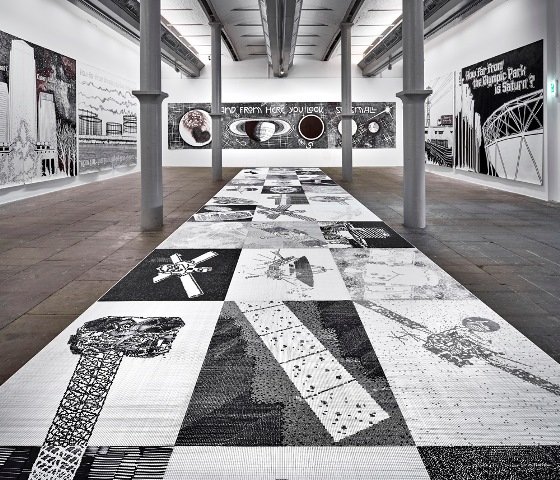
Artist Aleksandra Mir views space probes as substitutes for human explorers, romantically searching for connection in the Solar System. Her piece Probes (on floor) — part of her major work Space Tapestry — is an inventory of these craft, examining how their aesthetic has changed over time, as well as how the functionality of design intersects with its cultural underpinnings.
3Q: Aleksandra Mir
In 2014, Aleksandra Mir began a journey into the unknown. The London-based artist started talking with scientists and engineers about space — a realm in which she was a complete novice. The result of Mir’s dive into the cosmos is Space Tapestry, a vast wall hanging 3 by 200 metres, hand-drawn — in collaboration with 25 young artists — with fibre-tipped pens on synthetic canvas. Inspired in part by the eleventh-century depiction of Halley’s Comet on the Bayeux Tapestry, the work unfolds like a giant graphic novel to explore the unfathomable distances of space, the quest for extra-terrestrial life, and the impact of space technology on humans – from observing Earth to the politics of space. As the piece goes on show at Tate Liverpool, UK, Mir talks about her quest to get under the skin of science.
Why did you choose this format for Space Tapestry?
I wanted to create an immersive environment, almost like a stage set. And I wanted to introduce a new aesthetic. Whenever you see a science illustration you get what I call the “sleazy aesthetic”: supposed to convey fact but made to seduce with their slickness, intense colours and airbrushed surfaces. There are other ways of picturing phenomena that can be as realistic. And some phenomena beyond our technologies or perception can also be portrayed poetically. This is where art becomes relevant to science.
My original inspiration for the project was the 1066 Bayeux Tapestry. It features a very early portrayal of Halley’s Comet: you have this little group of characters staring out in horror and fascination, and there’s this simple line drawing of the comet. What was interesting to me is that it doesn’t look anything like an actual comet, but conveys a tremendous amount of scientific information – it has a direction, a velocity and luminosity – which makes it valuable for contemporary scientists. So this became the key to my ‘tapestry’: images with validity for the science community, but also treated in a very poetic, freestyle, emotive and personal way.
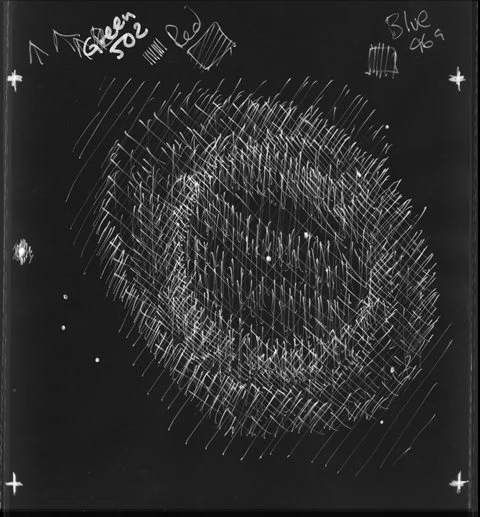
Mir’s work Ring Nebula emerged from conversations with Jayanne English, an astronomer involved in creating Hubble telescope images. To move beyond the “ice-cream” coloured swirls that Mir views as “trashy”, they experimented with capturing the same information in a black-and-white sketch in which the angle of cross-hatching represents different phenomena.
You’ve explored many issues over your 25-year career. Why space, and why now?
Space has been a strand of my work for a very long time. My family watched the Moon landing in 1969 in Poland (which was then behind the Iron Curtain), and this left a powerful mark on me. My best-known work is First Woman on the Moon, the transformation of a beach in the Netherlands into a lunar surface in 1999, in response to the 30th anniversary of Apollo 11’s feat. The video of this event has been touring for 17 years now. And I recently realised that while the gist of the work is still valid – no woman has yet set foot on the Moon – I needed to catch up on the achievements of today’s space industry.
I attended my first space conference in 2014 and was sold on a world that for me was like an alien planet. I had to learn a new language. I spoke to a lot of scientists about their daily lives. And once you start looking at that from my perspective as an artist and anthropologist, a natural philosophy and sort of magic embedded in these practices reveals itself. I was never interested in science fiction. Science has everything of interest to me. I think that the whole scientific project is a romantic project, the chasing for a connection, the yearning for depth, taking on a challenge, risking everything for a passion, the struggle.
What did you learn about scientists and science?
Working on the Space Tapestry project has given me access to some extraordinary scientists, locations and visuals. Among those I interviewed was Jan Woerner, director-general of the European Space Agency. Marek Kukula from the Royal Observatory Greenwich has been one of my main advisors, and molecular astrophysicist Clara-Sousa Silva has been a huge inspiration.
I visited high-security sites such as Airbus Defence and Space in Stevenage, UK; and saw the network control centres at Inmarsat and the Satellite Applications Catapult, both depicted in my drawings. I was allowed to ask tons of naïve questions, be critical, playful and absurd at times, which has connected and educated me in a big way. I can now hold a conversation in this realm, and in 2015 I was invited as a speaker at the UK Space Conference myself.
There is a newfound dialogue with scientists who are reaching the understanding that they also have been working in isolation. I have also realised that the sophistication of their projects, the enormous budgets and the long timespans can in no way ever be comparable to what I, as one artist, can do. So, if anything, I have gained a greater respect for science.
One conversation I’ve had with scientists, though, is that you don’t always have to be heroic and successful to garner respect. To struggle, fail, be tired and dirty is part of our nature and a fundamental part of all human exploration. Artists know how to draw power from it and I think my project both humanizes and makes science more credible.
Interview by Elizabeth Gibney, a reporter on physics for Nature based in London. She tweets at @lizziegibney.
This interview has been edited for length and clarity.
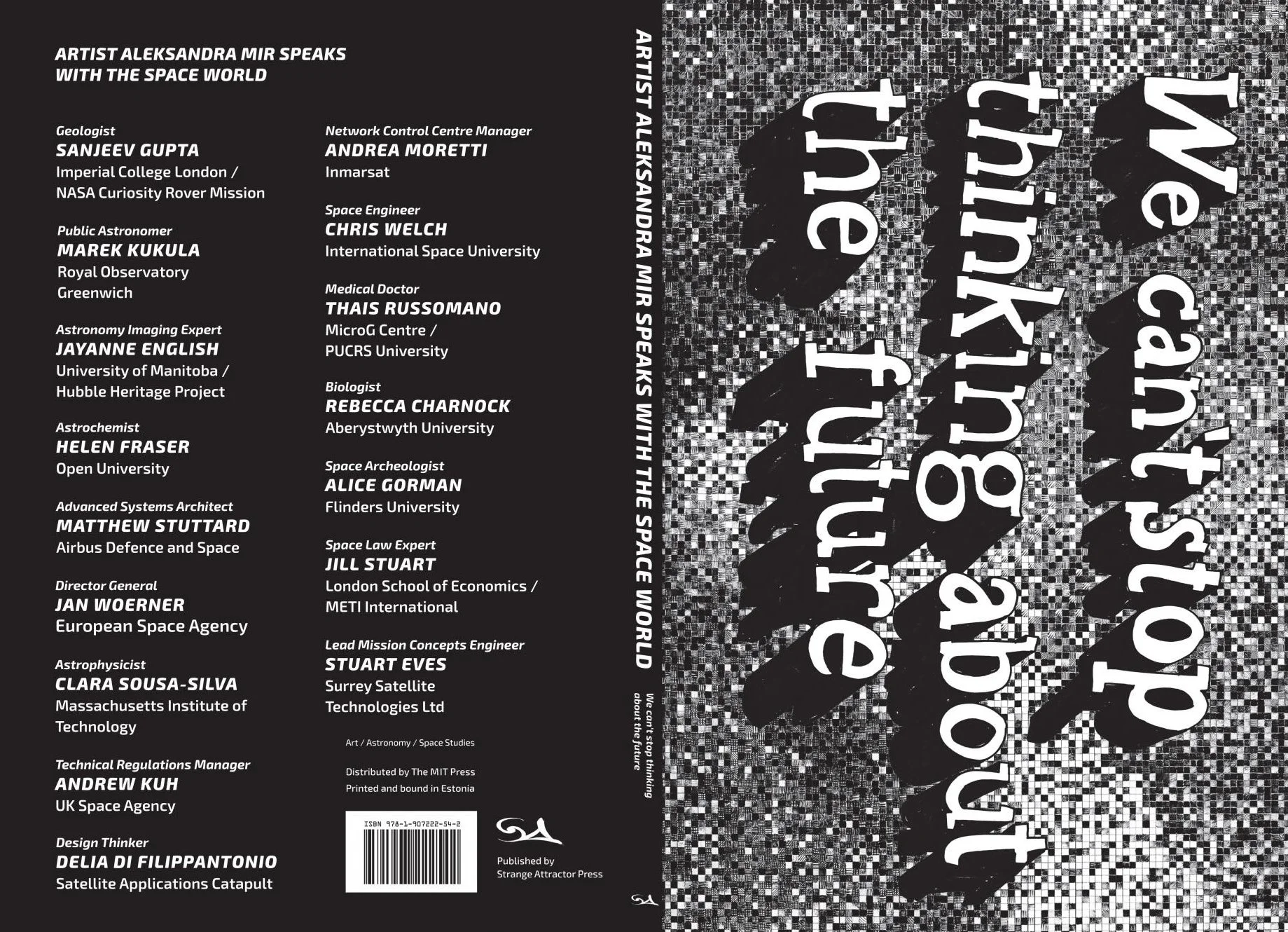
Space Tapestry is on display in two parts: Faraway Missions will be at Tate Liverpool until 15 October; Earth Observation & Human Spaceflight will be on display at Modern Art Oxford until 12 November. An accompanying book forming part of the Space Tapestry project, We Can’t Stop Thinking About the Future, is also available, and includes 16 interviews with space professionals.
Collect prints inspired by this collaboration
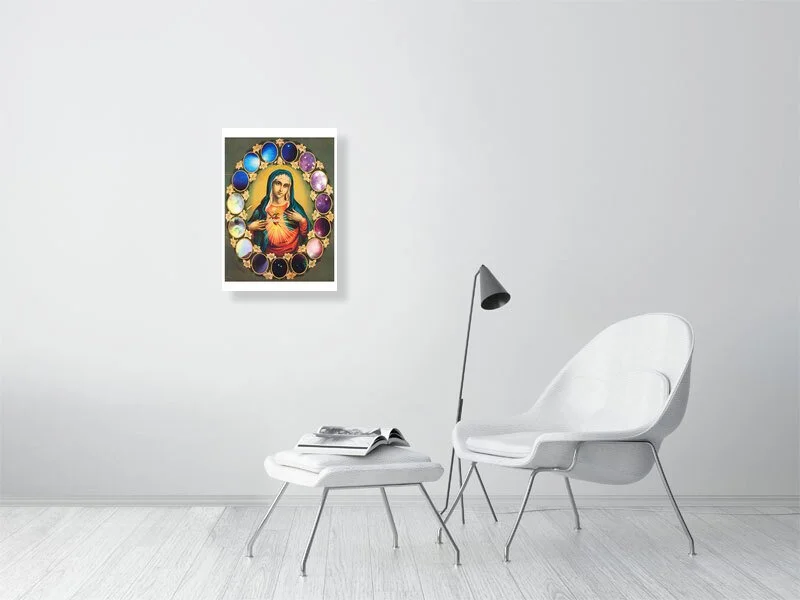
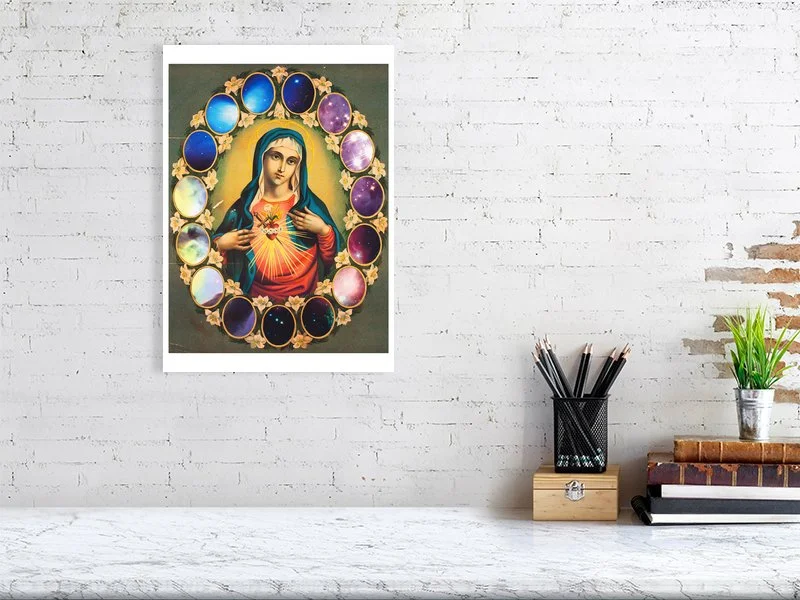
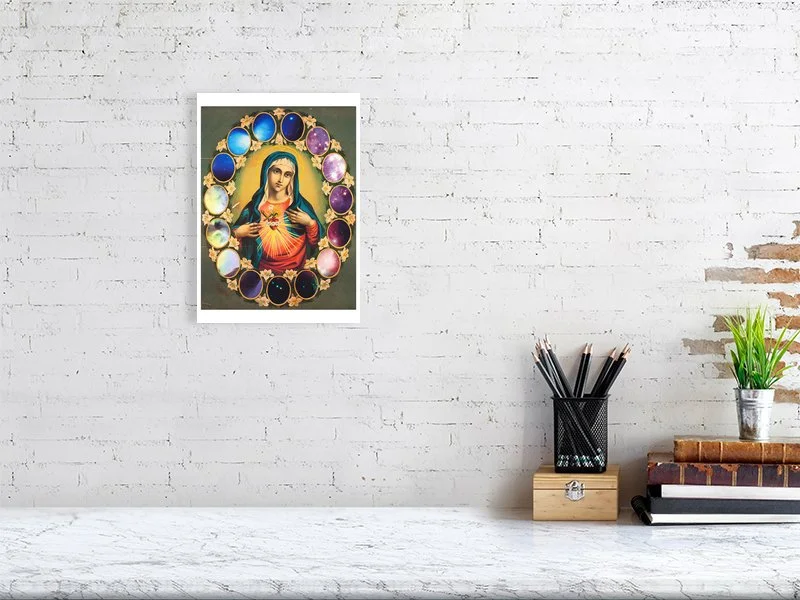
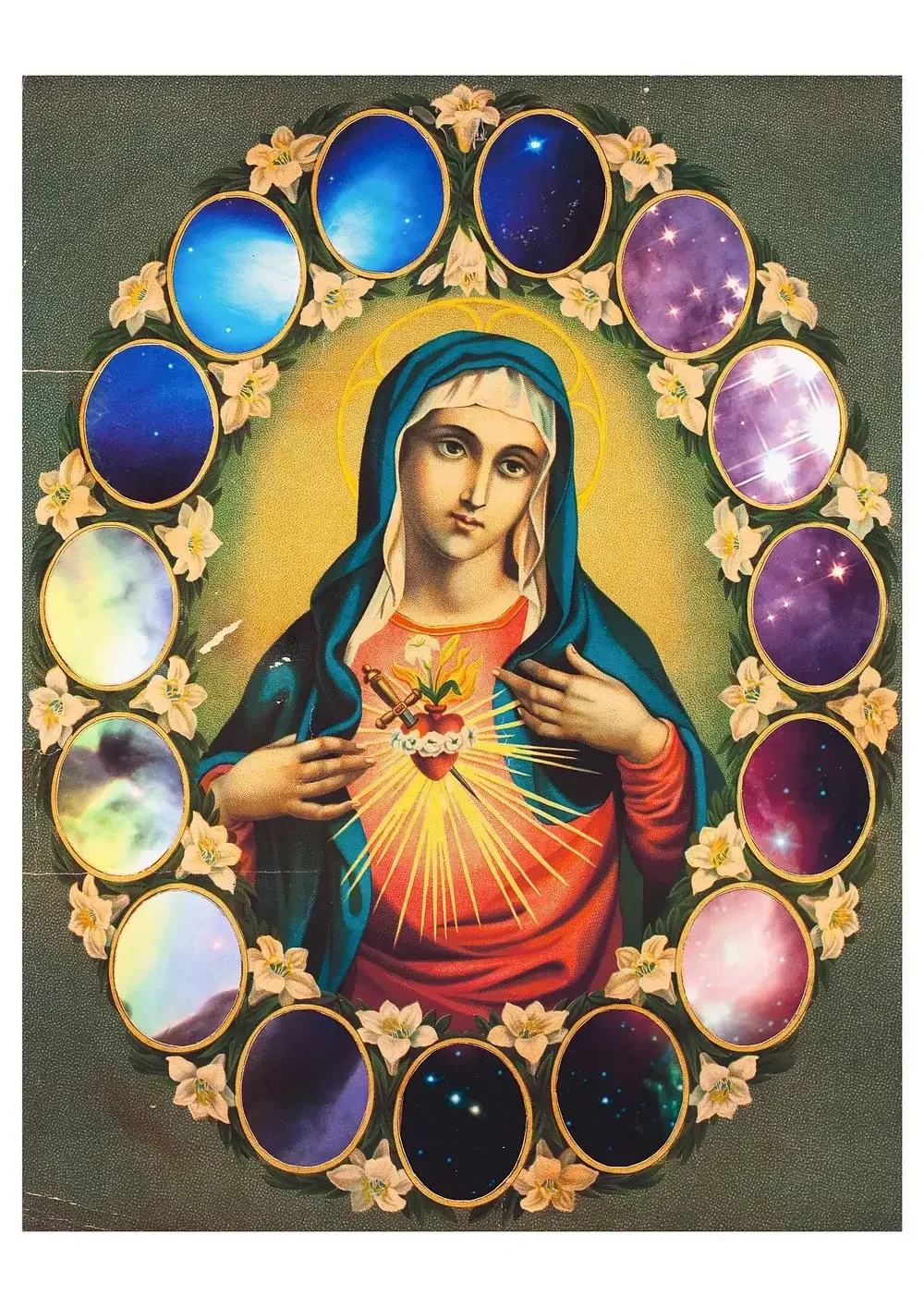
The Madonna, mother of Christ, presses her hands to her Sacred Heart — its starburst radiating golden light across her chest. This luminous Fine Art Print reproduces an original hand-cut paper collage by the artist Aleksandra Mir.
The new artwork combines source materials from antique religious and modern scientific imagery into a new physical and fantastical reality. The rosary-like structure of repeating ovals that would be a wreath of prayers becomes a string of cosmic windows. The Madonna's sacred heart now pulses outward into the universe itself. The piece equates spiritual devotion with scientific wonder — the cosmos is the sacred.
Giclée pigment ink on Hahnemühle German Etching paper results in a superior quality print with exceptional detail, vibrant color accuracy, and long-term durability. The fresh print reproduces an aged authentic patina and the imprint of the artist’s hand-crafted marks.
· Archival Museum Quality ·
· Limited Edition. 100 ·
· Certificate of Authenticity ·
· Hand & Human-Made without AI ·
· 100% Carbon Neutral ·
· Free Worldwide Shipping ·

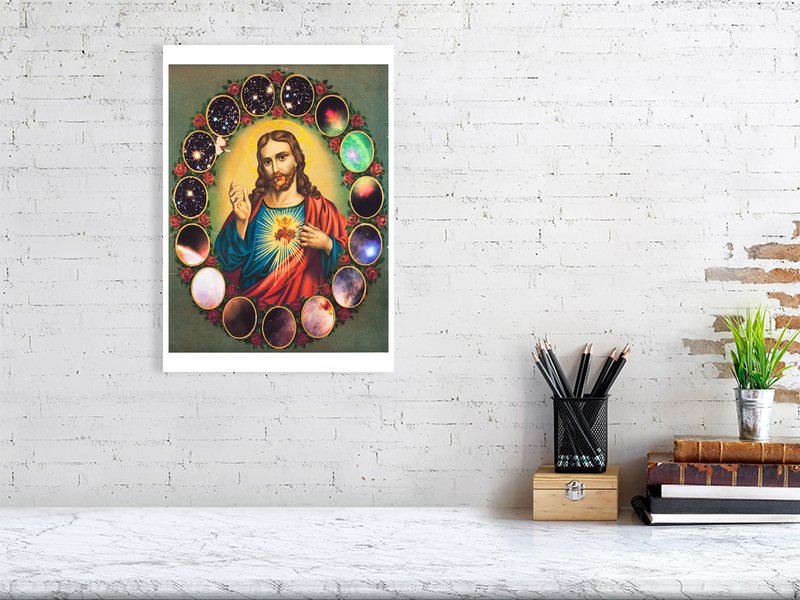

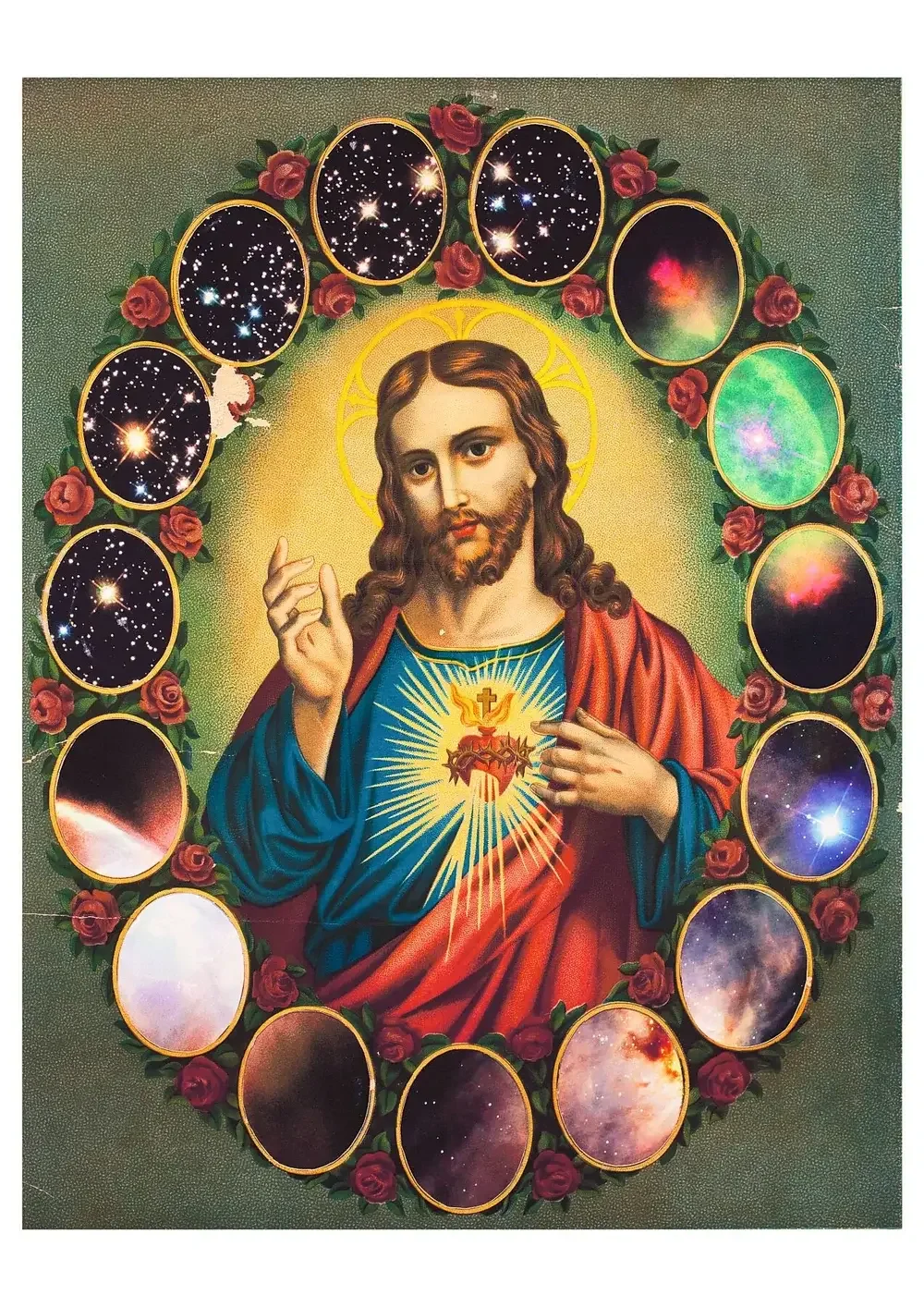
Jesus Christ surrounded by medallions holding the night sky — star clusters, nebulae and galaxies ablaze in the cosmos are depicted in deep blacks, greens, pinks and purples. This celestial Fine Art Print reproduces an original hand-cut paper collage by the artist Aleksandra Mir.
The new artwork combines source materials from antique religious and modern scientific imagery into a new physical and fantastical reality. It is based on a classic Sacred Heart of Jesus devotional print, where Christ raises one hand in blessing while pointing to his radiant, crowned heart. The surrounding wreath of oval medallions — in the original would be prayers or saints — has been collaged with astronomical images.
This is a companion piece to Cosmic Madonna — displayed together they form a diptych altarpiece. The Madonna and Christ side by side, each surrounded by visions of the entire universe. It's a quietly radical reimagining of devotional art that is both reverent and expansive.
Giclée pigment ink on Hahnemühle German Etching paper results in a superior quality print with exceptional detail, vibrant color accuracy, and long-term durability. The fresh print reproduces an aged authentic patina and the imprint of the artist’s hand-crafted marks.
· Archival Museum Quality ·
· Limited Edition. 100 ·
· Certificate of Authenticity ·
· Hand & Human-Made without AI ·
· 100% Carbon Neutral ·
· Free Worldwide Shipping ·
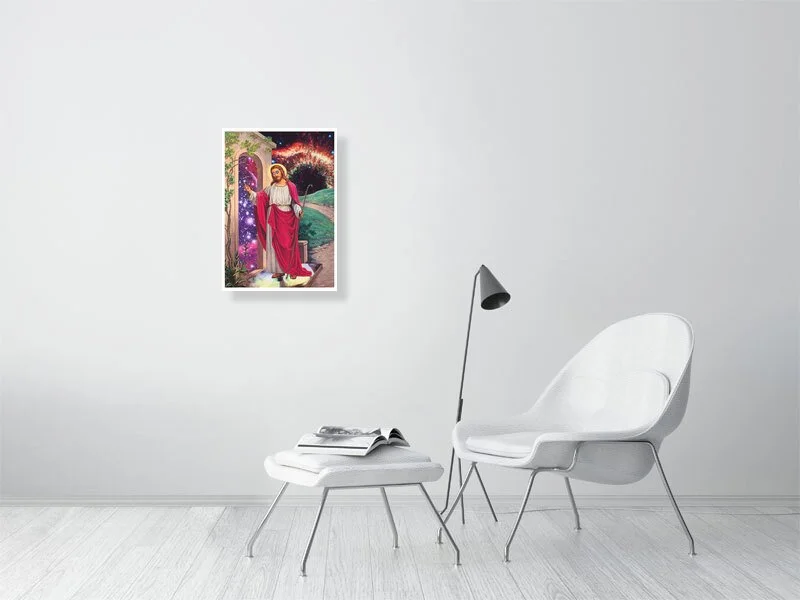
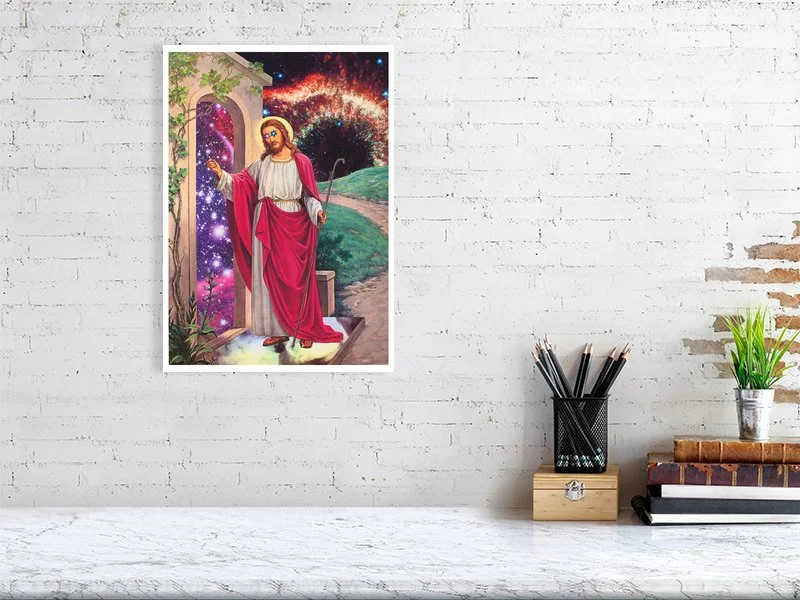
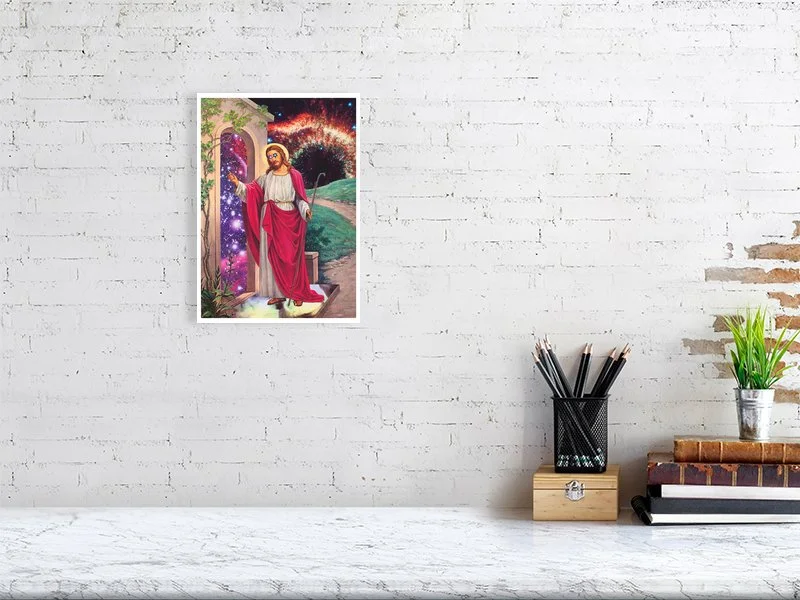
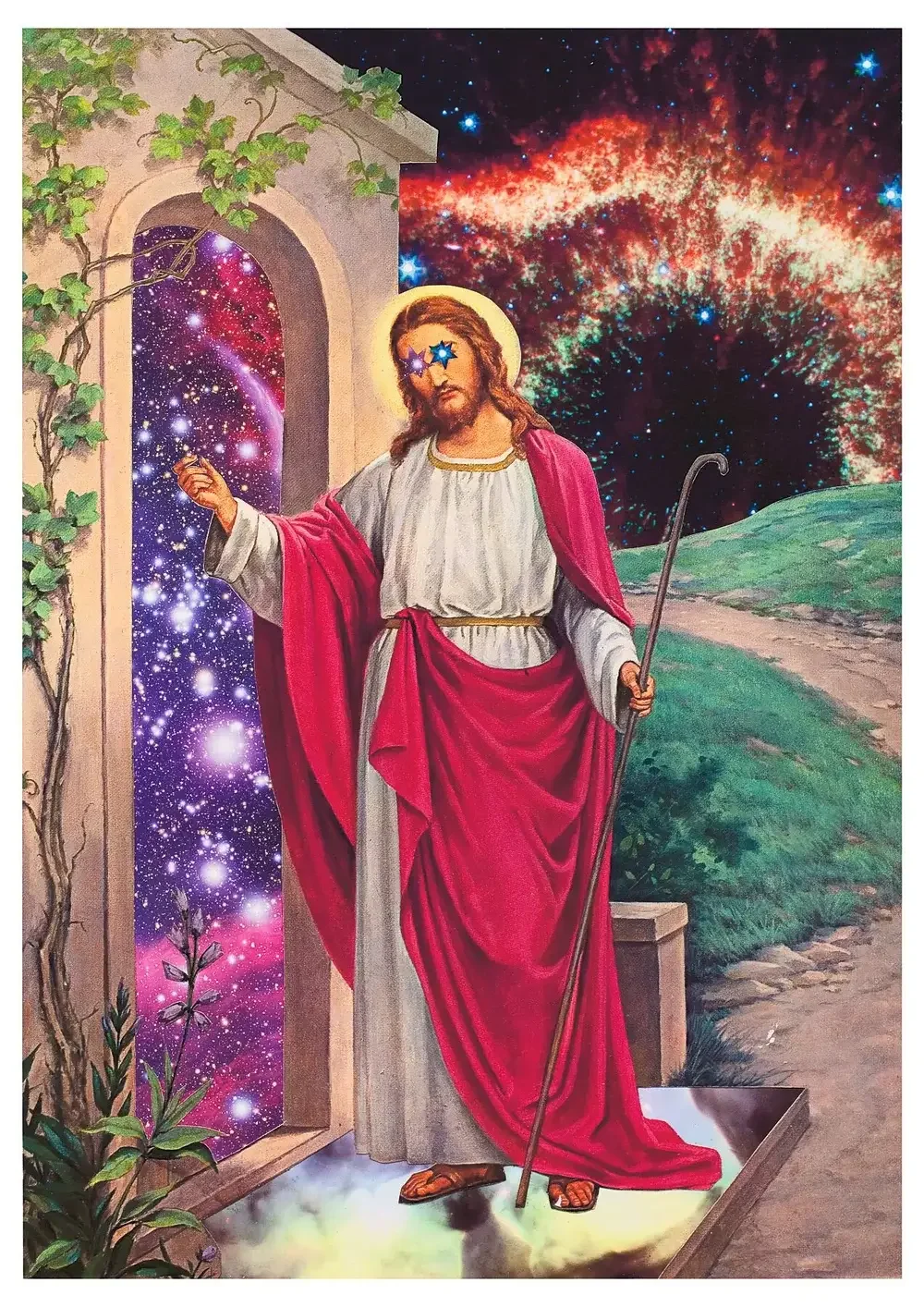
Jesus Christ knocking on heaven's door, beyond which there is the entire cosmos, lit up in stark colors and explosions. This Psychedelic Christian Art Print reproduces an original hand-cut paper collage by the artist Aleksandra Mir.
The new artwork combines source materials from antique religious and modern scientific imagery into a new physical and fantastical reality. The juxtaposition raises questions about faith, vision, the universe, and interfaith symbolism. The psychedelic dimension defined by the colour palette — deep purples bleeding into hot pinks, the electric nebula, the jewel-bright star — belongs as much to the visual language of 1960s and 70s psychedelic art as to astronomy.
The cosmos here does not feel cold and scientific but hallucinatory and visionary, as though the door Christ opens leads not simply to space but to an altered state of consciousness. The tradition of psychedelia was itself deeply spiritual — seeking transcendence through expanded perception — making the connection to religious iconography entirely natural.
Christ becomes a figure standing at the boundary between all belief systems and the infinite, his sight literally replaced by a symbol of another faith — he sees, and is seen, through multiple spiritual lenses simultaneously. The work sits at the precise intersection of three countercultural moments that each promised transformation: organised religion, the space age, and psychedelia — all three sharing the same fundamental hunger for transcendence beyond ordinary human experience.
Giclée pigment ink on Hahnemühle German Etching paper results in a superior quality print with exceptional detail, vibrant color accuracy, and long-term durability. The fresh print reproduces an aged authentic patina and the imprint of the artist’s hand-crafted marks.
· Archival Museum Quality ·
· Limited Edition. 100 ·
· Certificate of Authenticity ·
· Hand & Human-Made without AI ·
· 100% Carbon Neutral ·
· Free Worldwide Shipping ·