
In Artemis Awe
From one First Woman on the Moon, to another
I am writing this in the afterglow of the Artemis II crew’s safe return to Earth last night. It is early spring, 2026.
Following the whole journey, from the tension-filled countdown and lift-off, daily domestic communications and awe-inspiring imagery, to the flawless splashdown, has now lulled my nervous system into a peaceful post-climactic embrace.
This was really, really good, wasn’t it? We’ll do it again, soon, I am sure.
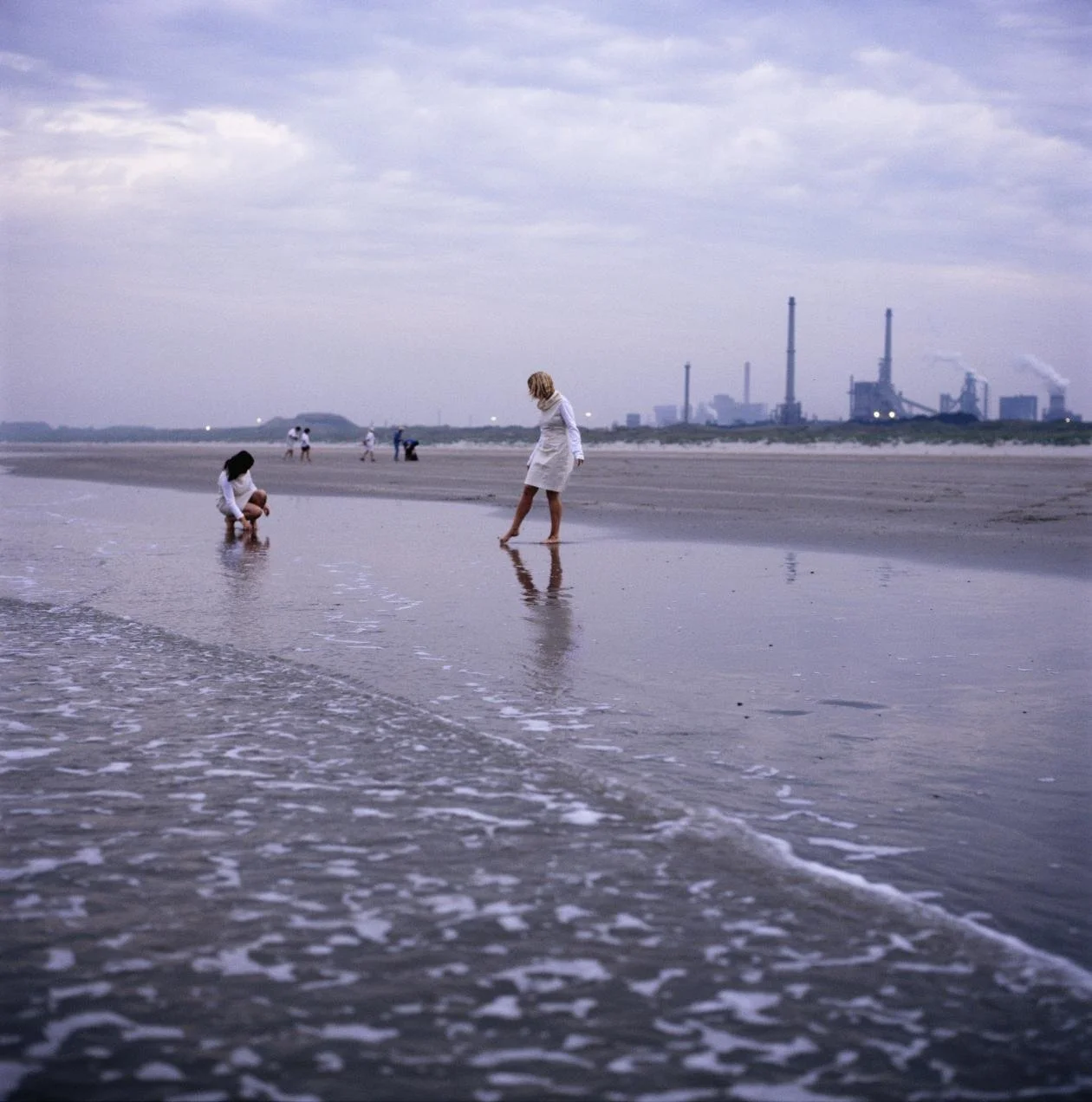
The immense focus on Artemis astronaut Christina Koch, has inevitably intensified the interest in my old art piece ‘First Woman on the Moon,’ an event that took place over one day on a beach in the Netherlands 25 years ago.
The film of the event has been touring art venues non-stop all these years, gathering new audiences that were not even born when it was created. Each pause, like today, gives me an opportunity to reflect back, listen, compare and project forward.
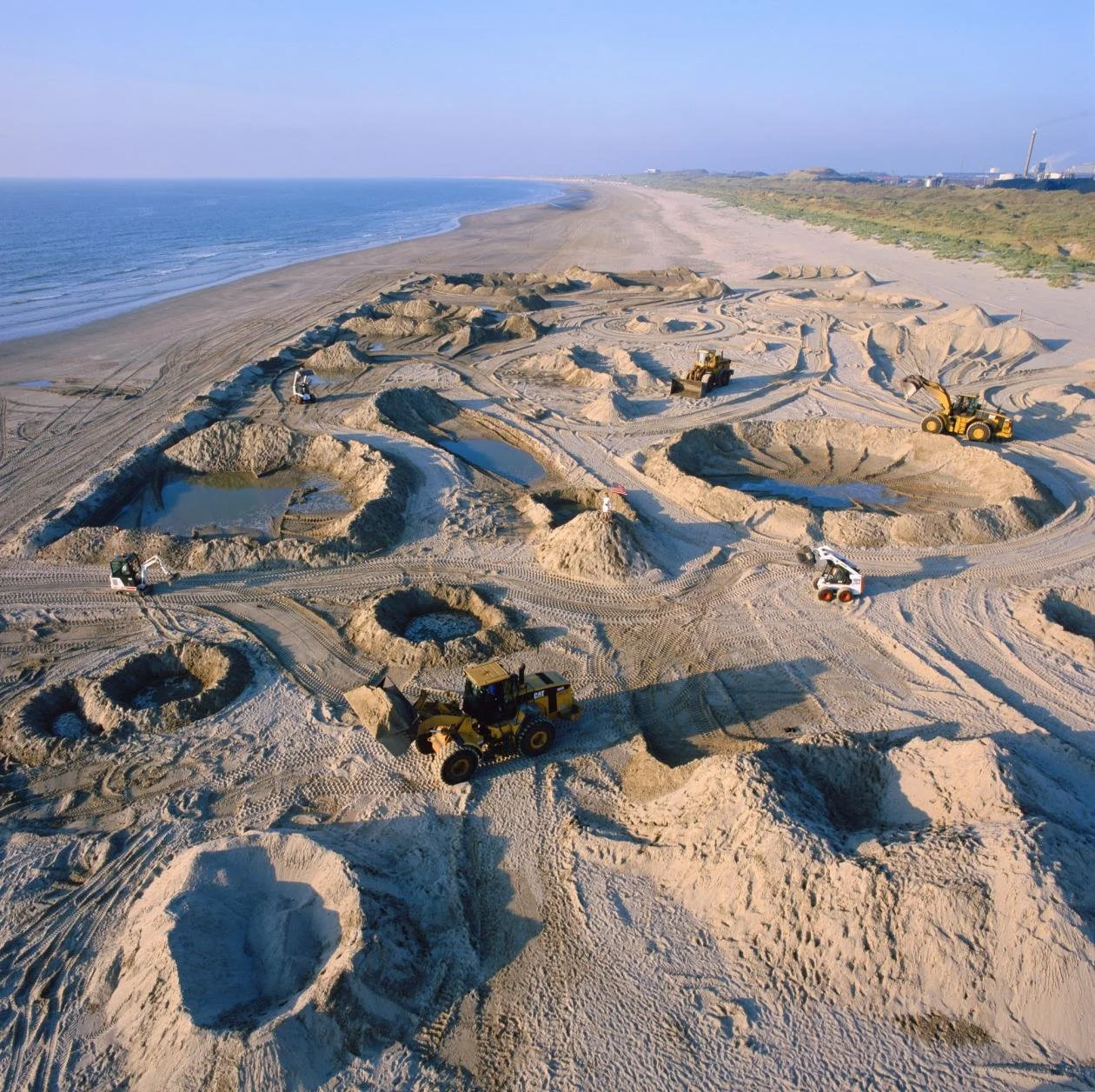
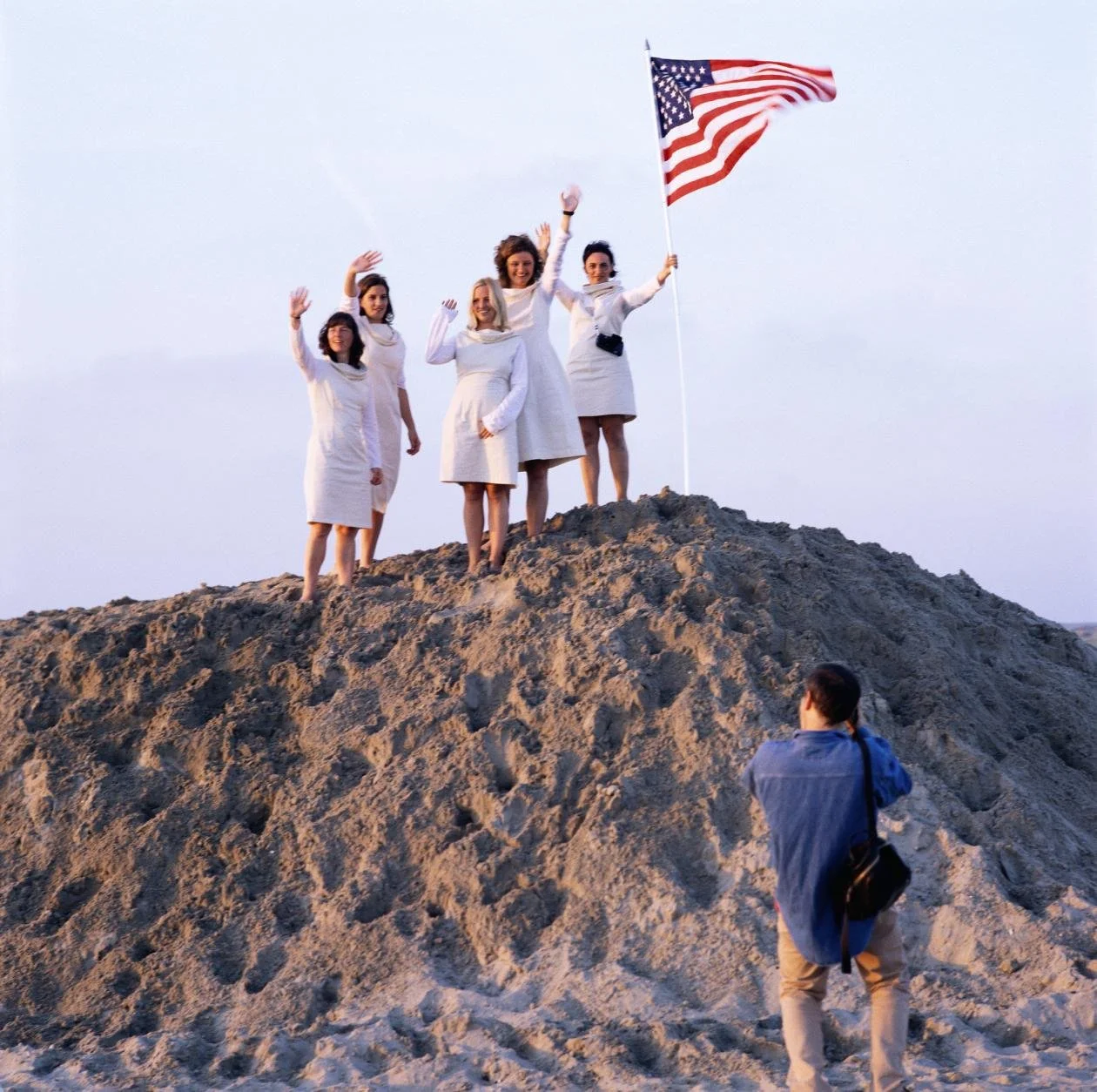
Aleksandra Mir, First Woman on the Moon, Casco Projects on location in Wijk aan Zee, NL, 1999
Conceptuality
I generally believe that when an artist puts their art into public circulation, they also seize control of the work’s meaning.
My personal motivations therefore matter less than how the work is perceived in any given time and place.
Here I like to use a space travel metaphor, for creating a durable artwork it is a bit like constructing a probe meant to explore the universe.
If you build it sturdy and complex enough, and I don’t mean materially, but in content, and if you manage to launch it beyond the earth’s gravitational field, which I equate to the control an artist has over their creation, then the probe should have the capacity to keep going forever.
And this is essentially what we mean when we say an artwork stands the test of time. The conversation keeps going, well after the artist has died and by the work’s own velocity.
At this stage I see myself mostly as an objective observer of the conversations that this project keeps generating, at least those conversation that I am able to follow, as most are far beyond my reach.
Art History
Over the years, the video documentation of the day, also titled ‘First Woman on the Moon’ has been included in some 65 exhibitions and museums worldwide, at the Guggenheim and Metropolitan Museums in NYC, Vasarely Museum, Budapest, Mori Art Museum, Tokyo, Moderna Museet, Stockholm, Tate Modern and Royal Museums, London and many others.
It has been shown in every imaginable setting: white cube, black cube, cinema style, on every type of screen or monitor, standing room only, benches to sit on, carpets for lounging, or TV sofas to mimic a living room, circa 1969. It has been shown in private apartments, video festivals and on museum gallery walls, debated at space industry conferences, in art schools and broadcast over the internet.
Curators have run all over the place with it, inserting it in group shows on such varied themes as Space Exploration, Geography, History, Feminism, Nationalism, Imperialism, Colonialism, Democracy, Archeology, Ecology, Media Culture, Conspiracy Theory, Tourism, Land Art, Performance Art, Video Art, Fashion, Photography – you name it.
So more than a space probe, ‘First Woman on the Moon’ is also constructed a bit like a pungent Christmas pudding where all these ingredients, the good and the bad, were baked into it from the start, let to brew and ferment. And so when you cut a slice of it, its complex taste and aroma has the capacity to engage you in multiple ways.
When I show it to students, I initially don’t comment but let them tell me what they see in it. This then often leads to engaged hour-long conversations that reflect on where we are in the culture and what the concerns of the day may be.

Memory
When in 1969 Neil Armstrong landed on the Moon, I was two years old and living with my family behind the iron curtain in communist Poland. I have a very vivid memory of the event, and here you can obviously debate what a memory is.
The footage of the Moon-landing is widely available and I have seen it over and over again many times, but what stands out as original in my mind of watching the live broadcast that very first time, is my father hysterically jumping up and down in front of the TV.
He was a mining engineer who understood the technology, but could not even get a passport to travel across the Western border and so he truly appreciated this monumental achievement, identified himself with it. Neil Armstrong's words, “…for all mankind” really hit home.
Here we were during the Cold War, watching a live broadcast of a heroic action where the centerpiece was an American flag. How was that even possible? Because the event transcended the politics of its day and tapped into something at once very specific and universal.
Art Production
30 years later (1999), I was an emerging artist living in New York City, building an international network by working with a wide range of non-profit artist-run spaces.
Casco projects, a small organization with an office in Utrecht, one director, one part-time employee, two interns, a fax machine, an e-mail account and a minimal budget invited me to make a project, which would take us 5 months to produce, time spent mostly on site scouting for wide beaches and on gathering up goodwill.
Their initial commissioning budget for creating a new work was $2.000. The money was spent on the first day by placing a half page ad in the magazine Artforum, “…to announce this historic event to the world”. At this point the media had been reporting on the 30th anniversary of the original Moon-landing for many months and I took inspiration from all the press coverage.
I was a Communications & Media major before I studied Fine Art and it was clear to me that a work that essentially refers to a mass-media event, has to be channelled via mass-media, not just the hermetic art system. So we used the Casco office as a press center and sent out press releases about our impending historical event worldwide.
An Australian gender studies department replied cheering us on. A Dutch anarchist association said we were making a mockery out of political struggle and were clearly not going anywhere. You believe what you want.
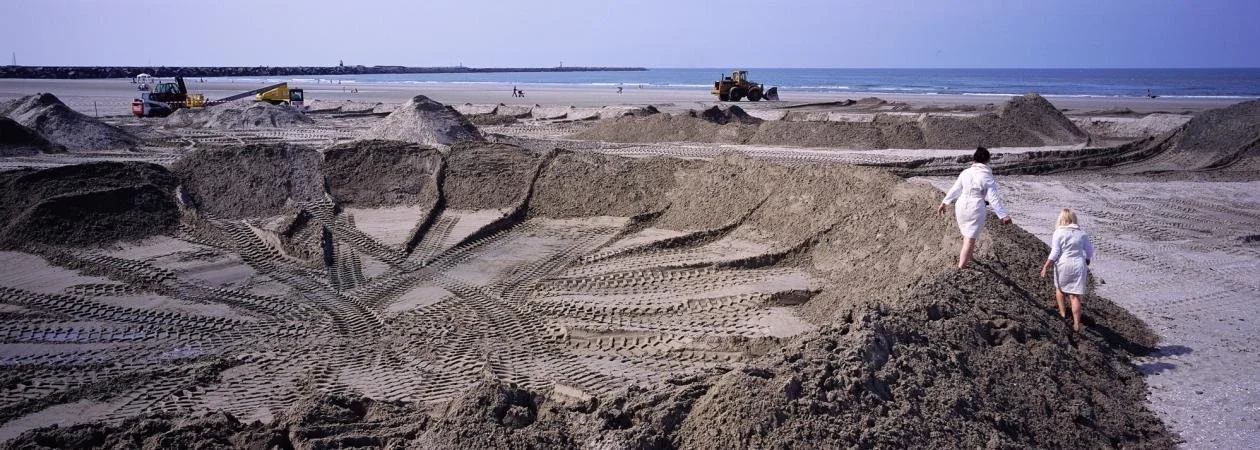
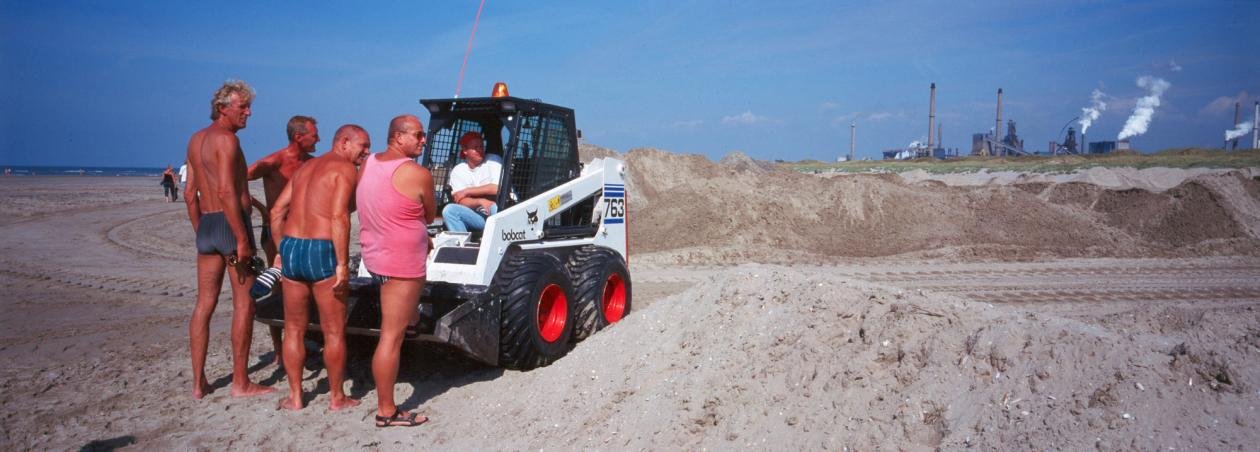
The rest of the production on site, including bulldozers, catering and documentation was put together on a zero budget, by soliciting goodwill and volunteers from locals and businesses nearby. We told them we wanted to put a woman on the Moon, and suddenly everyone in the small town of Wijk aan Zee joined in to play. Nobody there even questioned if it could be possible.
DIY
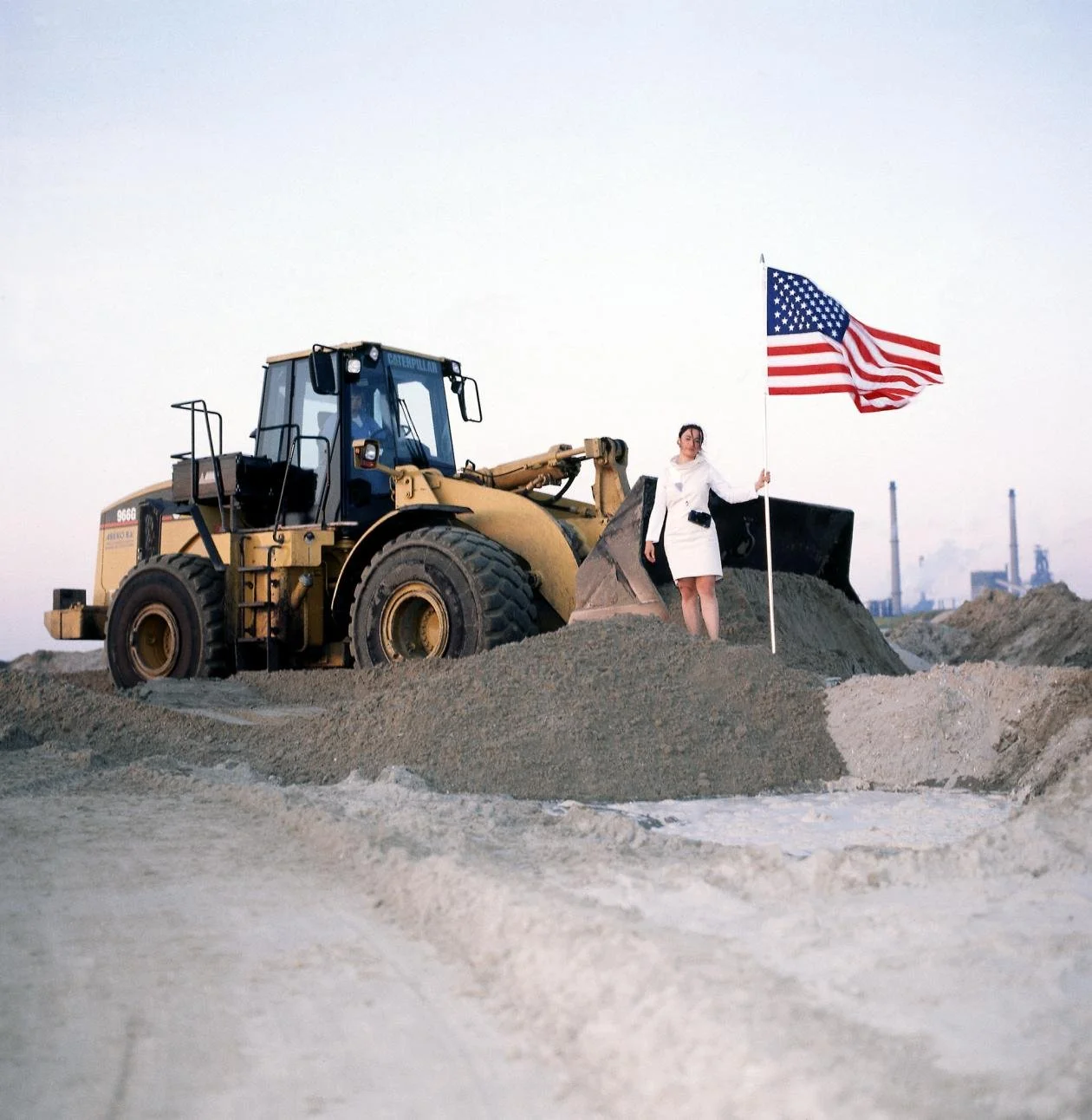
The logic of DIY or Do It Yourself, was applied both factually and ironically. If nobody had been able to put a woman on the Moon all this time, well, why wait? Why not just build the Moon for ourselves?
A big source of inspiration was the notion that the Netherlands was famous for its land reclamation projects, expanding farmland out to the sea. If there was already a tradition and policy of creating new land, certainly we could create a Moon.
50 volunteers, 10 bulldozers, 2 municipality’s approval, a steel factory, a hotel and a restaurant catering to all our crew later, we were ready for liftoff.
A short interview in the local paper snowballed into more press and a feature on the culture pages of Amsterdam’s main broadsheet, which warned about the spectacle about to unravel. What was an artist doing flirting with the media? I said, “Well, if I can work with a steel factory, why can’t I work with the media?”
This only provoked the commercial TV sector to join in. Crews from three TV stations arrived with bulky equipment, cameras and mikes that added to the veracity of our event. They sold their professional footage all over the world as breakfast TV, footage I was then able to claim back and incorporate into my video.
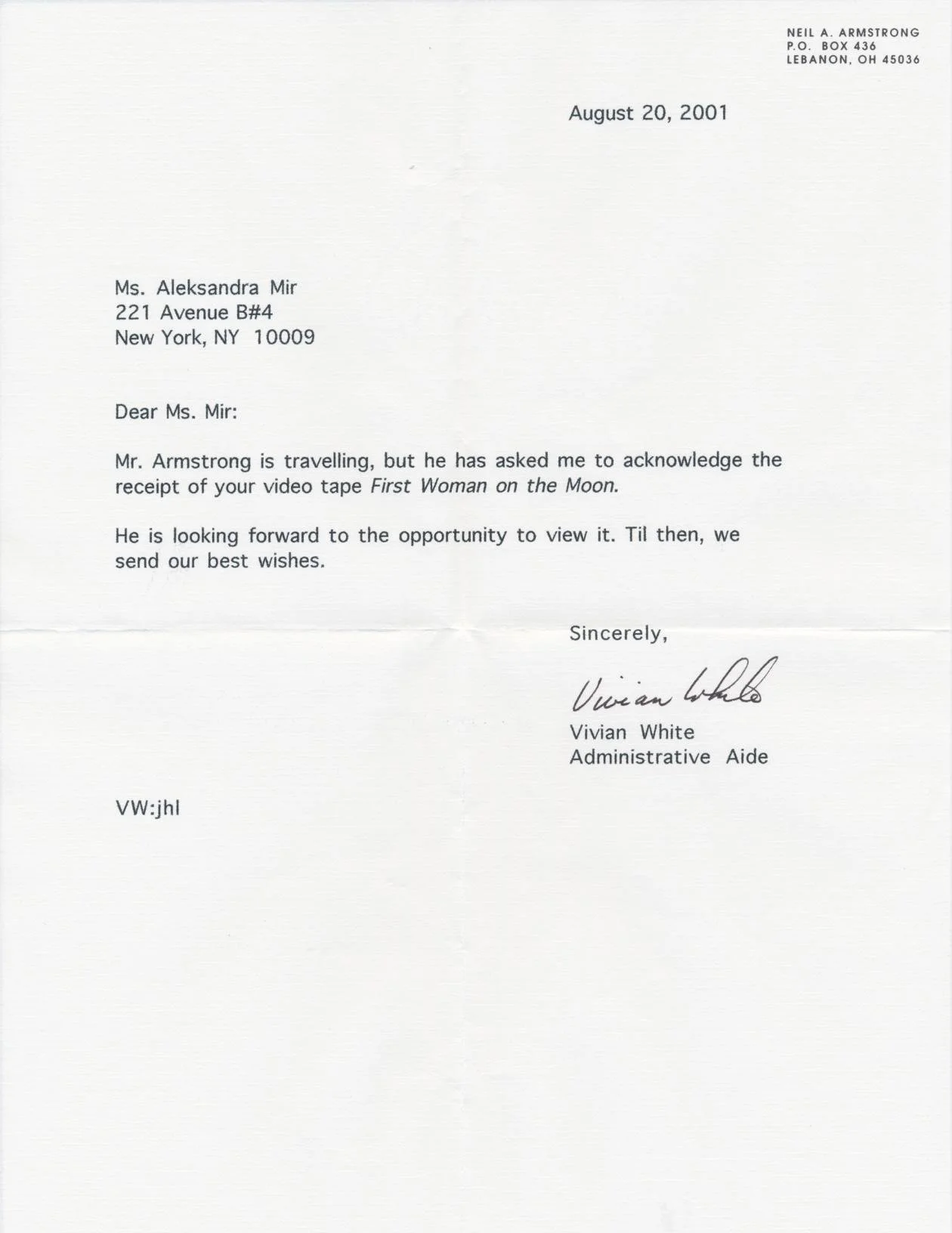
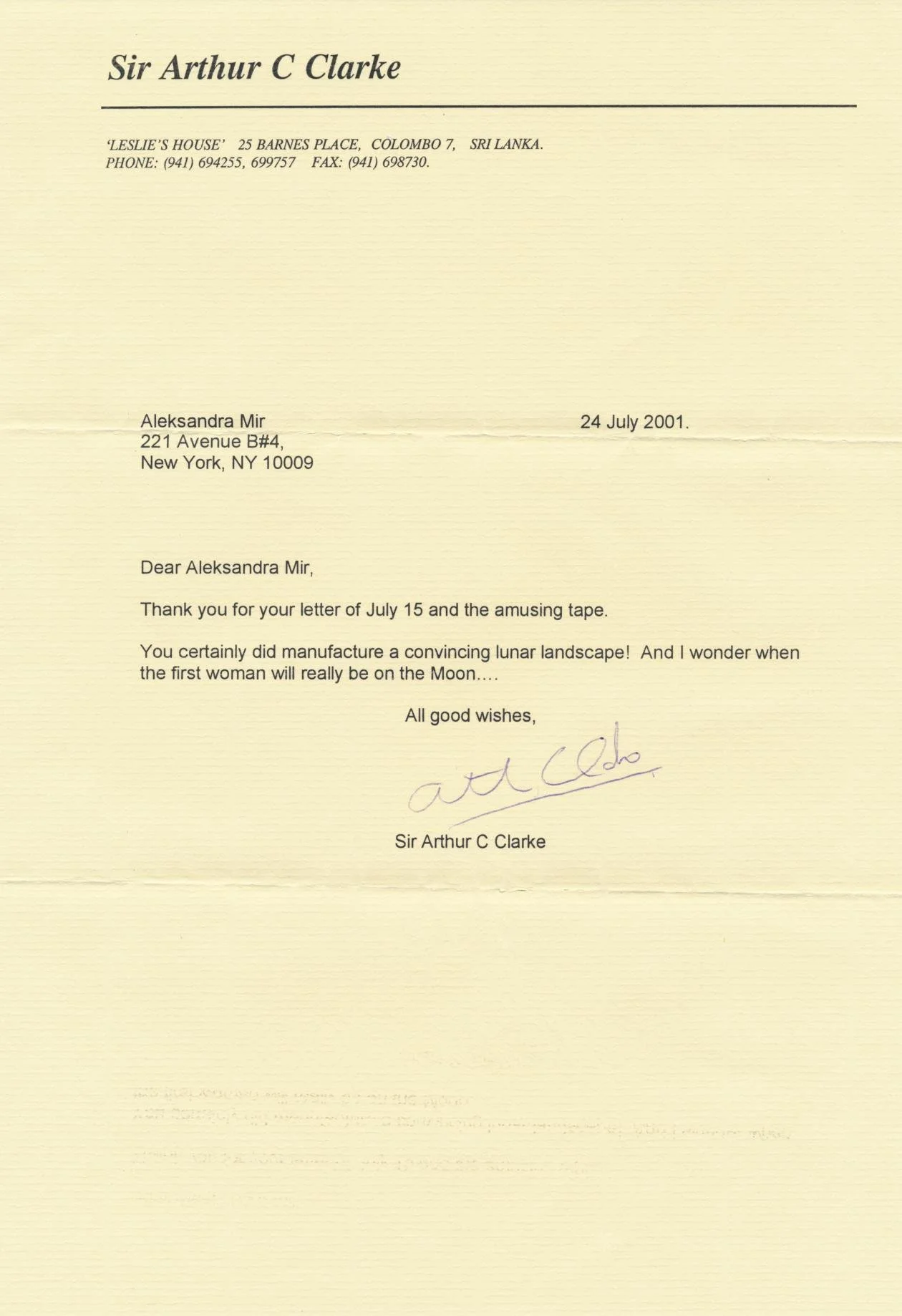
I then sent the video to Neil Armstrong in Cincinnati and so 30 years apart, the circle was closed. I had seen his and he, having seen mine, replied with an email and good humor!
Politics
The playfulness of our action meant there was the possibility for a dialogue. Although things were laid out according to a very simple binary grid – both in terms of space exploration, which was a race between Russians and Americans, and in terms of gender where the world was divided between men and women.
Women at this time were finally asserting themselves en masse, insisting at being able to do all the significant things that men were able to do, and on the same terms. Still, their roles were precarious.
Mine was never a resentful critique of NASA’s failure to invite a woman astronaut on all of their missions. I was inviting myself to play.
I have said in an interview that this was my “Me Too” moment but what “Me Too” meant in the 90s was not, “I have also experienced sexual assault”. It simply meant, “I am also going and nothing can stop me”! This to prove how much language has changed in a mere few decades.
Over the years the conversation around gender has departed the strict binary in which this project was made. When I learned about the concept of gender fluidity, and believe me, it was radical idea for my generation, I jokingly told Jan Woerner, the head of the European Space Agency whom I had the opportunity to interview in 2016, that if he didn’t hurry up and put a woman on the Moon, the entire concept of womanhood might become obsolete.
I am curious to follow the conversation on gender identity because as sure as these concepts have evolved, they will keep evolving and what seems absolute today will become obsolete tomorrow.
Criticism
It was not until 15 years into showing the video to students, when I visited a small art school in Northampton, England, that a teenager in combat boots, black pants, crew cut, tattoos and piercings, asked the first question: “Why did you wear a mini-dress?"
This is when it hit me. In my attempt at playing for equality, I had cast myself as Neil Armstrong’s bride.
Now, there are many reasons the women on my team all wore white mini-dresses and bare legs: It was a warm day on the beach and it was a comfortable outfit. But no matter how much I try to justify that choice, there is no escaping that my entire 90s endeavour was very much cast in the image of the 60s, and to a millennial my outfit gave go-go dancer rather than astronaut.
In other words, I had tarted myself out, diminished the feminism for femininity, which the student saw as defeat.
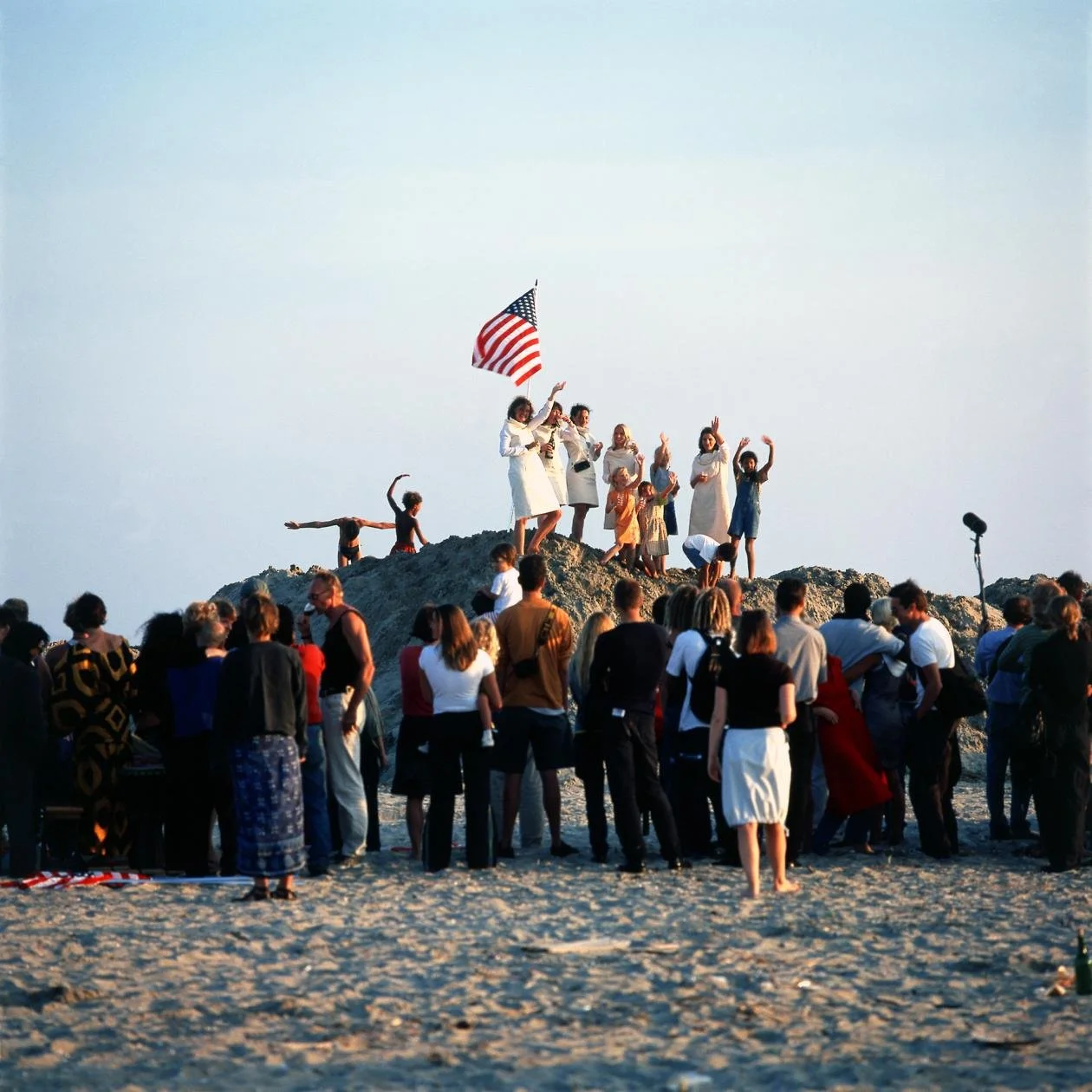
No matter us girlie-girls paving the way for the number of people in the audience who climbed up on the Moon next to us and proudly proclaimed themselves to be “The first gay man on the Moon, first black man on the Moon, first German man on the Moon” and of course all the children going mental on our Moon.
So, I notice with both delight and some irony, that today in 2026, when the promise of diversity has finally been fulfilled and we at once have a woman, a black man and a Canadian next to the standard white American male circling the Moon, the participants themselves seem to be calling for the obsoleteness of the very diverse categories they were chosen to represent and simply ask to be referred to as human astronauts. And this is also where my work comes to its final conclusion.
Flags
But the question and commentary I most frequently received after I started showing the video was, “Why the American Flag? Isn’t that a bit, you know, Imperialist”?
People proposed all sorts of flags I could have used instead: Dutch flag, Feminist flag, Anarchist flag, European Space Agency flag, or no flag at all.
We thought about all these options but either one would have constrained the playfulness in the piece, killed the art as I saw it, nailed it down to a manifesto, or a singular take on an issue that would have died down as quickly as the conversation moved on. And this is not what I wanted my Christmas pudding to do.
For the sake of complexity, I decided to stick with the original. The flag was a prop, meant to evoke a historical reality and that was simply an American flag. If I wanted to mimic the original, it had to look like the original!
These days, the emerging field of space archeology is actively working towards establishing protections of the original Moon-landing site and of all its material residues, flag, footprints and whatnot left there. The American flag on the Moon is an inevitable piece of cultural history. As are its detractors.
Criticism of space exploration has always been part of it. The parameters of the very questioning might shift, but the argument today is the same as it was then: Why waste all these resources to go beyond, when things so desperately need fixing here on Earth?
Nobody captured it better than Gil Scott-Heron in his spoken word poem, ‘Whitey on the Moon.’
“… I can't pay no doctor bills
But whitey's on the moon
Ten years from now I'll be payin' still
While whitey's on the moon …”*
Metaphor
The arguments for are equally familiar: Space travel unites humanity. It inspires and fuels science and progress with a direct payback on Earth. Above all, it is human nature to explore and go into the unknown.
As someone who has been sold on space since I was two, watching the Moon-landing with my parents on a black-and-white TV behind the iron curtain as it opened up a mental space for us that was materially and physically restricted, I have to agree. It is of course impossible to measure and account for in $$$ the impact an event like this has on anyone watching. As what value do you put on inspiration?
As an artist, exploring the subject of space grants me an endless expanse and a whole lot of un-knowns. And because I have ventured into it with zero or on very small budgets, with my own hands and with my friends, using perishable materials that are available to me in the here and now, I can at best approach space metaphorically.
Clearly, Christina Koch and I exist in parallel, separate worlds, with widely divergent resources and even objectives. Hers is physical, mine is poetic. But up until this week, when no woman had ever even come close to the moon, all you could count on, was for an artist to claim that void of a space.
And that pointed to something larger in the culture where women had been made absent overall.
What the Artemis mission has shown, is that more than casting a woman in a leading role, plenty of women now also occupy senior roles behind the scenes. They include Charlie Blackwell-Thompson (Artemis Launch Director), Lili Villarreal (Artemis Landing and Recovery Director) and Laura Poliah (Lander Ground Operations Expert).
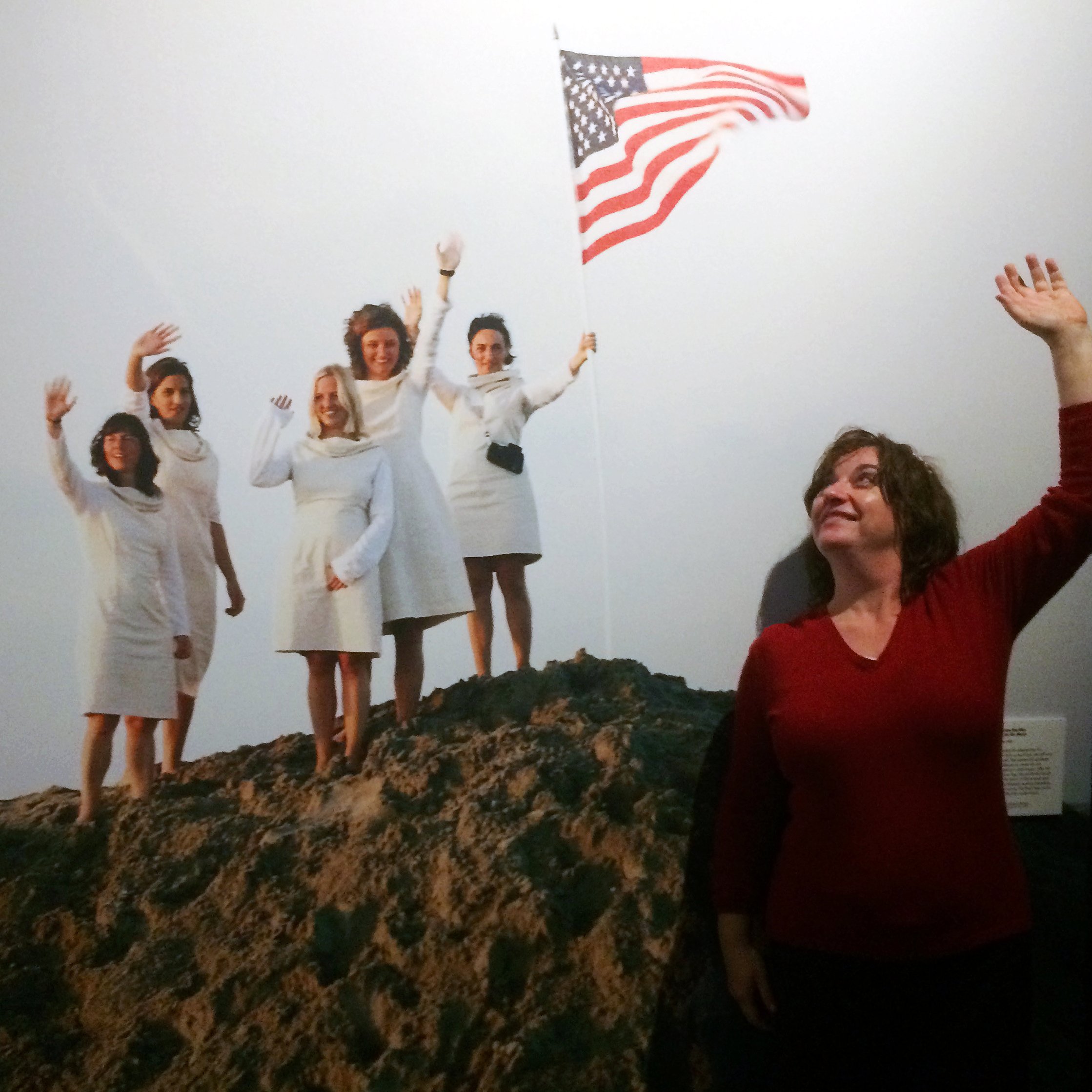
Aleksandra Mir in front of her work First Woman on the Moon (1999), Royal Museums Greenwich, London, 2019
Image makers
A last aspect that I want to touch upon, is the fact that all of this plays itself out in the realm of images.
Only twelve people have ever set foot on the Moon. 28 have traveled beyond low Earth orbit. For the rest of us, we are but the recipients of images and as any image maker knows, images, no matter how documentary, are also acts of creation.
The first time my video was shown to the public, at the Swiss Institute in New York, we paired it with footage of the original Moon-landing and invited a conspiracy theorist to come and talk. Not because I believe in the conspiracy theories that the original was fake, but so that we could simply compare the two videos on aesthetic grounds.
It was also the conspiracy theorist who gave me the idea of sending my tape to Neil Armstrong. So, everyone who has come in contact with the work, no matter their position, has also played a not insignificant part in the conversation around it, making it perpetually engaging and relevant.
But there is more.
While I was producing my Moon-landing, NASA had for the first time in history opened up its archives and allowed San Francisco photographer Mike Light access to the original Hasselblad photography taken by the astronauts.
Novel digital scanning technology now allowed for perfect first-generation reproductions of priceless film originals that could be cloned without any loss. Moreover, as Mike was allowed to freely roam among the thousands of images never seen before he also did his own edit that became his book and a show called “Full Moon”.
The tight selection of images that had circulated until then all depicted the astronauts as superheroes, worthy of the superpower that had launched them.
While Mike made a much more mundane selection that showed these men simply at work, exhausted, dirty and even bored. So even at the highest and official level, the story about the Moon-landing was shifting, being rewritten to better suit a moment that put less emphasis on performative ideals and that wanted more from the behind-the-scenes.
Grand Finale
And then, when I learned that NASA had used Hasselblad cameras and realized that the Hasselblad headquarters were in my hometown of Gothenburg, Sweden, I called up the head of marketing and told him what I was up to.
His answer? “The Moon is ours! Hasselblad has run the same ad campaign for 30 years, and we don’t want any other camera company associated with it. What do you need”? Hasselblad equipped two of my photographers with luxurious cameras and lenses, gave me their latest model camera as product placement to wear and paid for all the expensive film and processing, by which I was able to create my own first-class documentation.
That camera is now in the collection of the Guggenheim Museum in New York who was the first art institution to collect a piece of the work, while my own image archive continues to be subject to endless re-edits.
In comparison, the level of realism that the Artemis crew has conveyed to us over the past week is in the format of a reality-TV show, where their minute trials and tribulations, spontaneous commentary, toilet malfunctions, joy, tears and prayers were shared with the world population in real time.
The relatability almost beats the heroism but also sets the tone for what is to come.
A real First Woman on the Moon has finally arrived. There will be plenty more first women after her. And one day I presume, space travel will be as mundane as sitting on the commuter bus.
END.
This post was adapted from two of my earlier talks:
First Woman on the Moon - 25 Years Later
Sky Art 24 - Symposium: In Between Worlds, 5 April 2024
Art, Culture and Technology, Massachusetts Institute of Technology, Cambridge, MA
First Woman on the Moon - 25 Years Later
Art Talks: Aleksandra Mir, 25 September 2024
ZHDK, Zurich
*Gil Scott-Heron, Whitey on the Moon, https://genius.com/Gil-scott-heron-whitey-on-the-moon-annotated
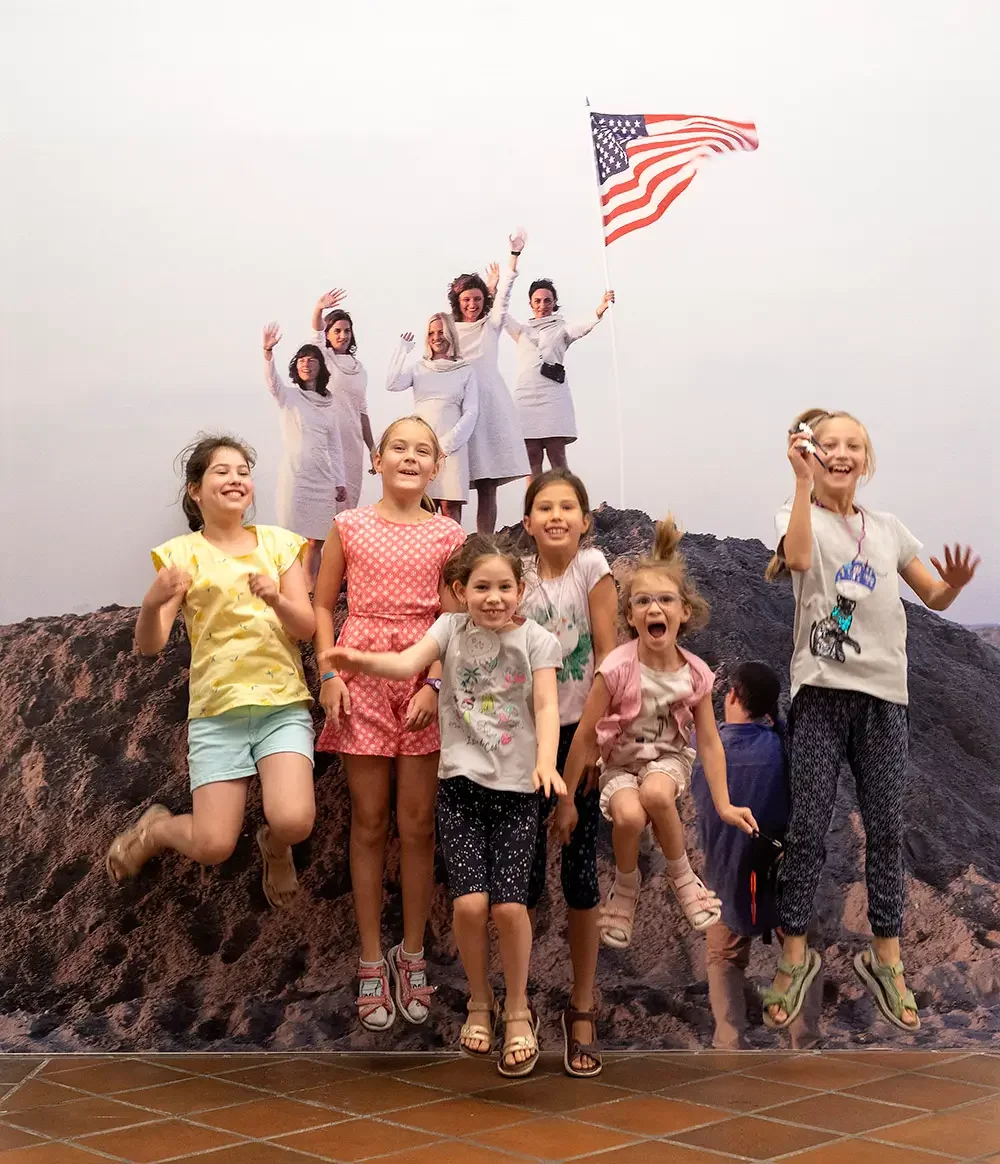
First Woman on the Moon, wallpaper, kids, Vasarely Museum, Budapest, 2019
Post Script. That one student in Northampton really did wake me up to the fact that my idea of space exploration was dated. Today over 60 nations have stakes in space, satellites are the new highways, private individuals are initiating space missions and there are plenty of female astronauts.
So by 2013 I embarked on a five-year immersion into the contemporary space industry, attending conferences, visiting high-security production sites and befriending scientists, academics and professionals who work across the many fields that are concerned with space today: archeology, medicine, physics, engineering, geology, etc.
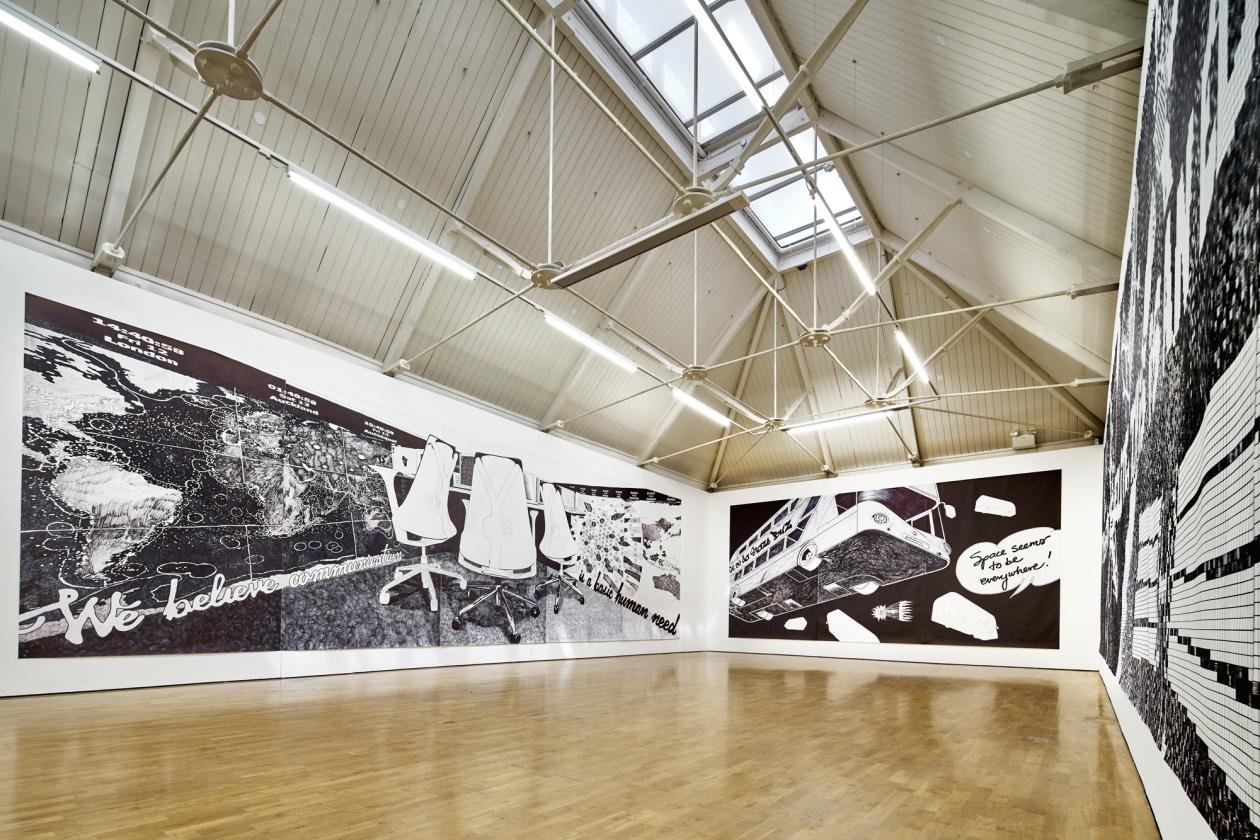
I received funding support from the Arts Council, UK Space Agency and the Science & Technology Facilities Council which allowed me to hire 20 student assistants to complete a series of monumental drawings inspired by the Bayeux tapestry.
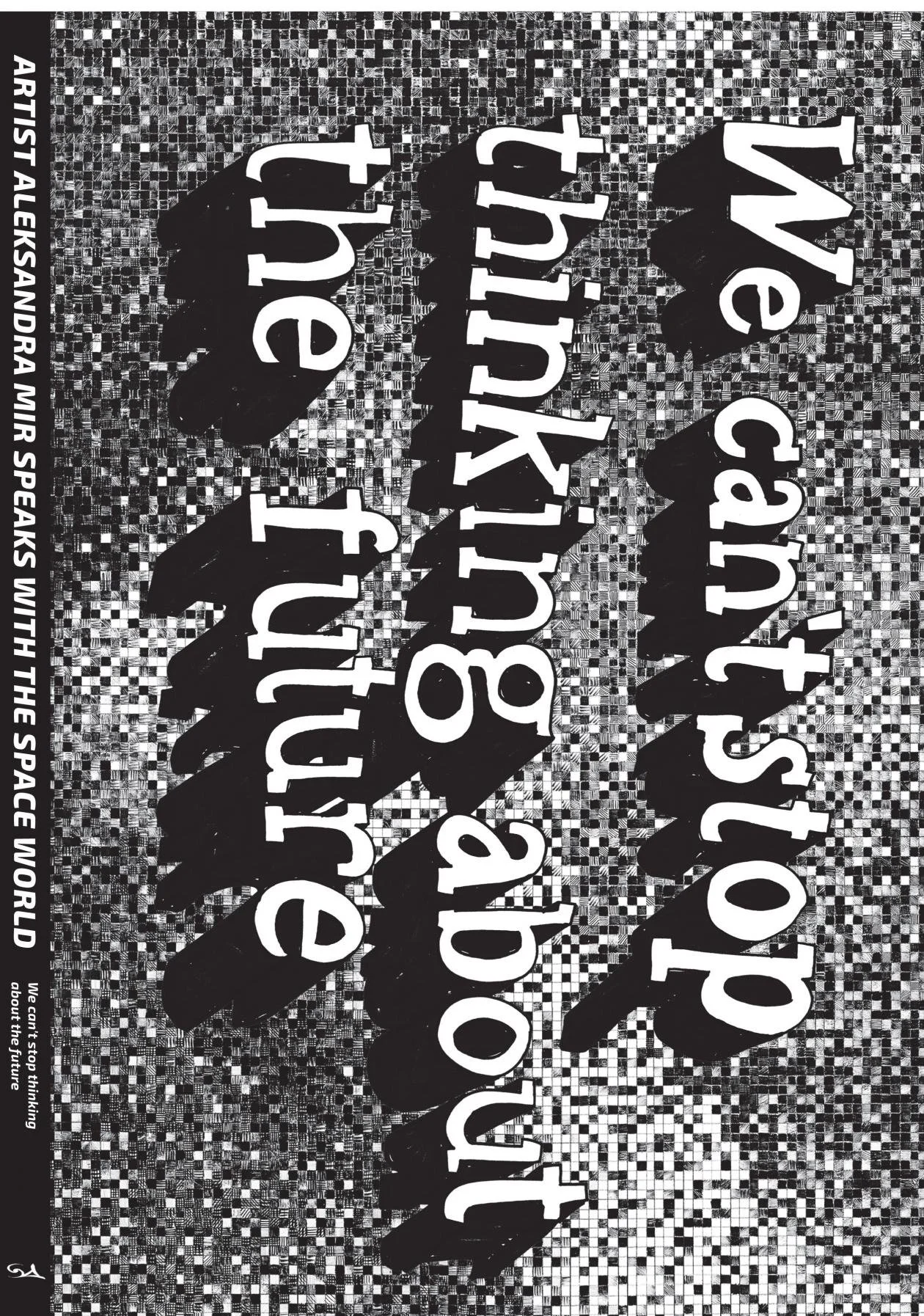
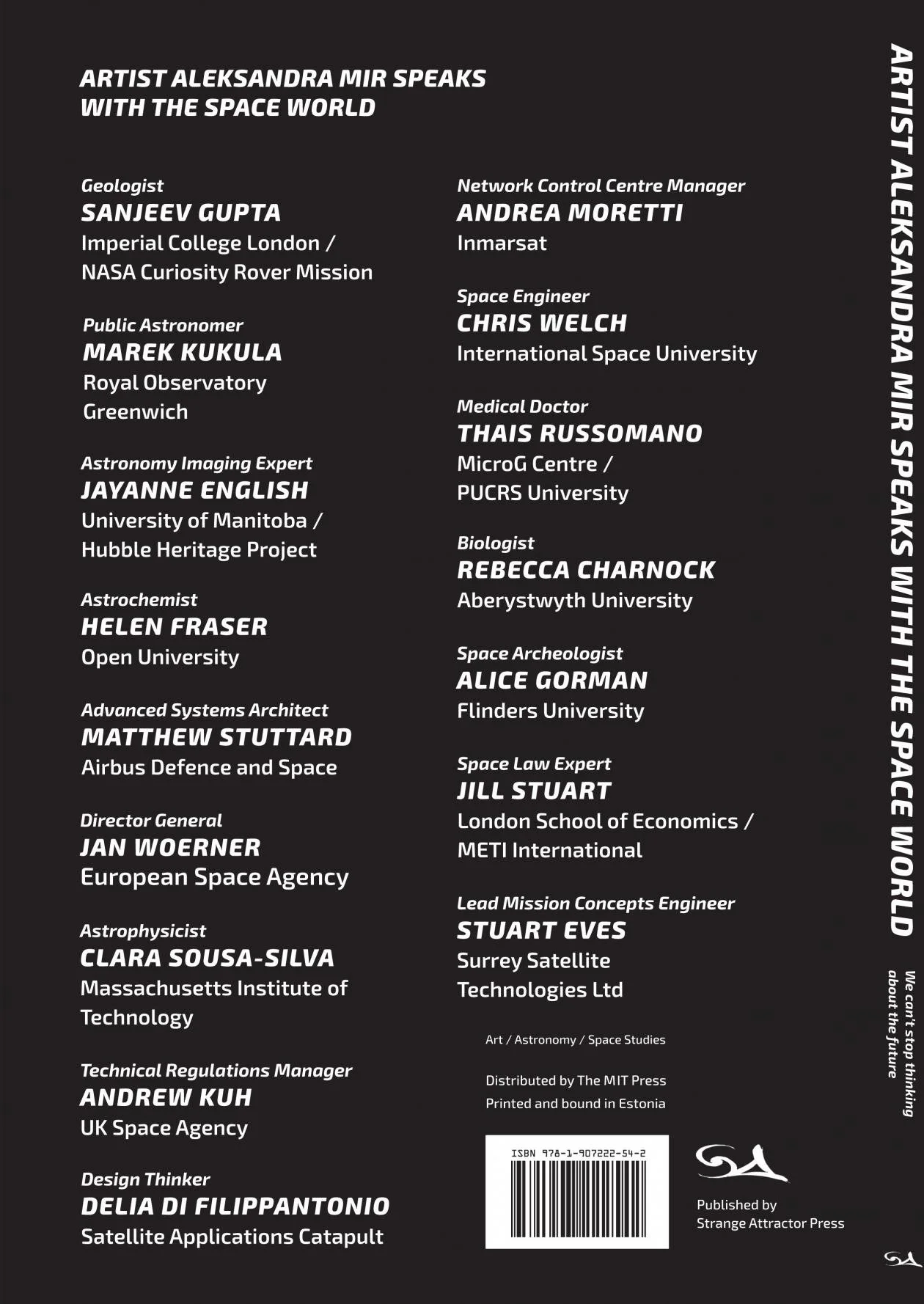
The resulting ‘Space Tapestry’ was exhibited at Tate Liverpool and Modern Art Oxford, along with the book We Can’t Stop Thinking About the Future – Artist Aleksandra Mir Speaks with the Space World, MIT Press, 2017
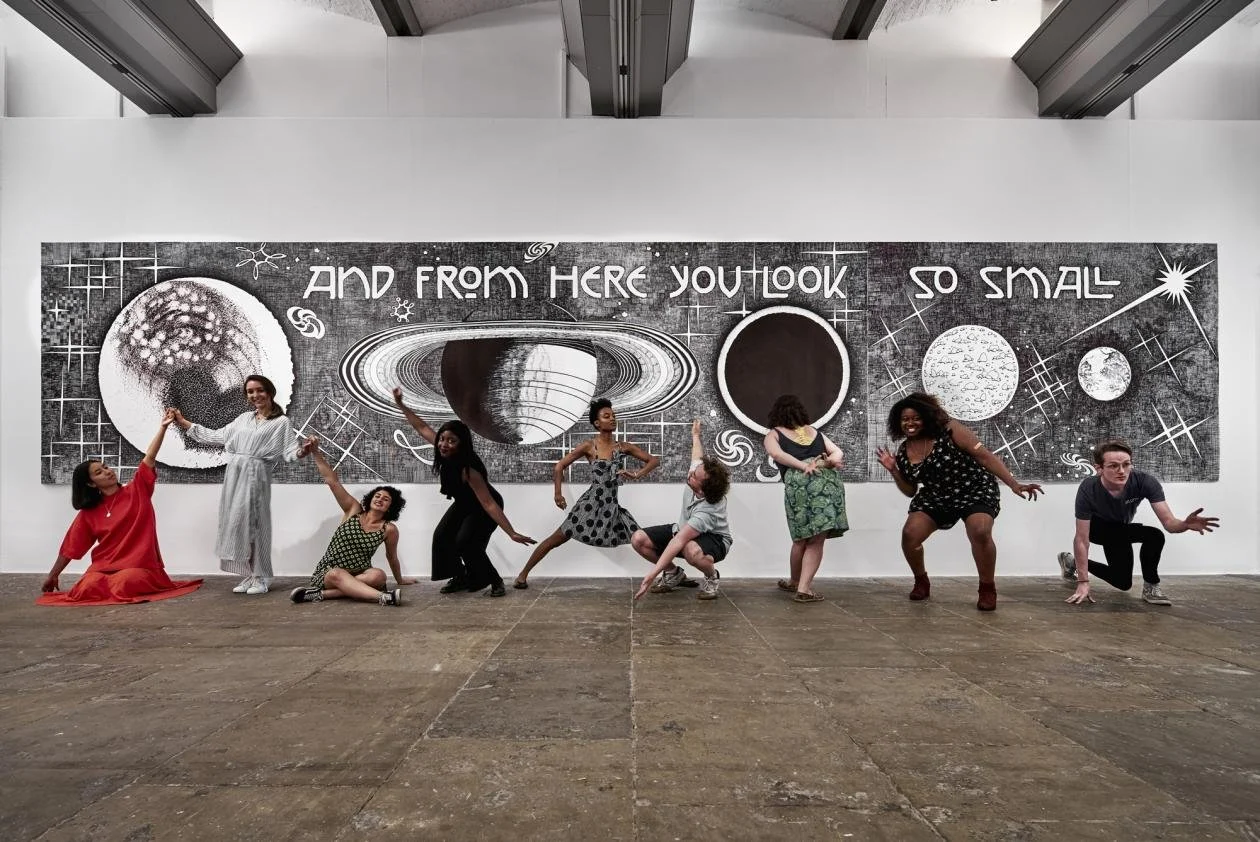
Aleksandra Mir, Space Tapestry, Tate Liverpool, 2017
Aleksandra Mir, Space Tapestry, Modern Art Oxford, 2017
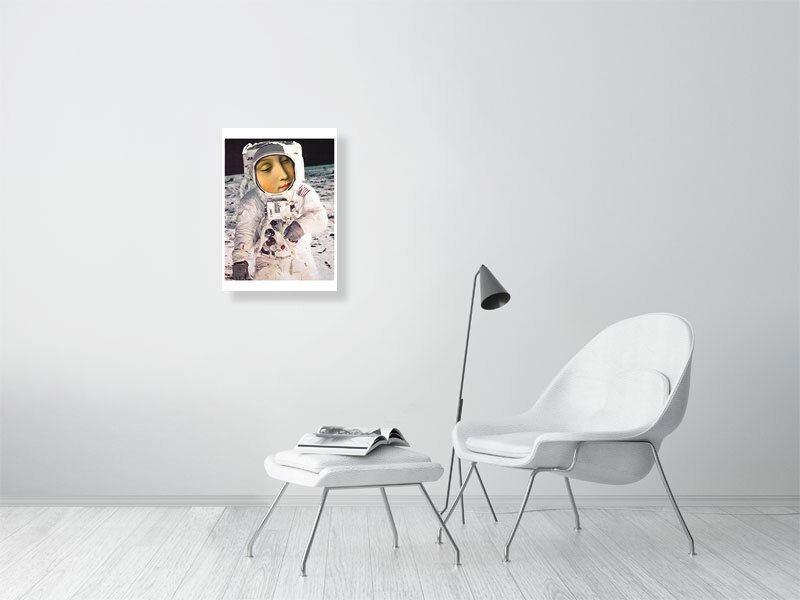
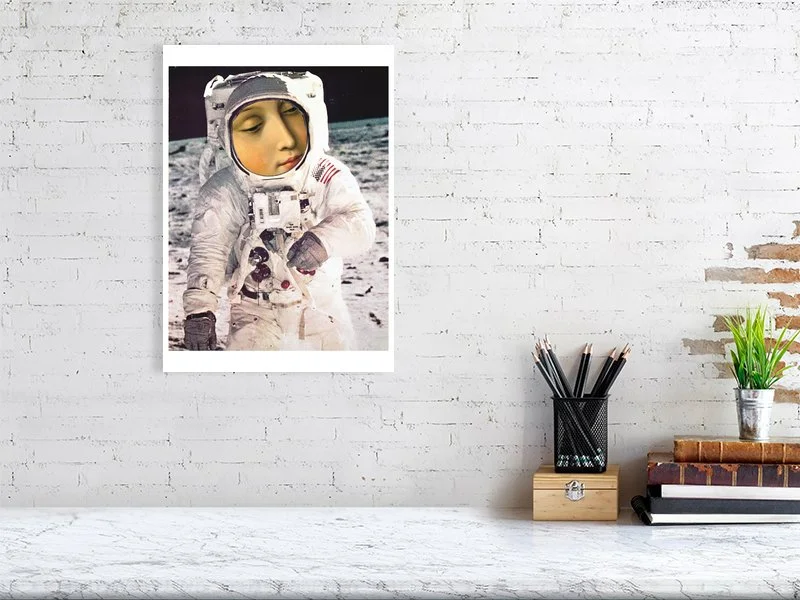

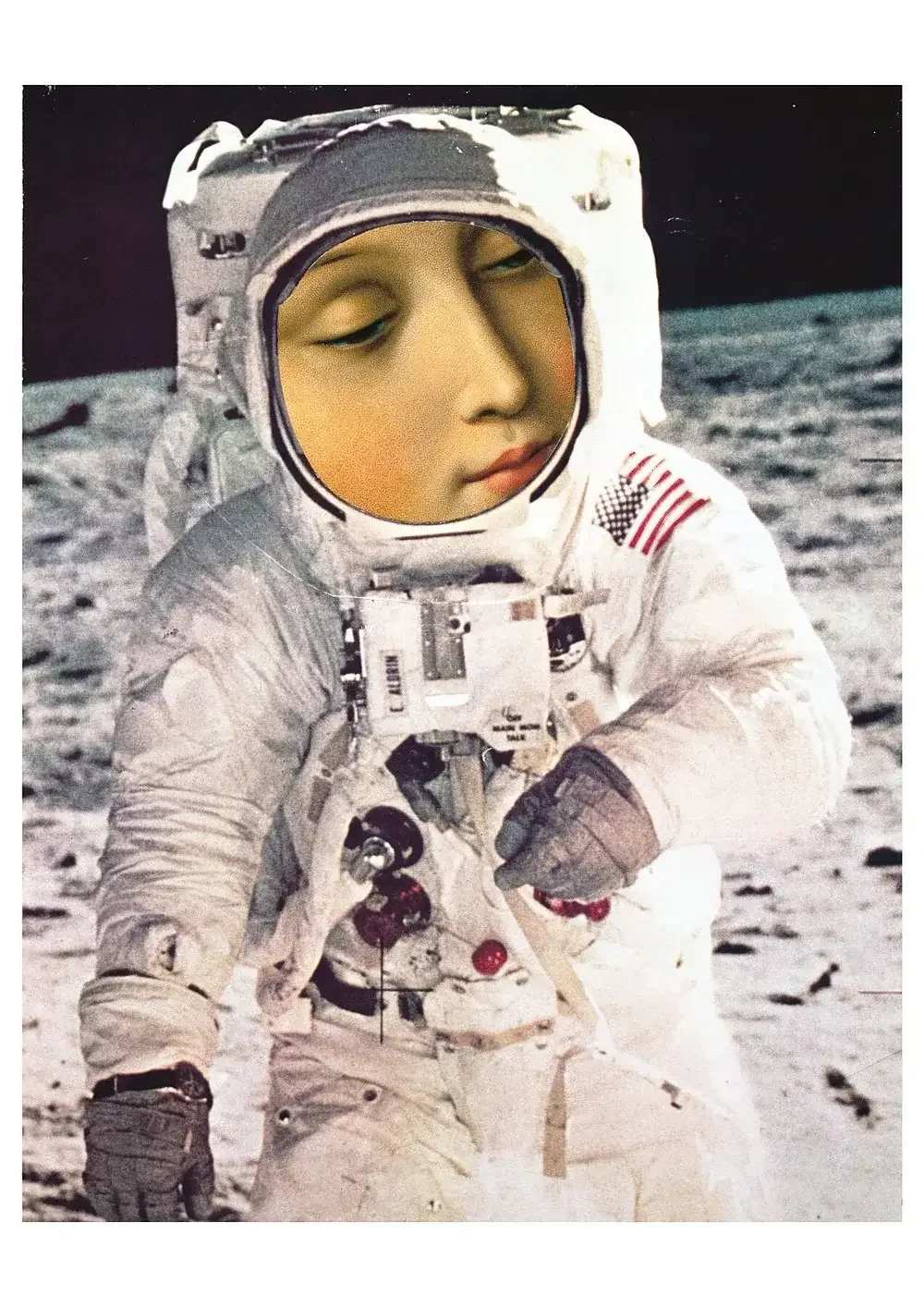
An astronaut with the face of a Saint has landed on the Moon. This is a Fine Art Print of an original hand-cut paper collage by Aleksandra Mir.
The new artwork combines source materials from antique religious and modern scientific imagery into a new physical and fantastical reality. The collage combines an iconic NASA Apollo-era photograph with a Renaissance-era painting. Both the Renaissance church and NASA's space programme represent the greatest collective ambitions of their respective ages — one reaching toward God, the other toward the cosmos. Both demanded total devotion, sacrifice, and the marshalling of the finest human minds and resources of their time. Both produced objects of transcendent beauty in the process. The saint and the astronaut are mirror images across five centuries.
By placing one inside the other, the work asks: have we simply replaced one form of devotion with another? Or were they always the same impulse — the human need to reach beyond the known world toward something greater than ourselves? The contrast between the technical, industrial spacesuit and the serene, almost meditative expression of the painterly saint’s face is quietly profound. It suggests innocence, wonder, or perhaps the inner life behind great human endeavour.
Giclée pigment ink on Hahnemühle German Etching paper achieves a superior quality print with exceptional detail, vibrant color accuracy, and long-term durability. The fresh print reproduces an aged authentic patina and the imprint of the artist’s hand-crafted marks.
· Archival Museum Quality ·
· Limited Edition. 100 ·
· Certificate of Authenticity ·
· Hand & Human-Made without AI ·
· 100% Carbon Neutral ·
· Free Worldwide Shipping ·