
Interview with Francesco Pantaleone
The contemporary art gallerist shares the story of his family’s 100+ year old religious good store
[Italiano]
When the Pantaleone religious goods store in Palermo closed its doors for good in 2023, it had been run for over 100 years by four generations of the family. Last in line, the contemporary art gallerist Francesco Pantaleone was born into a world of Catholic liturgy where faith, material culture, spirituality and commercialism naturally intermingled.
We first met when I moved to Palermo in 2005. Francesco then worked in the store serving the Catholic faithful by day, hosting contemporary art exhibitions and wild parties in his crumbling palazzo at night. At first, it seemed an unlikely contradiction but I soon learned that there was no contradiction too big for Palermo to hold.
At the time, I categorized the entire shop inventory as popular cultural artfacts, even though not everything was mass-produced – the setting made it seem so. Thinking back, there were also many things made by hand that qualify as craft, even as fine art. I am thinking specifically about ‘pittura su vetro’ or reverse glass painting, masterfully painted, highlights first, backgrounds last. Or, the private viewing room on the second floor, which held the lavishly embroidered and color-coded chasubles, one for each time and ceremony, patiently explained by Francesco.
As an artist who benefited tremendously from the shop’s visual universe and Francesco’s generosity, I was deeply touched by the closing of an institution that ‘had been there forever.’ Today, few people who visit Palermo would recognize the shop’s legendary presence and its lasting impact on the gallerist. This interview is a homage to their story.

Fratelli Alinari, Quattro Canti (Piazza Vigliena), Palermo, c. 1910. Public domain
1. What can you tell us about the shop’s origins, your ancestors who ran it and your own formation inside of it?
The shop’s final month of operation was July 2023. That month, we completely cleared out the space: thousands of items accumulated over more than a century were removed from those rooms one by one, and in the end, the shutters came down for good. Today, in the same spot—one of Europe’s most famous Baroque intersections, Palermo’s Quattro Canti—a luxury deli stands in place of my family’s religious goods store. It’s a very Palermo-esque transformation: the sacred giving way to food.
The shop had been founded in 1905 by my great-grandfather Giuseppe Pantaleone, who had started with a small tailor shop specializing in the creation of ecclesiastical garments. Palermo was a deeply Catholic city, and the production of liturgical vestments was a highly sought-after craft. Over time, that small tailor shop transformed into a full-fledged religious goods store.
The business then passed to my grandfather, Francesco Pantaleone, a man very different from the founder. My grandfather was more of a scholar than a merchant: he loved books and took an interest in the Sicilian language and local culture. His time in charge also coincided with very difficult years—the war and the postwar period—and the shop remained essentially a small family business.
The real transformation came with the next generation, that of my father, Domenico Pantaleone. His business fortunes became intertwined with one of the most important events in the recent history of the Catholic Church: The Second Vatican Council, which concluded in 1965.
That council profoundly changed the liturgy. The Mass, which for centuries had been celebrated in Latin, began to be celebrated in local languages. But above all, the arrangement of the altar changed: the priest no longer celebrated with his back to the faithful, but facing the congregation. This also entailed a radical change in liturgical vestments.
The fiddle-back chasuble, typical of the pre-conciliar liturgy, was gradually replaced by the full chasuble, a looser-fitting garment, almost like a poncho, with the decorated part on the front. In the traditional fiddle-back chasuble, on the other hand, the most ornate part was on the back, because the celebrant spent most of the service facing the altar.
This liturgical change had very concrete consequences: thousands of churches in Sicily had to renovate altars, vestments, and liturgical objects. It was necessary to purchase or replace a huge quantity of sacred objects. For my father, it was an extraordinary opportunity.
Thanks to that historical juncture, he managed to expand the business enormously, moving it to a space of over 500 square meters spread over three floors, right at the Quattro Canti. For many years, the shop was probably the largest religious goods store in Italy: a place where you could find absolutely everything, from small plastic rosaries for tourists to large liturgical vestments commissioned by dioceses.
I grew up in that world. As a child, I used to open the wooden crates containing goods arriving from workshops and suppliers. I worked in the store for many years, until 2012, when I decided to move my contemporary art gallery next door to the store.
At that point, management passed into my sister’s hands. Unfortunately, over time it became clear that she lacked both the discipline for day-to-day work and the entrepreneurial intuition needed to run such a complex business. Gradually, the store lost its energy, direction, and commercial viability, until my father found himself forced to make the most painful decision: to permanently close the business he had built over the course of his life.
Looking back today, I see a family history spanning four very different generations:
The artisan founder, Giuseppe;
The scholarly grandfather, Francesco;
My father Domenico, who transformed the shop into a major business;
And finally, my generation, the last to have experienced that world from the inside.
When the shop closed in 2023, a history spanning more than a century also came to an end—a history deeply intertwined with the religious, social, and everyday life of the city of Palermo.
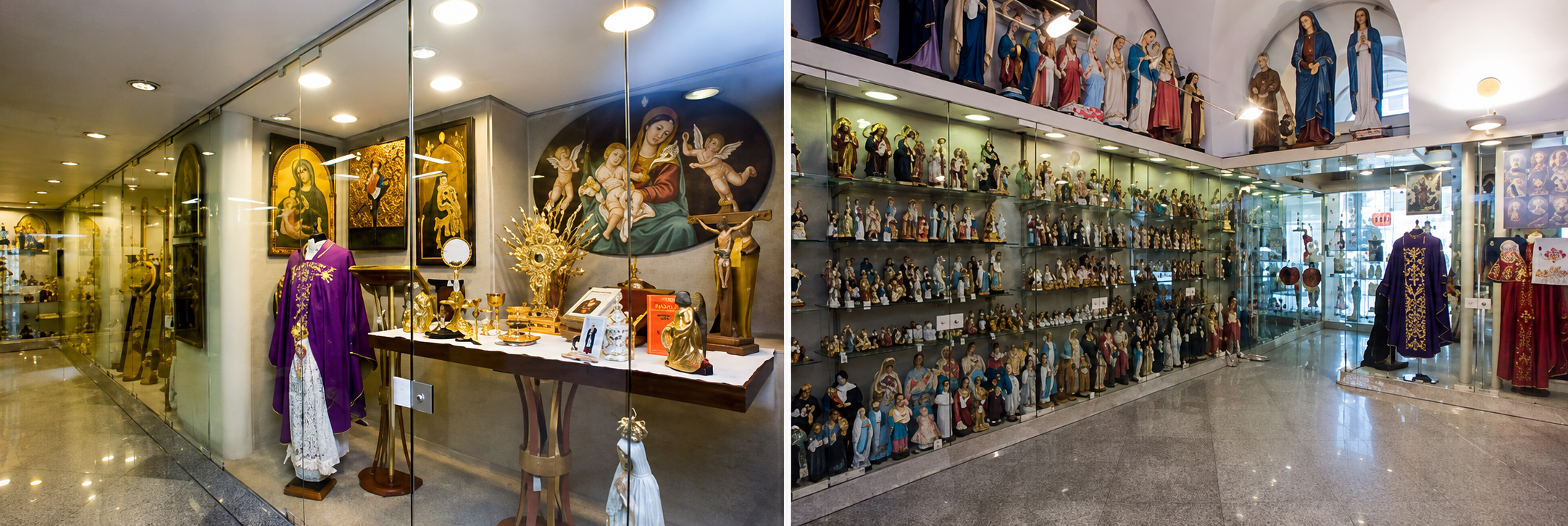
Pantaleone, shop interior, ca. 2020
2. The store’s inventory included everything from one-euro plastic rosaries and candles to exclusive wax paintings, metal candlesticks, elaborate vestments, and large wooden crucifixes and stone decorations, catering to everyone from casual tourists to the Church. How did this inventory come to be? What drove the demand? How was it organized, “curated,” and displayed inside the shop?
If the shop’s history tells the story of a family’s evolution over more than a century, its inventory, on the other hand, tells the material history of the Catholic religion.
From the very beginning, the business had a very particular nature: that of continuous expansion. The founder, my great-grandfather Giuseppe Pantaleone, had started with a liturgical tailor shop, making mainly vestments for priests. But over the course of the 20th century, the business gradually expanded.
As the years went by, and with the opening of a second location—a small Art Nouveau-style shop on Via Roma—the idea arose to offer an increasingly comprehensive service. The goal was simple: to meet all the needs of the Catholic community, from the simplest popular devotional items to the liturgical objects used in churches.
This development naturally followed the evolution of society and the market. Over the course of the 20th century, Italy underwent profound changes: materials, production technologies, and people’s purchasing power all shifted. Alongside traditional items made of wood, bronze, or embroidered fabrics, industrially produced items began to appear—made of plastic, resins, or metal alloys—which were much more affordable and accessible.
My father often told me that, in the beginning, the store was extremely simple. In the late 1940s, right after the war, money was very scarce. My grandfather had built some of the store’s furniture using the wooden crates in which the merchandise arrived: he took them apart and turned them into display cases. Today it might seem like an aesthetic choice or a form of upcycled design, but back then it was simply a necessity dictated by postwar poverty.
Over time, the shop became an extraordinarily complex place, almost a small three-dimensional encyclopedia of Catholicism. There were many variations of every item, because the Catholic religion exists simultaneously on very different levels: the grand liturgy of the churches and the private devotion of individuals.
The crucifix, for example—probably the best-selling item—could be made of cheap plastic, bronze, or carved wood. It could be just a few centimeters tall, to be worn around the neck or kept on a nightstand, or it could reach monumental dimensions, even over two meters, intended for church altars.
But demand was not static: it was always shaped by a balance between tradition and change. Over the years, for example, new saints proclaimed by the popes appeared, and this immediately generated new demand.
The most obvious example was Padre Pio, probably the saint who brought the shop its best business. His image was sold in all sizes: from small figurines just a few centimeters tall to large fiberglass statues imitating bronze, which were placed at crossroads, in squares, or in front of churches.
Padre Pio was a charismatic and controversial figure. For many years, he was not fully accepted by church authorities and was even forbidden from celebrating Mass in public. He was a friar marked by the stigmata, surrounded by almost miraculous tales, and it was precisely this ambiguous aura that made him even more powerful in the popular imagination. As often happens with figures who are in some way opposed or marginalized by institutions, the people’s devotion to him grew instead in an almost feverish manner.
In no time at all, countless images and statues of Padre Pio appeared on the market, and my father always tried to collect them all: from small figurines just a few centimeters tall to large, monumental statues.
At the height of its expansion, the store spanned three floors.
The ground floor was dedicated to the most common and accessible items: statues, crucifixes, rosaries, candles, but also more significant liturgical objects such as chalices, tabernacles, and reliquaries. The idea was to have at least one example of every type of item the store could supply.
The second floor, on the other hand, was almost entirely dedicated to liturgical vestments and fabrics. Here, one found mainly chasubles, displayed in many styles and in all liturgical colors.
As you know, there are four main liturgical colors: white, purple, green, and red. Added to these is gold, which can be used on almost all major solemnities. There is also blue, which is not actually an official liturgical color but is often used in Marian celebrations. Finally, there were some very rare pink chasubles, which are used only twice a year: on the third Sunday of Advent and the fourth Sunday of Lent.
As for the shop’s upkeep and display, a key figure in its history was Miss Maria. She was a woman who worked in the shop practically her entire life. She was hired at seventeen and stayed with us until she retired, well past sixty. For my father, she was a tremendous blessing. Over time, she became almost like family. She saw me born and loved me like a son. She often scolded me, and as a child it seemed strange to me: I thought she was simply an employee. It was only much later that I realized she was someone who cared deeply about the store.
She was the one who took care of the storefront displays. She changed them according to the liturgical calendar, but also following a very pragmatic logic: she displayed the newest items we wanted to promote, but also those that had been sitting in the warehouse too long, so we could finally get them out. Without ever having studied marketing, she applied highly effective sales strategies in a completely natural way. And above all, she was a formidable saleswoman.
Looking back today on the shop’s history, Miss Maria is perhaps the person I remember with the most esteem and affection, along with Mrs. Valentina Puntil, who handled the administration and was my ally; for a time, she also managed the gallery. We both still keep in touch from time to time.
Giclée pigment ink on Hahnemühle German Etching paper achieves a superior quality print with exceptional detail, vibrant color accuracy, and long-term durability. The fresh print reproduces an aged authentic patina and the imprint of the artist’s hand-crafted marks.
· Archival Museum Quality ·
· Limited Edition. 100 ·
· Certificate of Authenticity ·
· Hand & Human-Made without AI ·
· 100% Carbon Neutral ·
· Free Worldwide Shipping ·
3. When I arrived in Palermo and first met you in 2005, you were still working part-time behind the shop counter, displaying an encyclopedic knowledge of Catholic liturgy and its artifacts, and chatting with customers with great ease. At the same time, you had just launched your contemporary art gallery from your home, just a few steps away, in a dilapidated building in the historic center. How did you have the mental capacity to do both and move between these two worlds?
I was literally born inside the shop. I started working when I was still a child. I was already very physically developed—the tallest in my class—and for that reason, my father never hesitated to involve me in the work very early on.
I spent hours in the warehouse opening wooden crates, hanging objects, assembling large crucifixes, screwing things together, and organizing. It was completely natural: everyone in my family worked. So, I absorbed, almost without realizing it, an enormous amount of knowledge—from liturgy to the stories of the saints, to the materials and techniques used in sacred objects.
At a certain point, however, that world was no longer enough for me.
After my time in New York, where I had worked at Gagosian, I felt very clearly that I wanted something else. Contemporary art wasn’t just an interest—it was a necessity. I felt the need to build something that could change my city, something that could truly change my life.
So, in 2003, after settling in Piazza Garraffello, in the heart of the Vuccirìa—then still a raw, almost forgotten place—and after sensing the potential of those spaces, I opened the gallery, thanks in part to the support of two artists, Marco Cingolani and Alessandro Bazan.
From that moment on, a period of incredibly hard work began.
I worked at the shop, and then, during my lunch break and in the evenings, I devoted myself to the gallery. I set up exhibitions, organized the spaces, and together with my partner—who is now my husband—we built everything else: the website, the emails, the contacts. It was non-stop work, with no set hours.
Looking back today, I find it hard to understand how I managed to sustain all of that. It was an enormous effort.
But I believe the real answer runs deeper. That energy also stemmed from a sense of unease. Within my family, I always felt, in some way, like the odd one out, the one who didn’t quite fit in. And contemporary art became a space of freedom for me, a place where I could exist without having to conform.
Over time, I realized that it wasn’t simply a matter of juggling two jobs or two identities.
I was experiencing, without being fully aware of it, the transition from one symbolic system to another.
The shop represented a codified, regulated, institutional form of the sacred, made up of objects with a precise, established, and shared meaning. Contemporary art, on the other hand, opened up an opposite space: ambiguous, open, unstable, where meaning is not fixed once and for all, but is continually constructed.
I never experienced these two worlds as completely separate.
On the contrary, it was precisely the tension between these two poles—between tradition and experimentation, between faith and doubt, between ritual object and work of art—that generated the energy that allowed me to move forward.
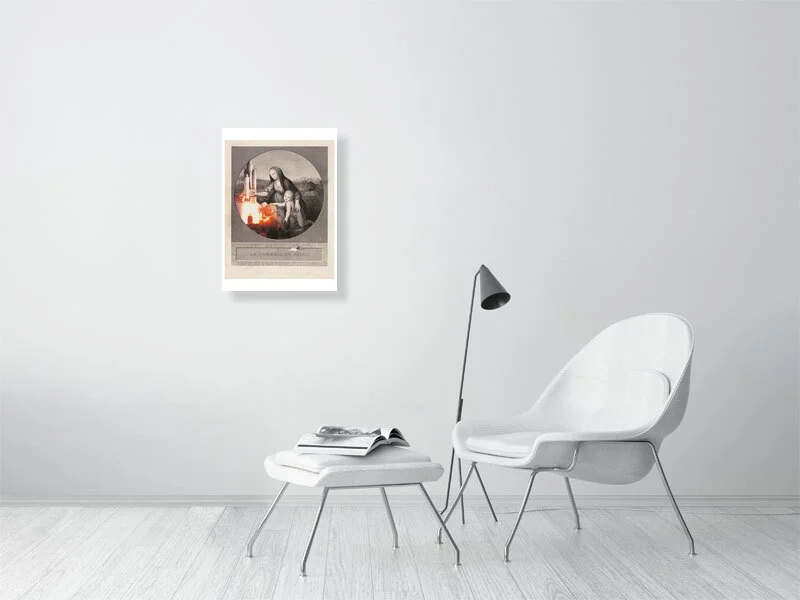
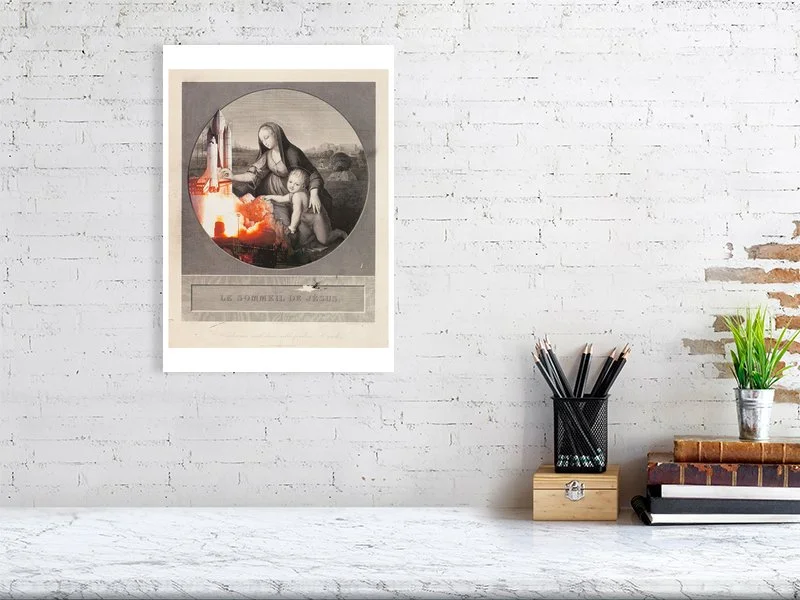
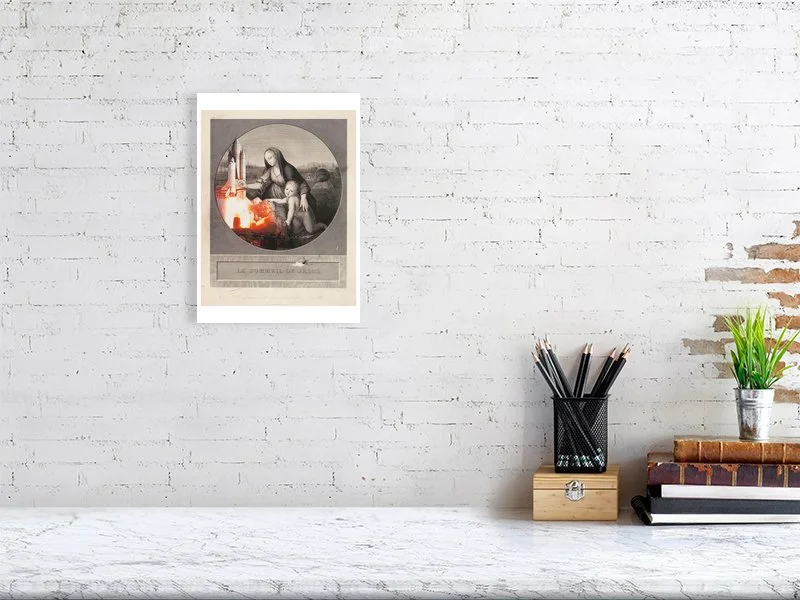
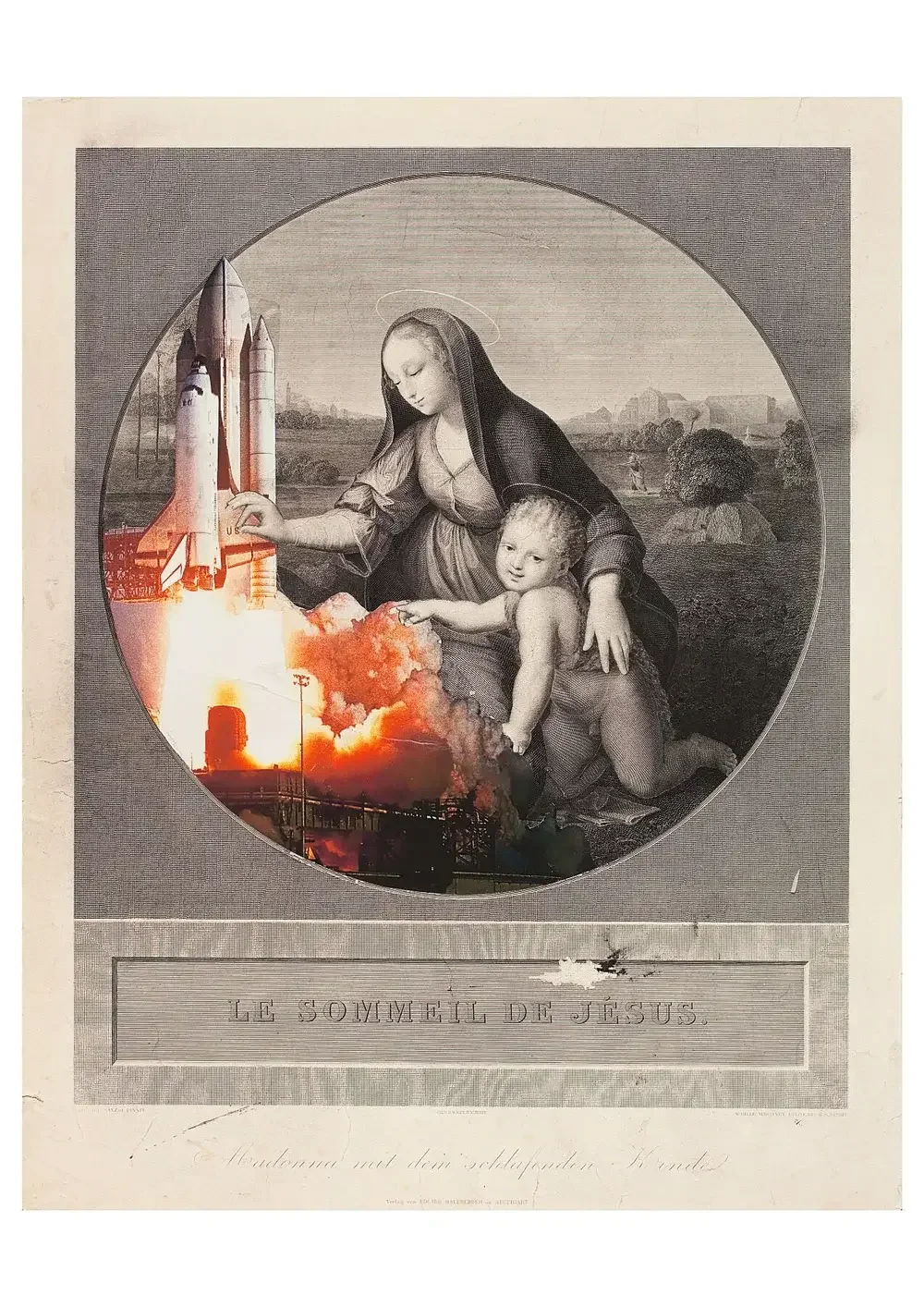
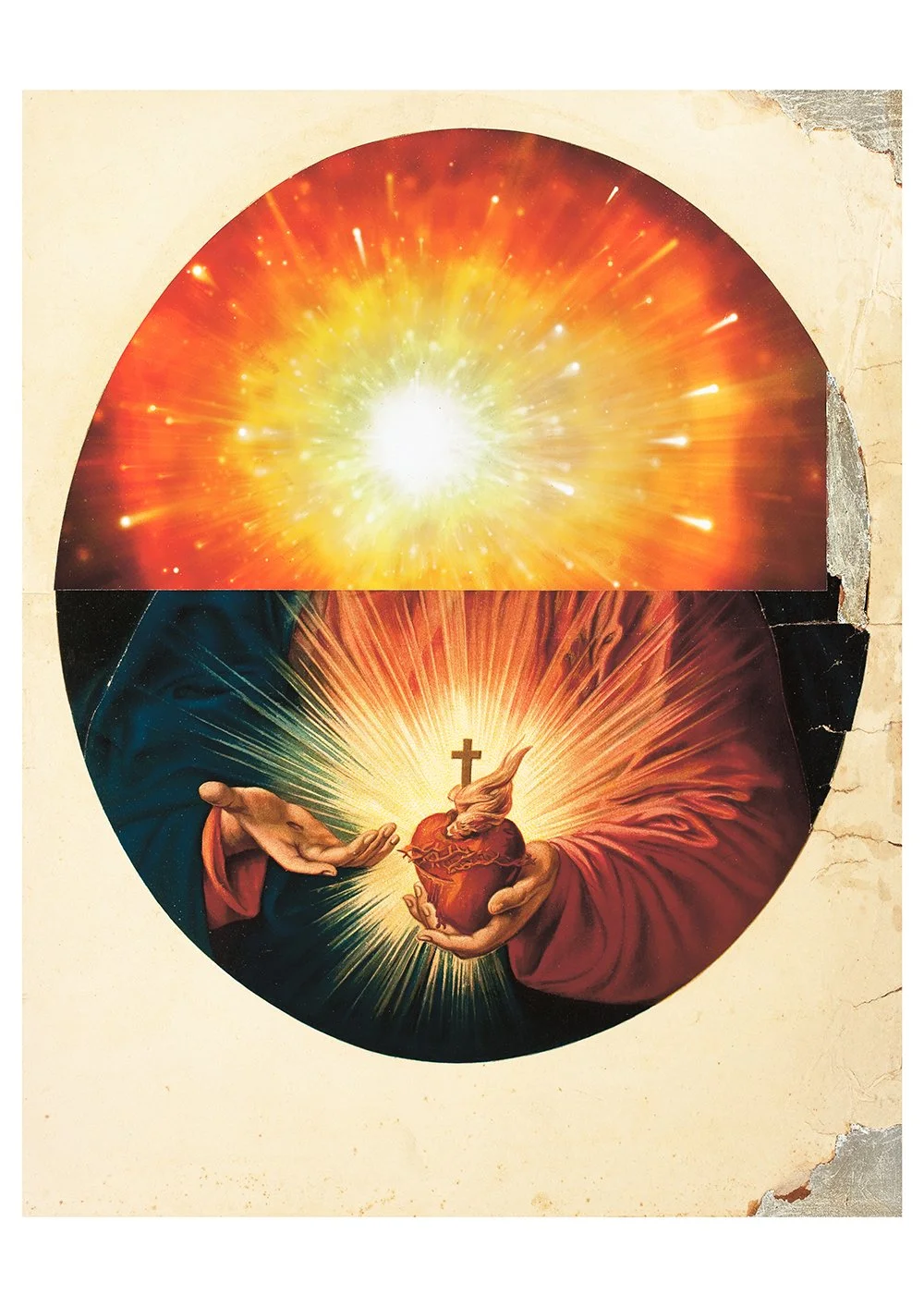
A Renaissance-style Madonna and her Child admire a Space Shuttle launch — the brilliant orange and red explosion of ignition filling the scene with light and fire. Remarkably, the Madonna's outstretched hand appears to be touching the shuttle, and the Christ child reaches toward the flames — as if blessing or directing the launch. This powerful Fine Art Print reproduces an original hand-cut antique paper collage by Aleksandra Mir.
The new artwork combines source materials from antique religious and modern scientific imagery into a new physical and fantastical reality. The sleeping child of the title becomes the awakening of human technological ambition. The serene, monochrome devotional world of the engraving is violently and beautifully interrupted by colour, fire and modernity. The Madonna appears not alarmed but composed — as though she has always known this moment was coming.
Giclée pigment ink on Hahnemühle German Etching paper achieves a superior quality print with exceptional detail, vibrant color accuracy, and long-term durability. The fresh print reproduces an aged authentic patina and the imprint of the artist’s hand-crafted marks.
· Archival Museum Quality ·
· Limited Edition. 100 ·
· Certificate of Authenticity ·
· Hand & Human-Made without AI ·
· 100% Carbon Neutral ·
· Free Worldwide Shipping ·
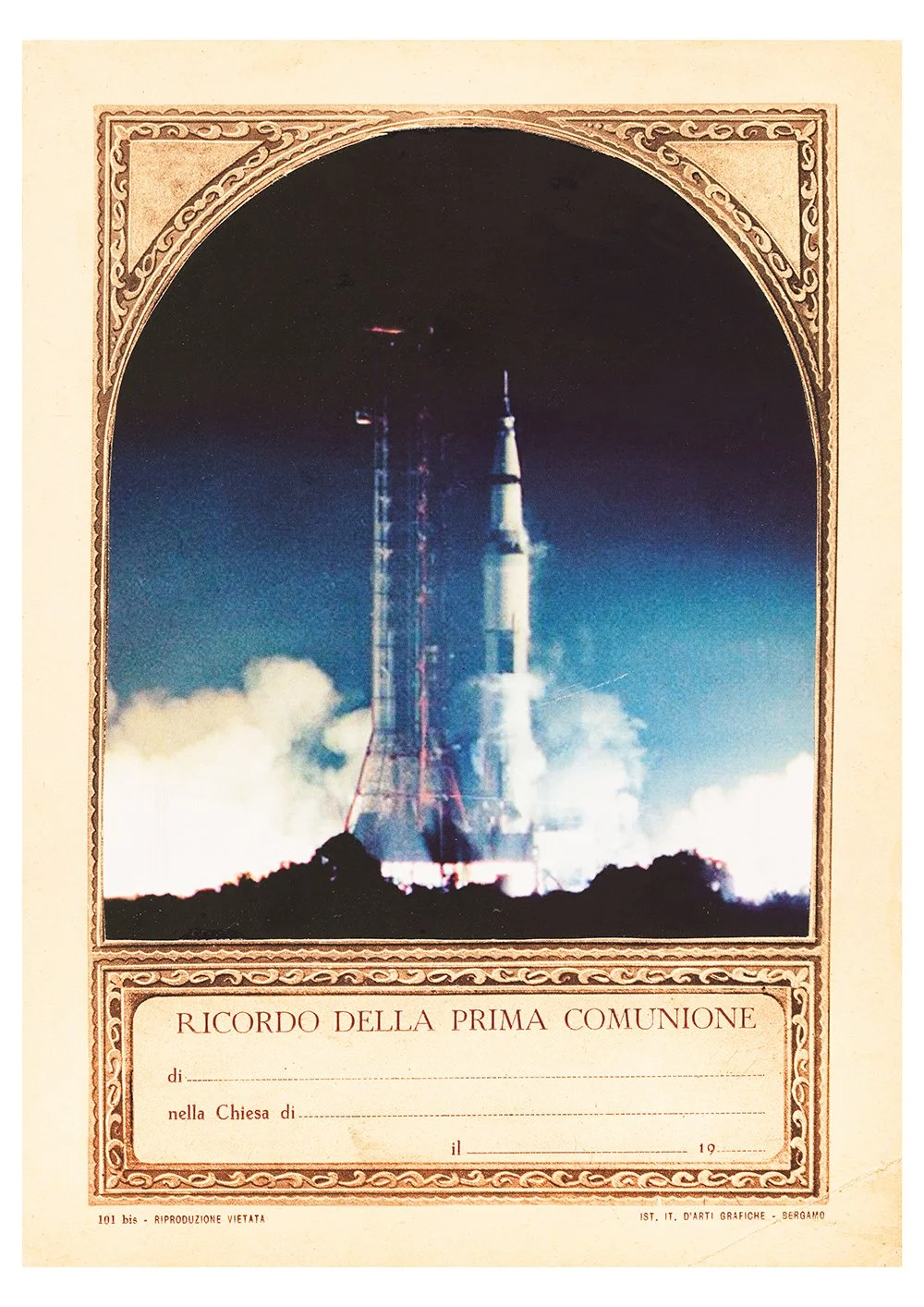
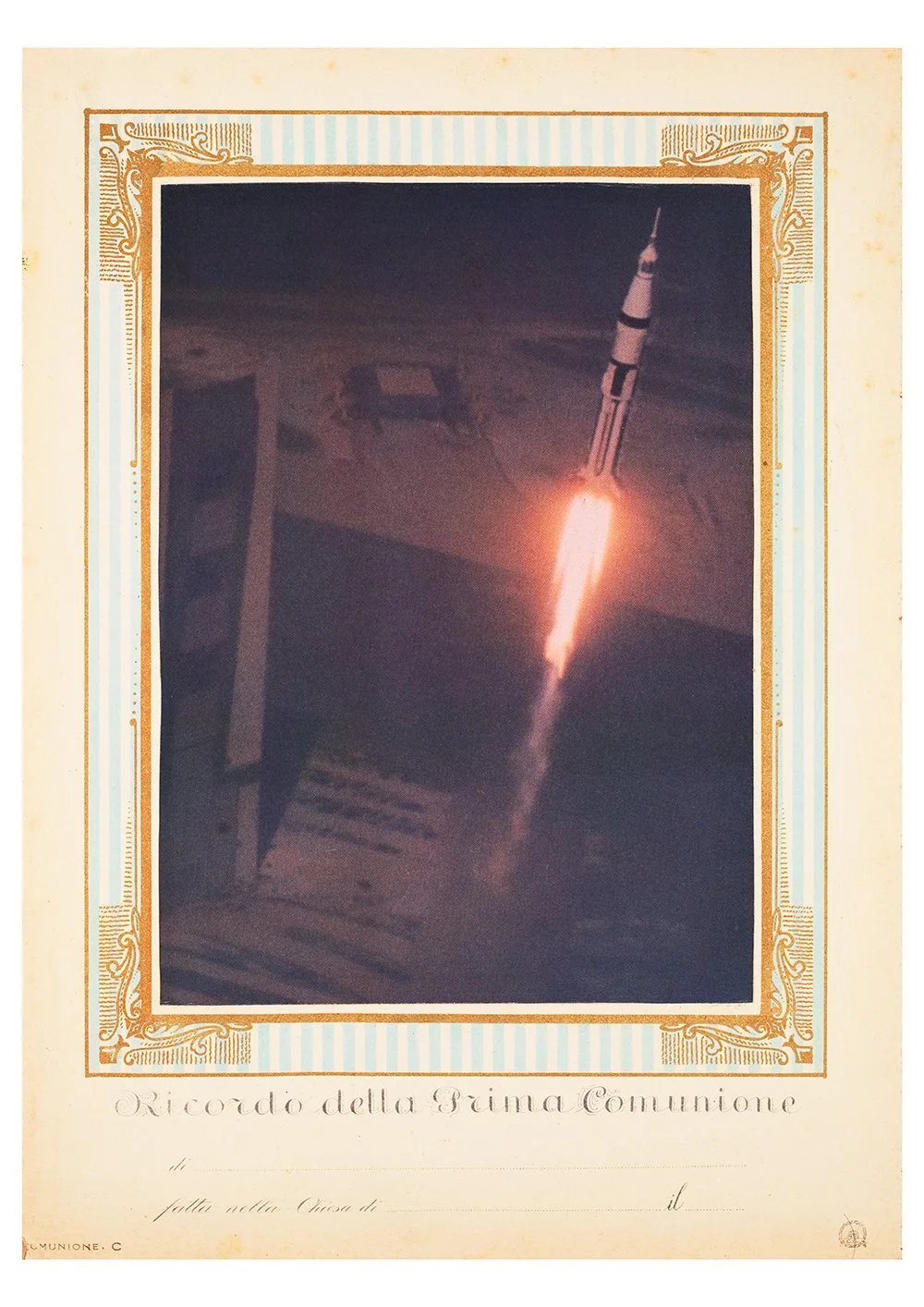
4. One day, around 2007-8, when you came to visit my studio and saw me working on a collage, you took me to the store’s warehouse and gave me a box of old First Communion certificates—too damaged to be sold, but a goldmine for a collage artist. What can you tell us about these certificates? How old are they? How were they traditionally sold and used?
It’s a very interesting memory, and I must say I had never really thought deeply about the fact that the first things I gave you were actually certificates.
In the Catholic tradition, there has always been a need to make visible something that, by its very nature, is invisible. The sacraments—baptism, communion, confirmation—are spiritual, immaterial acts. Yet the Church has always produced documents attesting to their occurrence: printed certificates, often decorated, bearing a signature and a stamp.
In this way, a concrete, tangible trace is created of something that is not.
It is a form of translation: from the spiritual to the material.
The certificates I gave you were mostly from the first half of the 20th century, and some were even older. We sold them to parishes, and they were handed out after the sacrament was celebrated; they were filled out with the person’s name, the date, the priest’s signature, and the church’s stamp. They were often very visually appealing: gilded decorations, sacred images, and elaborate typography.
Over time, those that became damaged or could no longer be sold ended up in storage. To my father, they were unsellable items; I sensed the potential they held in the hands of the right artist.
I also remember that, over the years, I gave you many other religious images: prints, devotional images, even holographic ones with very intense, almost three-dimensional colors. All that material belonged to a popular visual culture, one that was extremely rich and layered.
But the topic of the certificate strikes me as particularly interesting today because it draws a very direct parallel with my current work. Even in the world of contemporary art, there is a fundamental document: the certificate of authenticity. When a gallery sells a work, it issues a document bearing the artist’s signature and the gallery’s stamp.
That certificate serves to make visible something that, at its core, is itself invisible: the confidence that the work is authentic, that it was conceived by the artist, that it truly belongs to their practice.
Once again, it is a matter of transforming a belief into an object.
And in this sense, it strikes me to see how, in two seemingly very distant contexts—religion and contemporary art—the same need exists: to give material form to something that, without that gesture, would remain invisible.
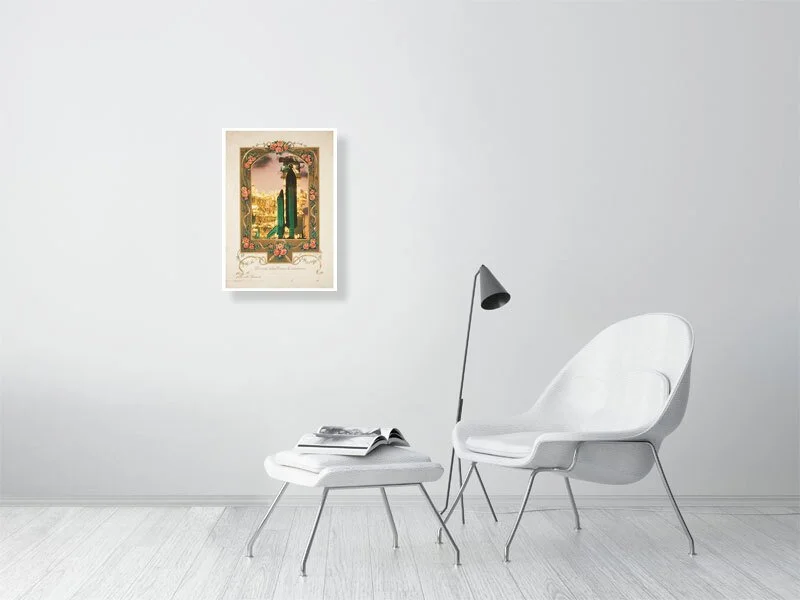
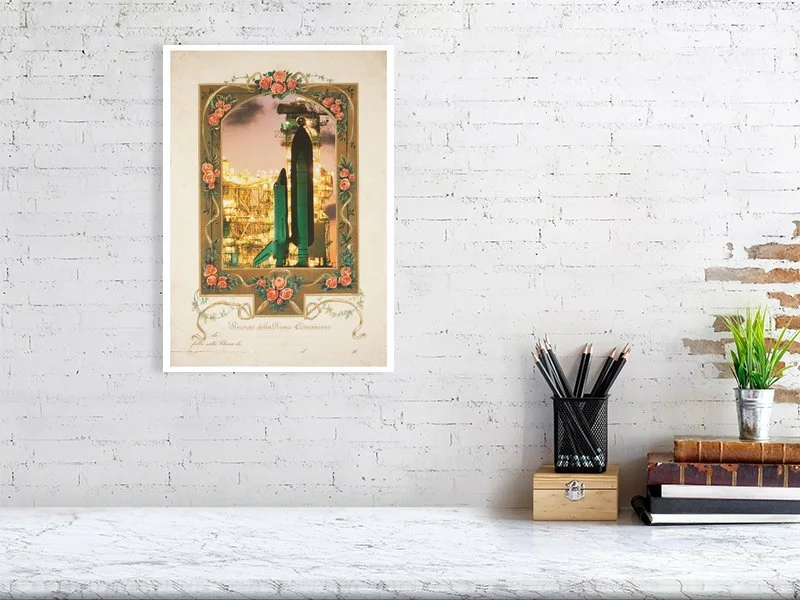
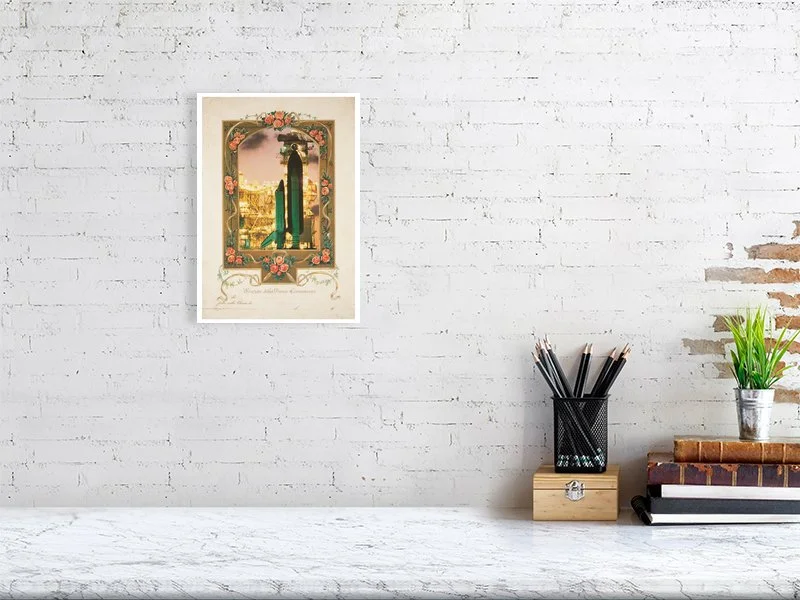
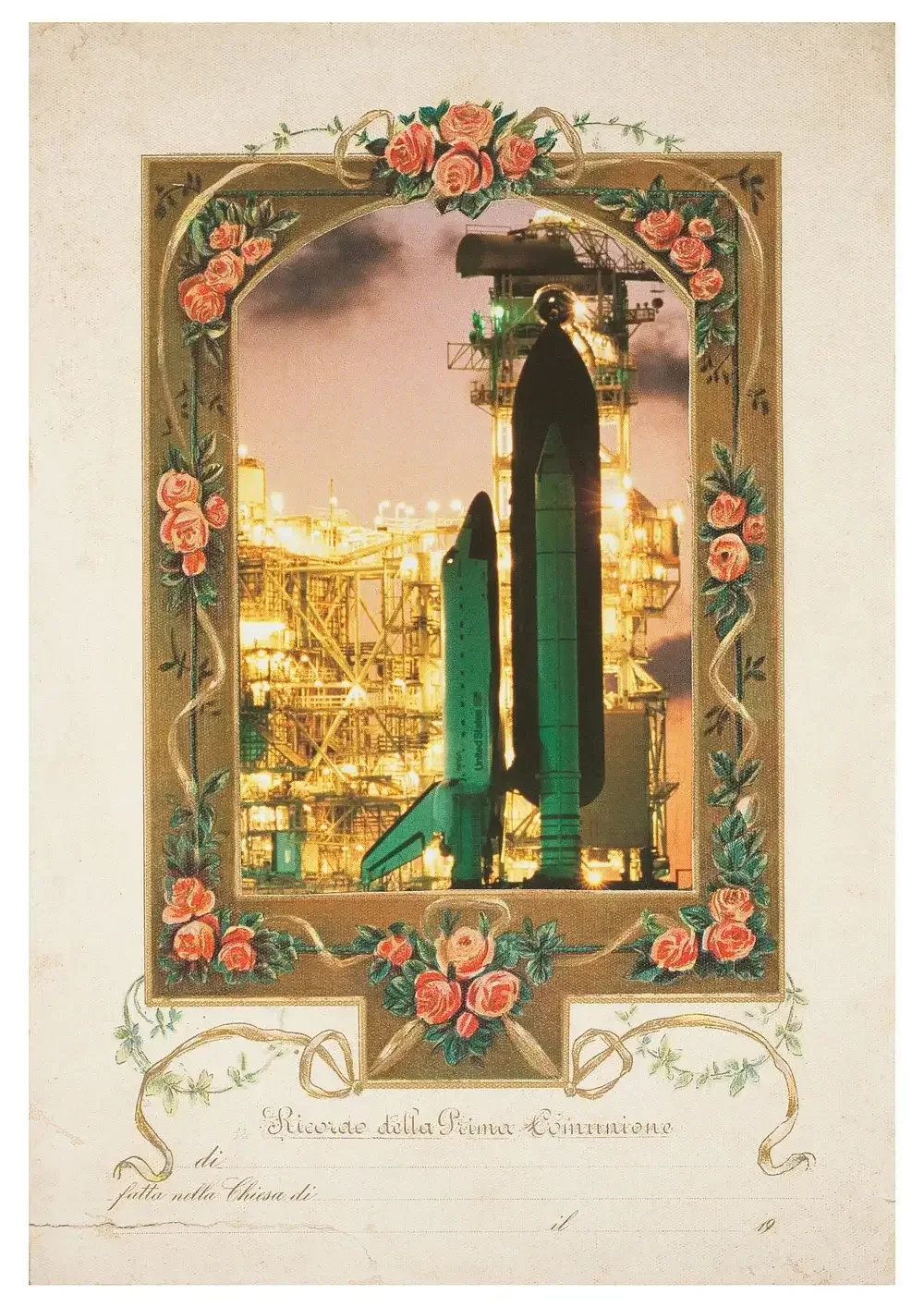
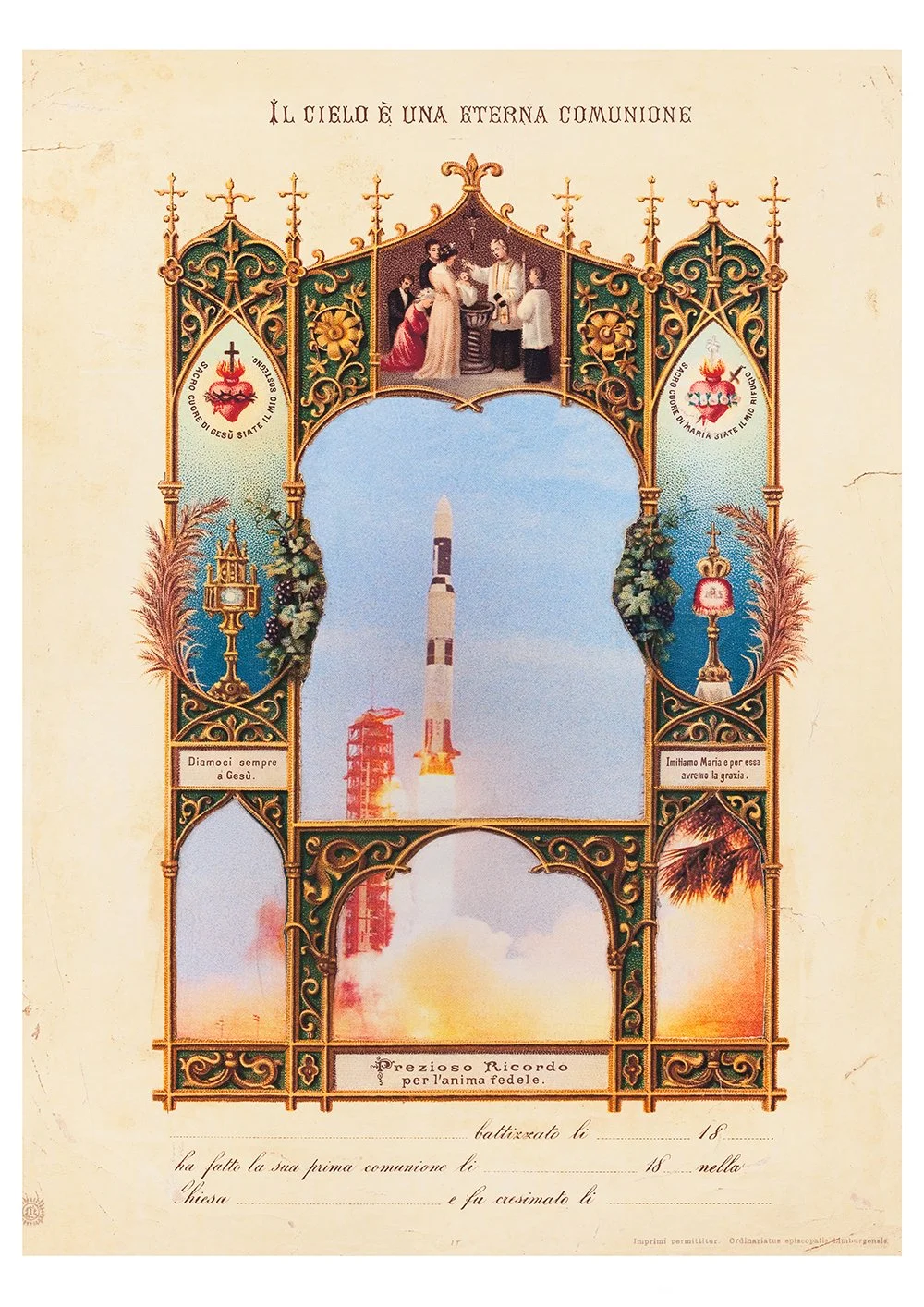
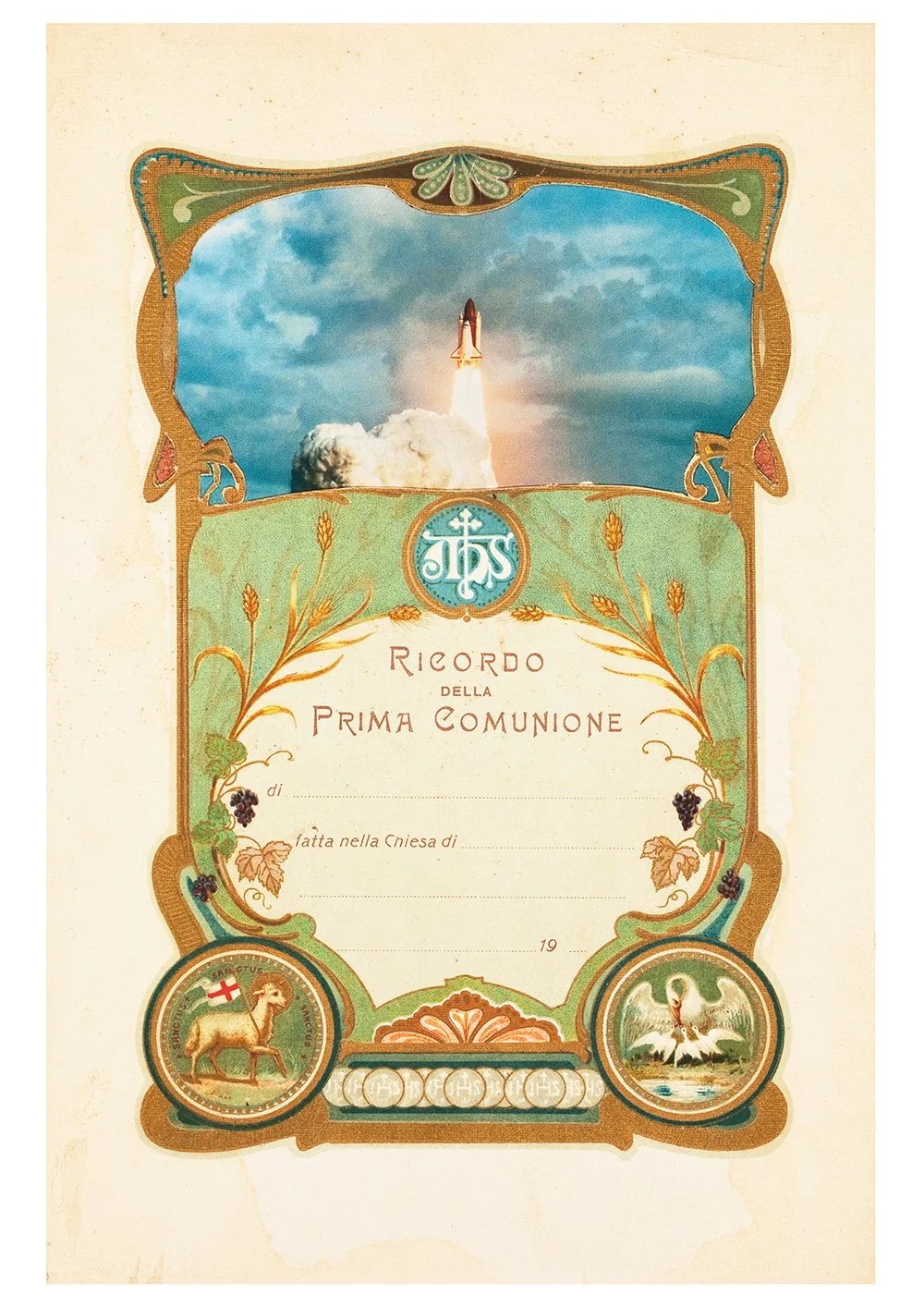
An Italian First Communion certificate, framed with a delicate border of pink roses, gold ribbons and green ivy, becomes the setting for a Space Shuttle on its launch pad — bathed in golden floodlights against a dusky sky. This wondrous Fine Art Print reproduces an original hand-cut paper collage by the artist Aleksandra Mir.
The new artwork combines source materials from antique religious and modern scientific imagery into a new physical and fantastical reality. It is at once a collision and a communion of concepts. A certificate marking a child's most sacred rite of passage in Catholic tradition now enshrines the impending Space Shuttle launch as its holy image. Humanity’s launch into the universe is celebrated as a coming of age milestone.
The blank lines waiting to be filled in are deeply poignant — this could be anyone's communion with the cosmos. The roses and gold filigree frame the rocket with the same tenderness reserved for the divine. It's playful, warm and genuinely sweet.
Giclée pigment ink on Hahnemühle German Etching paper results in a superior quality print with exceptional detail, vibrant color accuracy, and long-term durability. The fresh print reproduces an aged authentic patina and the imprint of the artist’s hand-crafted marks.
· Archival Museum Quality ·
· Limited Edition. 100 ·
· Certificate of Authenticity ·
· Hand & Human-Made without AI ·
· 100% Carbon Neutral ·
· Free Worldwide Shipping ·
5. For many people in the art world who have visited Palermo in recent decades, you are a sort of unofficial mayor—someone who welcomes, hosts, and introduces artists to your city. Many artists who visit or move here also end up drawing inspiration from the Church in various ways. Could you share some of these projects and works?
That’s a very interesting observation, and also very flattering, so thank you. The idea of being, in some way, a point of reference in Palermo makes me feel like I’ve done a good job.
A job built above all on relationships, enthusiasm, and energy, aimed at those arriving in an extraordinary city that isn’t always easy to understand. Palermo is very charming, but it can also be intimidating; above all, it isn’t a city where contemporary art is immediately accessible or visible.
Over time, I realized that I had become, almost naturally, a sort of ambassador for the city through the language of art.
This idea reminds me of my grandfather Francesco, who was an Esperanto scholar. Esperanto was a utopia: a universal language that could emerge from the convergence of all languages. But it was also a very concrete international network. There was a guide listing contacts in every city, and when an Esperantist traveled, they could find a local contact, be welcomed, guided, and introduced to the city—all in that common language.
In a way, I’ve experienced something similar. Except that the shared language wasn’t Esperanto, but contemporary art.
I was fortunate enough to welcome extraordinary people to Palermo. I had already met some of them during my years in New York, when I worked at Gagosian, such as David Hockney or Jenny Saville, who was much less well-known back then. Jenny, in particular, is one of the people I’ve seen most deeply drawn to the theme of the sacred. And this is no coincidence.
Palermo is a city where the sacred is not merely a religious matter, but a continuous, living, and symbolic presence. It is in the bodies, in the rituals, in the images, in the processions, in the churches layered with history. It is a dimension that, even when not sought out, inevitably emerges.
I think many artists, especially the more sensitive ones, are struck precisely by this symbolic intensity. Not necessarily in an explicit or overt way, but as a force that runs through their work.
A very clear and recent example is the two altarpieces created by Adrian Ghenie in the church of Santa Maria della Mazza, on Via Maqueda. In that case, the dialogue between contemporary art and sacred space is direct, almost head-on.
But even when it doesn’t translate into such explicit interventions, Palermo leaves its mark. It’s as if the city, with its religious and cultural layers, continues to work beneath the surface in the artists’ imaginations.
I believe, however, that there is also another aspect of my personality that has contributed to creating this kind of relationship: a certain inclination toward joy, curiosity, and sharing the opportunities that Palermo offers. I have always enjoyed bringing very different people together, creating unlikely encounters, and introducing not only the art but also the complex humanity of the city.
That’s why I often hosted dinners and gatherings with figures from Palermo’s social scene—collectors, aristocrats, artists, journalists, or utterly eccentric individuals. But at the same time, I also thoroughly enjoyed taking international guests to the city’s most authentic and contradictory spots. Sometimes that meant accompanying extremely elegant and sophisticated people to Palermo’s only gay nightclub—a place that might have been a bit tacky, but incredibly fun.
I believe that’s how Palermo works: it’s a city where the sublime and the decadent coexist constantly, often on the very same evening. And perhaps part of the charm that many artists perceive stems precisely from this unresolved tension.
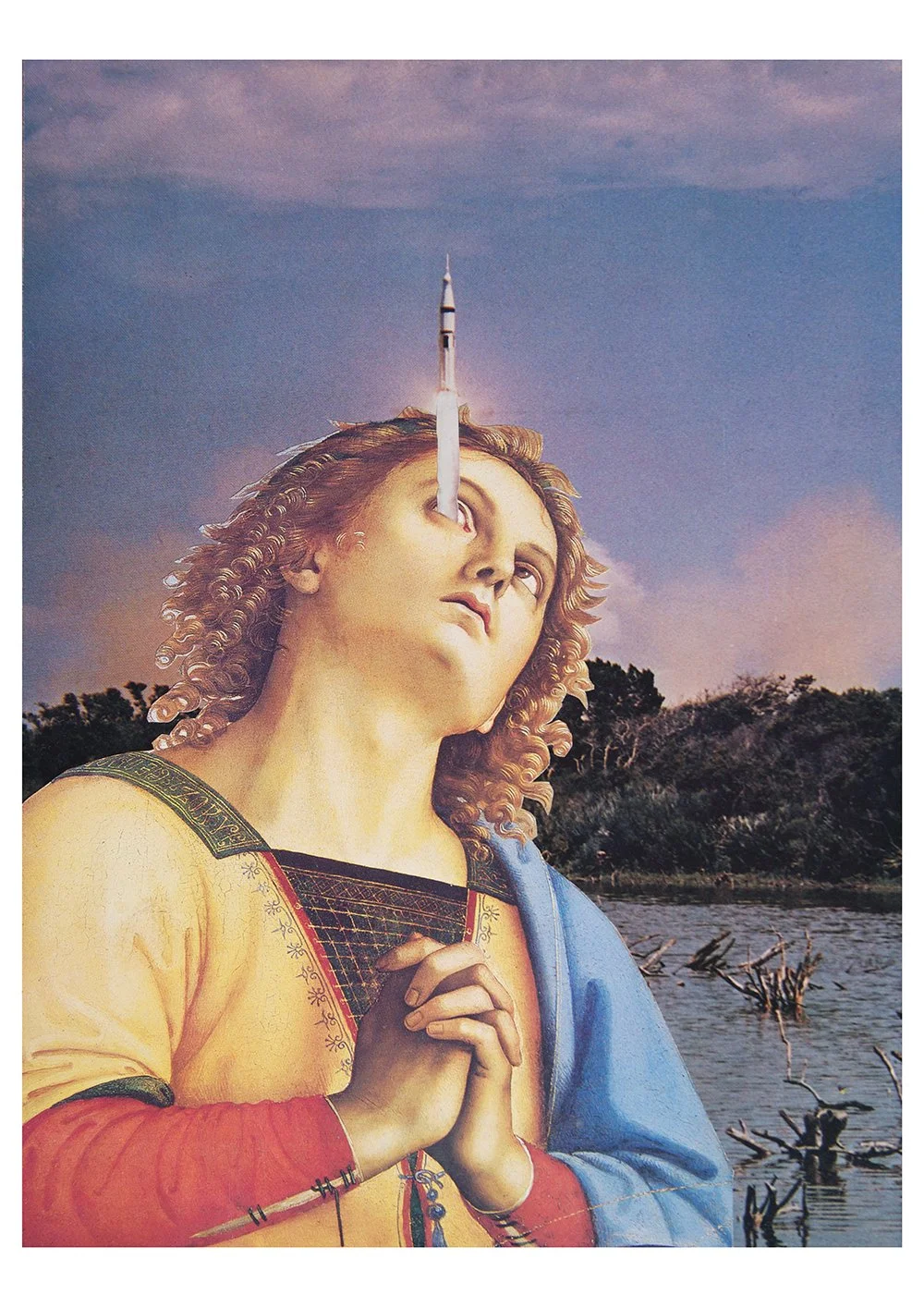
Giclée pigment ink on Hahnemühle German Etching paper achieves a superior quality print with exceptional detail, vibrant color accuracy, and long-term durability. The fresh print reproduces an aged authentic patina and the imprint of the artist’s hand-crafted marks.
· Archival Museum Quality ·
· Limited Edition. 100 ·
· Certificate of Authenticity ·
· Hand & Human-Made without AI ·
· 100% Carbon Neutral ·
· Free Worldwide Shipping ·
6. You have always been an openly gay and proud man, actively participating in Palermo Pride and publicly announcing your marriage to your husband, Francesco Giordano, in a documentary on Italian national television. How did you reconcile this with your family business and the fact that the store’s main client was the Church? Was it ever a problem or a struggle, or is this contradiction merely imagined?
I became aware of my identity very early on, and this was, at least at first, a source of great suffering.
My family struggled to understand and accept this part of me. Over time, things changed, at least in part, but not completely. A great distance remained—sometimes silent—that I felt deeply. Even during important moments, like the documentary you mentioned, this difficulty emerged clearly, and it was painful for me, because I would have wanted a more explicit sign of recognition and affection.
This tension wasn’t just personal; it also permeated my relationship with the store and its history. At times, I felt that my role and my contributions weren’t fully recognized, and that made everything more complicated.
Yet, over time, I realized something fundamental: what I initially perceived as a weakness was actually a strength. At a certain point, I stopped seeking validation where it couldn’t be found, and I decided to live my identity with freedom and responsibility. If someone was unable to accept it, I learned to see that as their limitation, not mine.
Along this journey, I was also guided by powerful cultural role models. I grew up reading and watching the work of figures like Andy Warhol, Pier Paolo Pasolini, Federico García Lorca, Michel Foucault, Rainer Werner Fassbinder, and Luchino Visconti—artists and thinkers who transformed their own identities into a creative force.
I believe that, in many cases, it is precisely from a tension—from a deeply felt contradiction—that a form of energy capable of generating vision is born. So, I have tried to move forward with determination, yet with a sense of lightness, without compromising who I am.
Along this journey, a fundamental presence has been that of Francesco Giordano, my husband.
He has always believed in me and in my work, even in the most difficult or uncertain moments. He has been a constant anchor, a source of continuous support, and knowing I could count on him made an enormous difference.
When I look at the achievements of these past years, I know that a significant part of that energy—that ability to persevere and carry on—also stems from there, from the strength of a bond that gave me stability and confidence.
For this reason, in the end, I don’t think it’s simply a contradiction between personal identity and context, between being gay and working in a world connected to the Church. Rather, it has been a real, difficult, yet deeply generative tension. A tension that, in different ways, has helped define who I am today.
END.
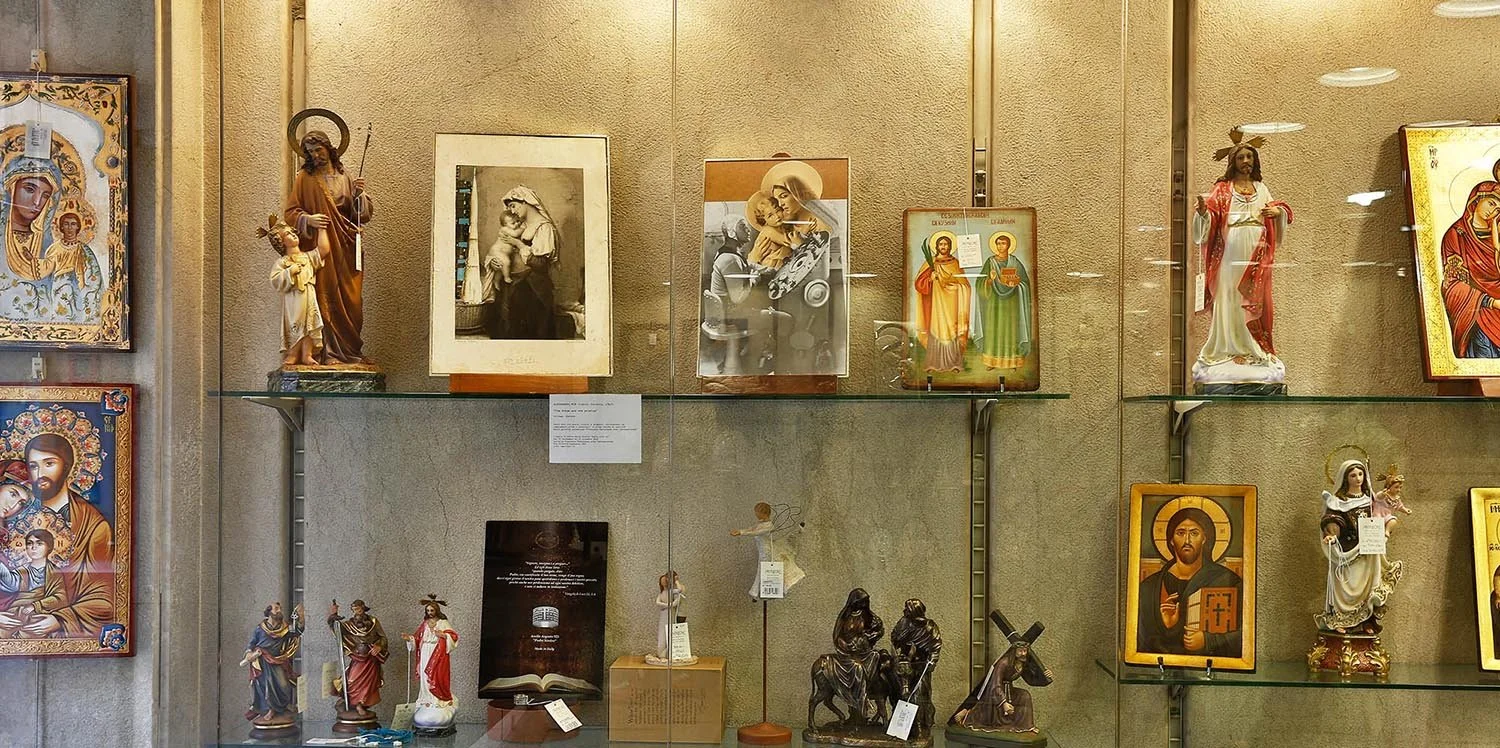
Aleksandra Mir’s collages exhibited in the Pantaleone shop window, Palermo, 2013
Did you ever visit the Pantaleone religious goods store? Did you take any photos of the merchandise or interior? We are actively searching for any type of photographic documentation to build a retrospective archive. Please send contributions to hello@aleksandraprints.com and/or fp@fpac.it
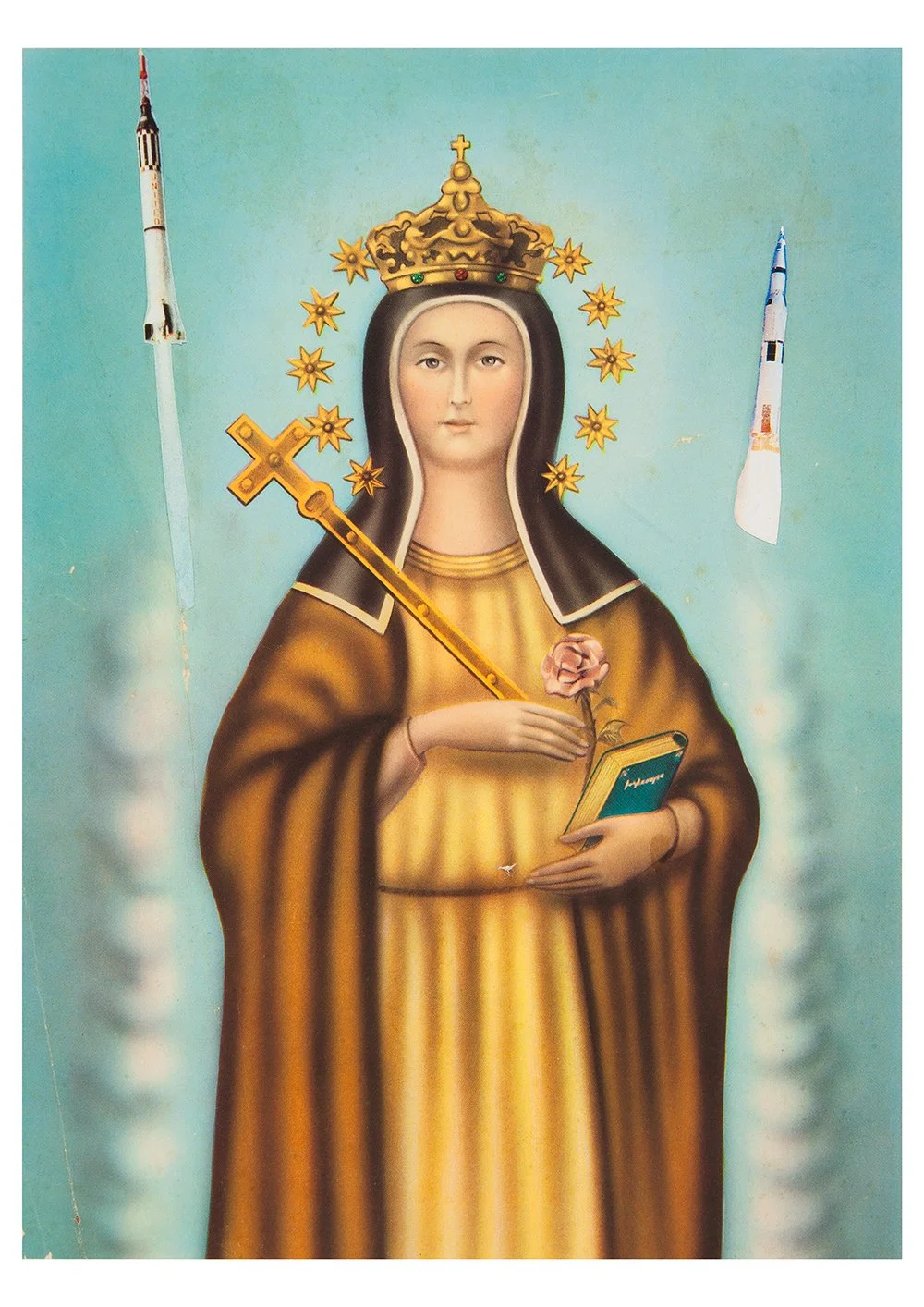
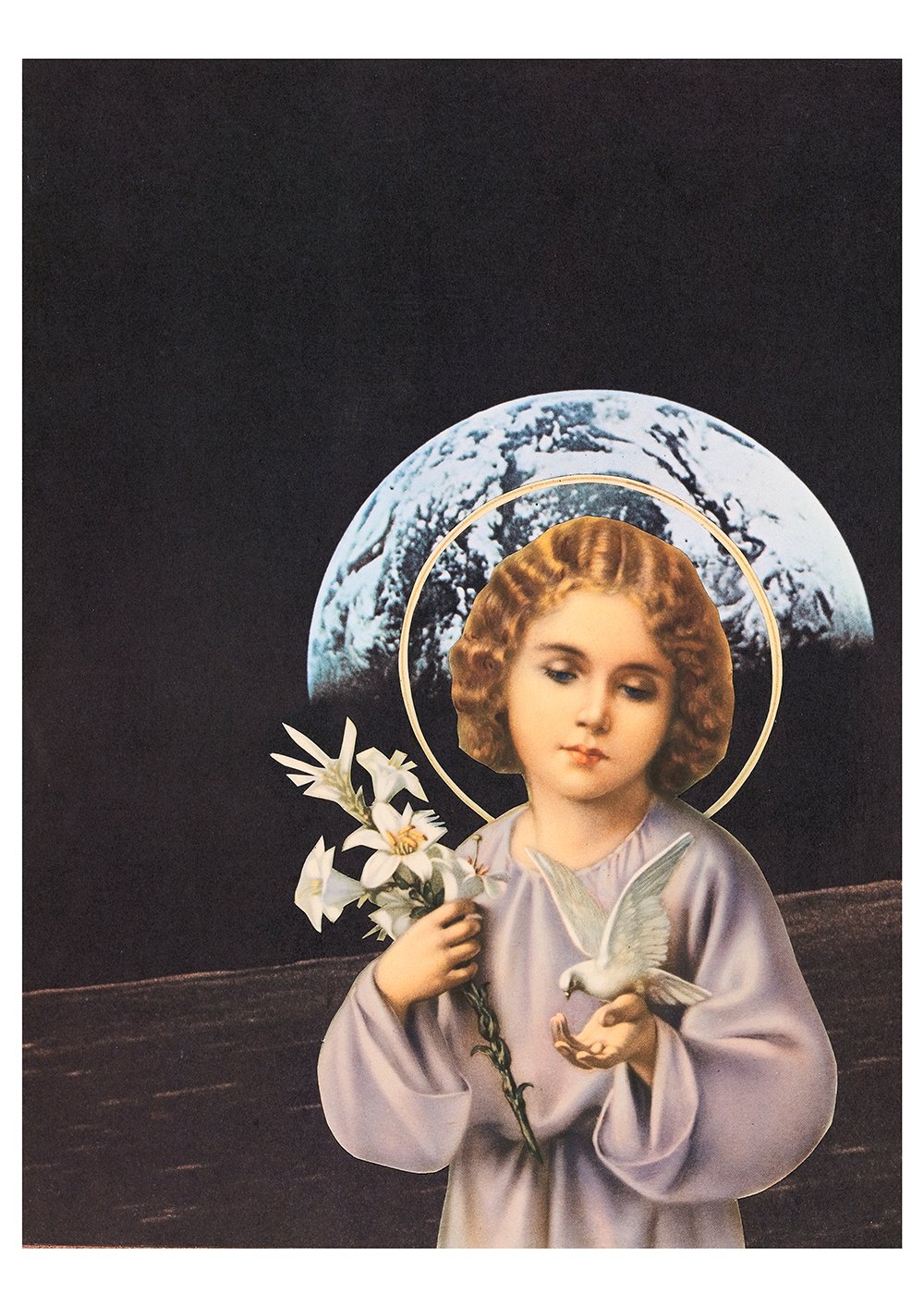
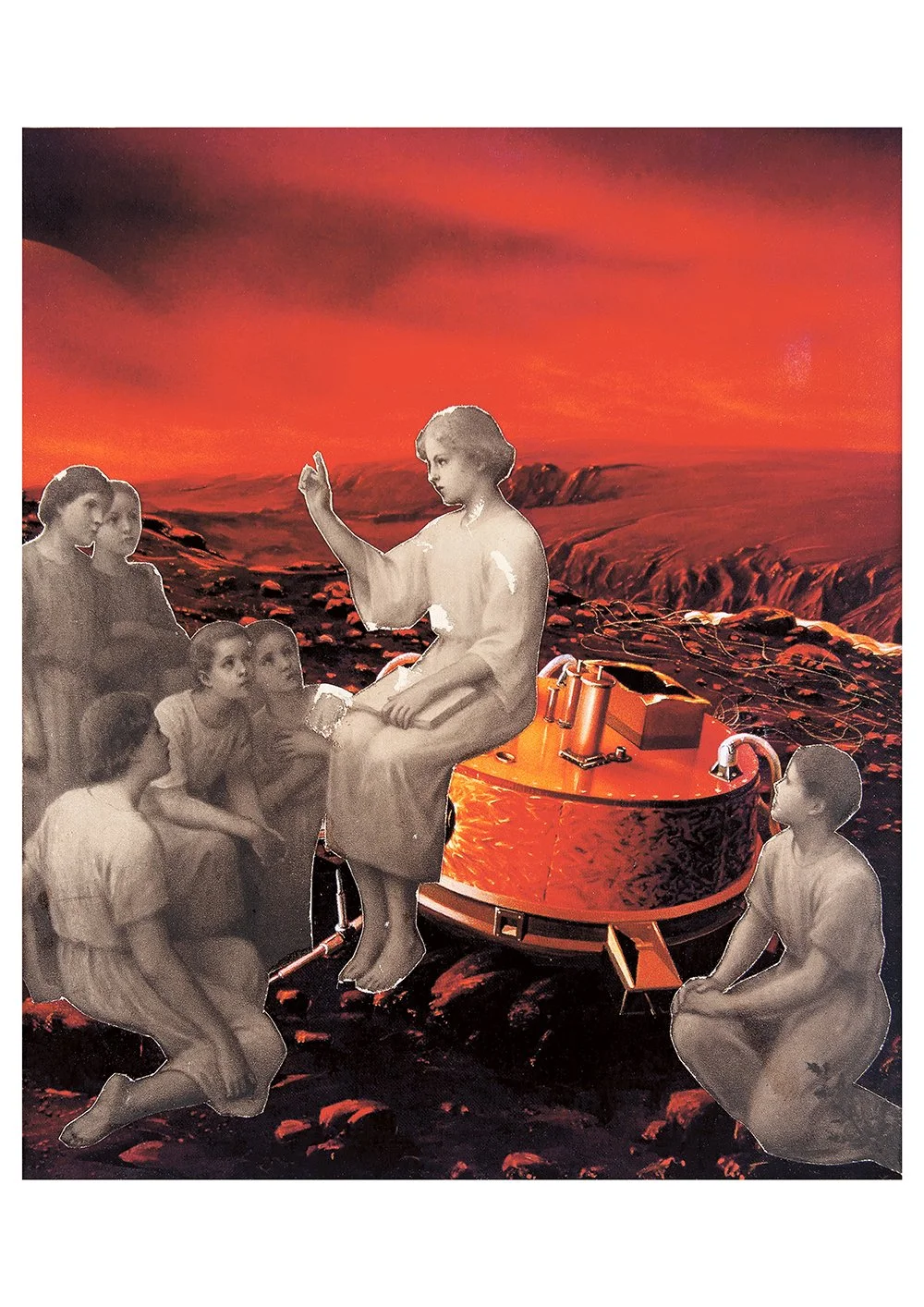
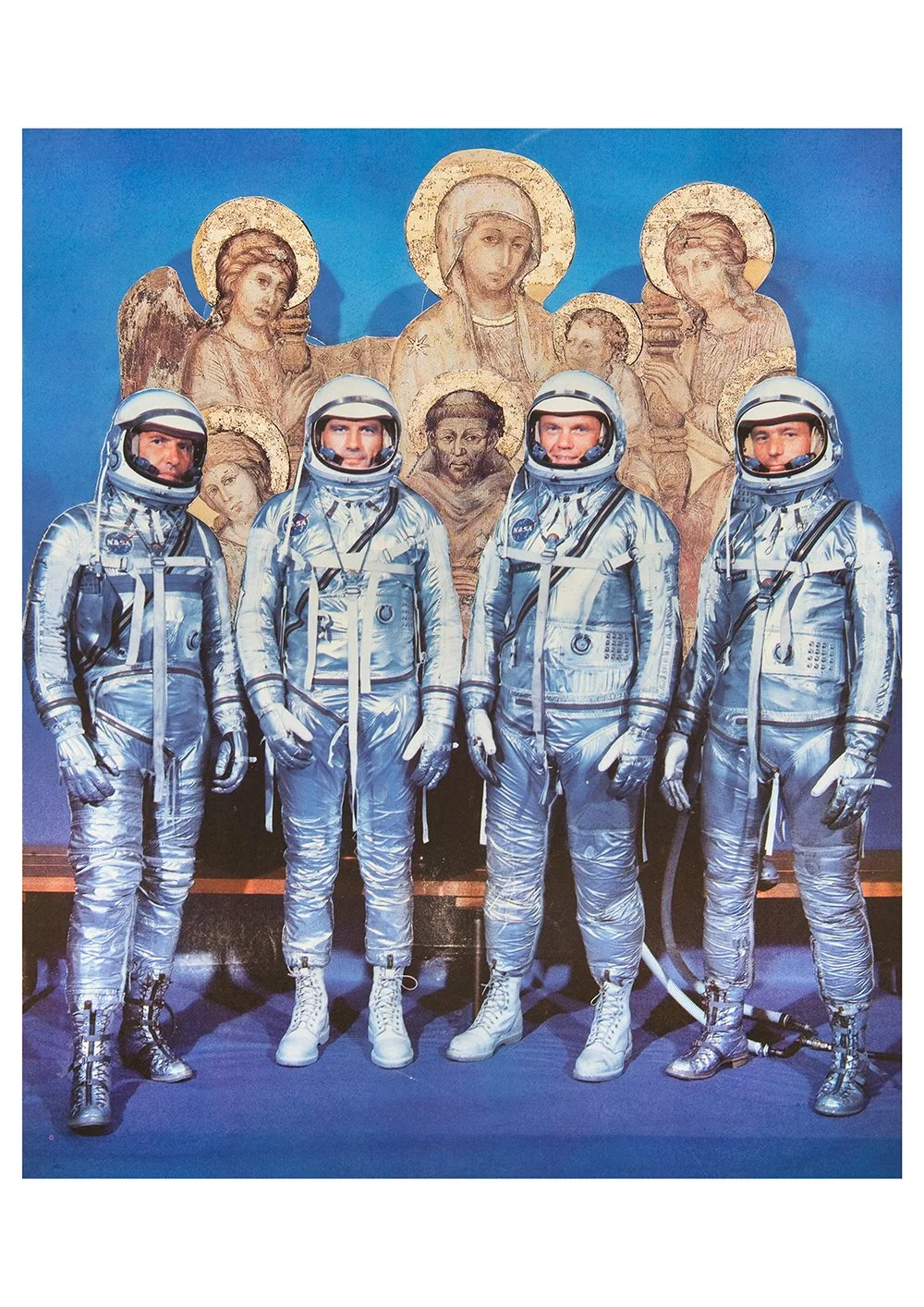
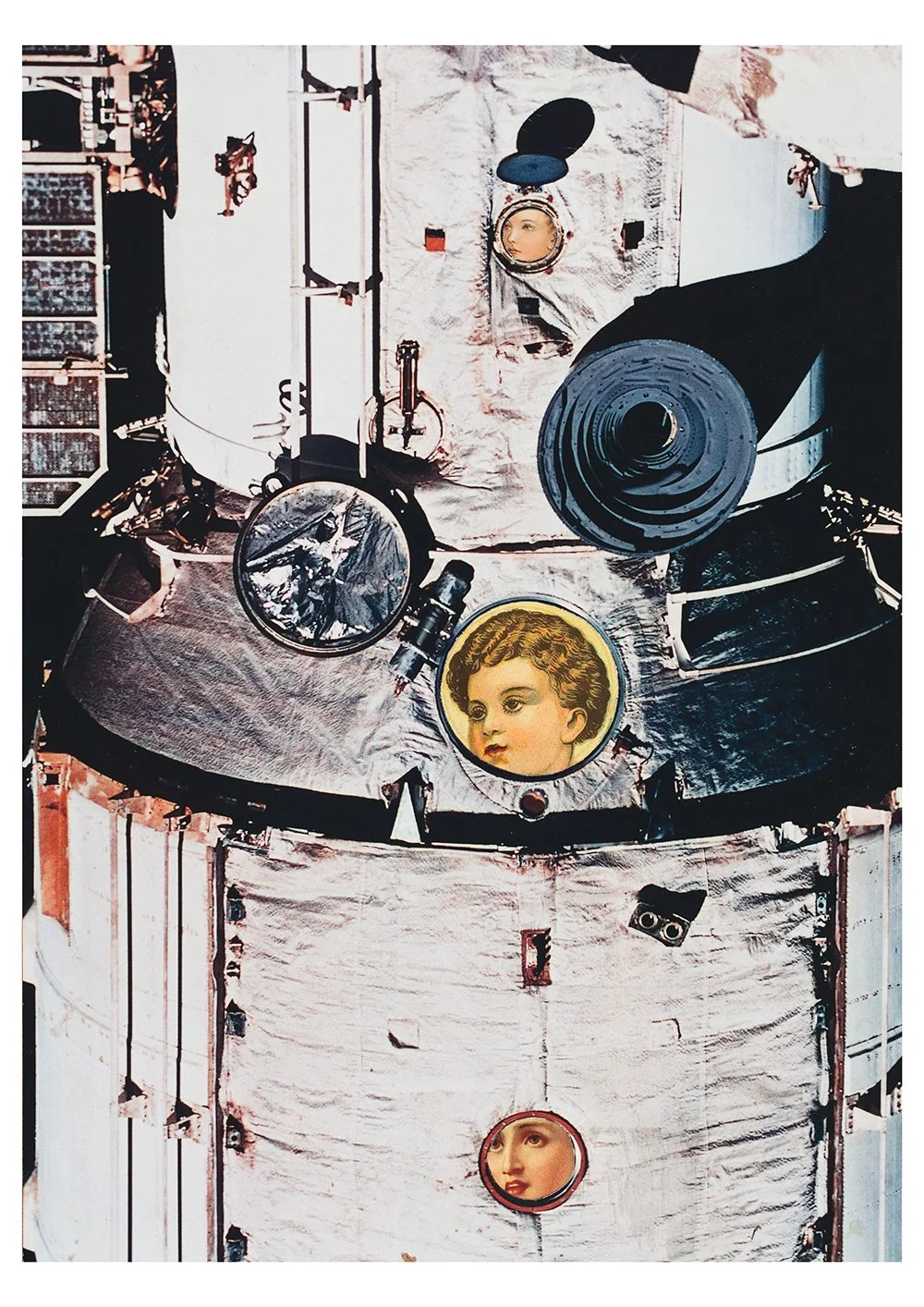
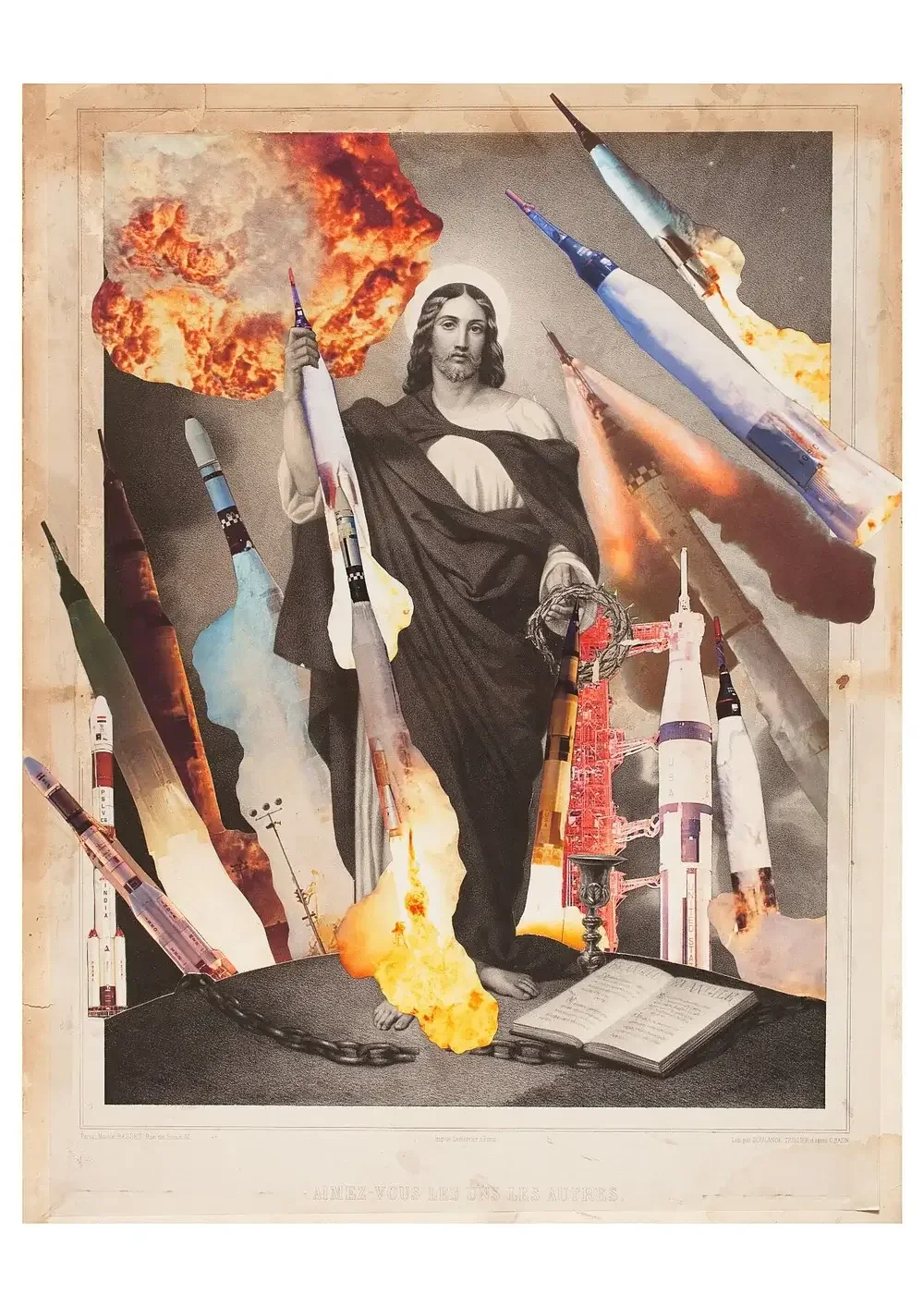
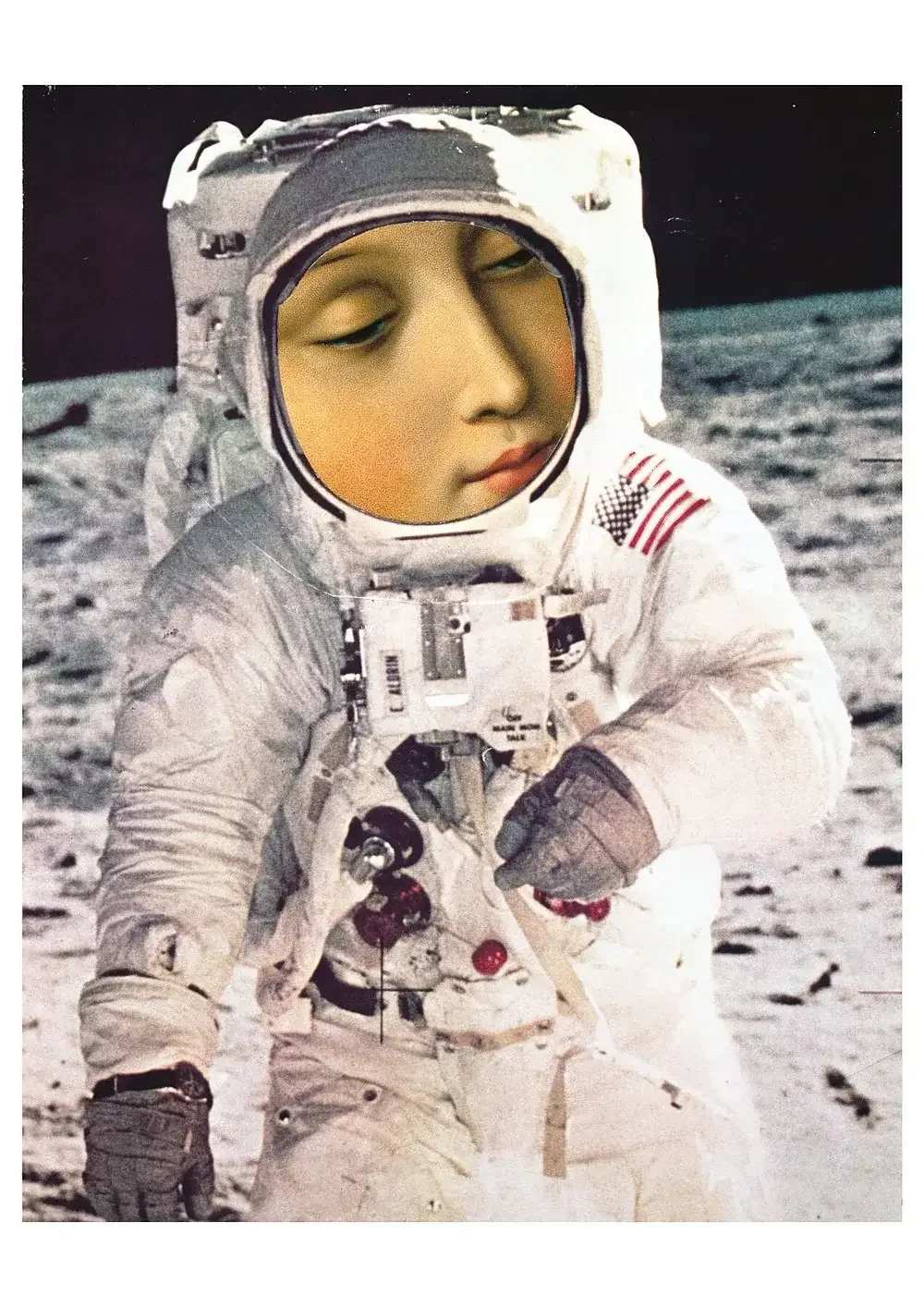
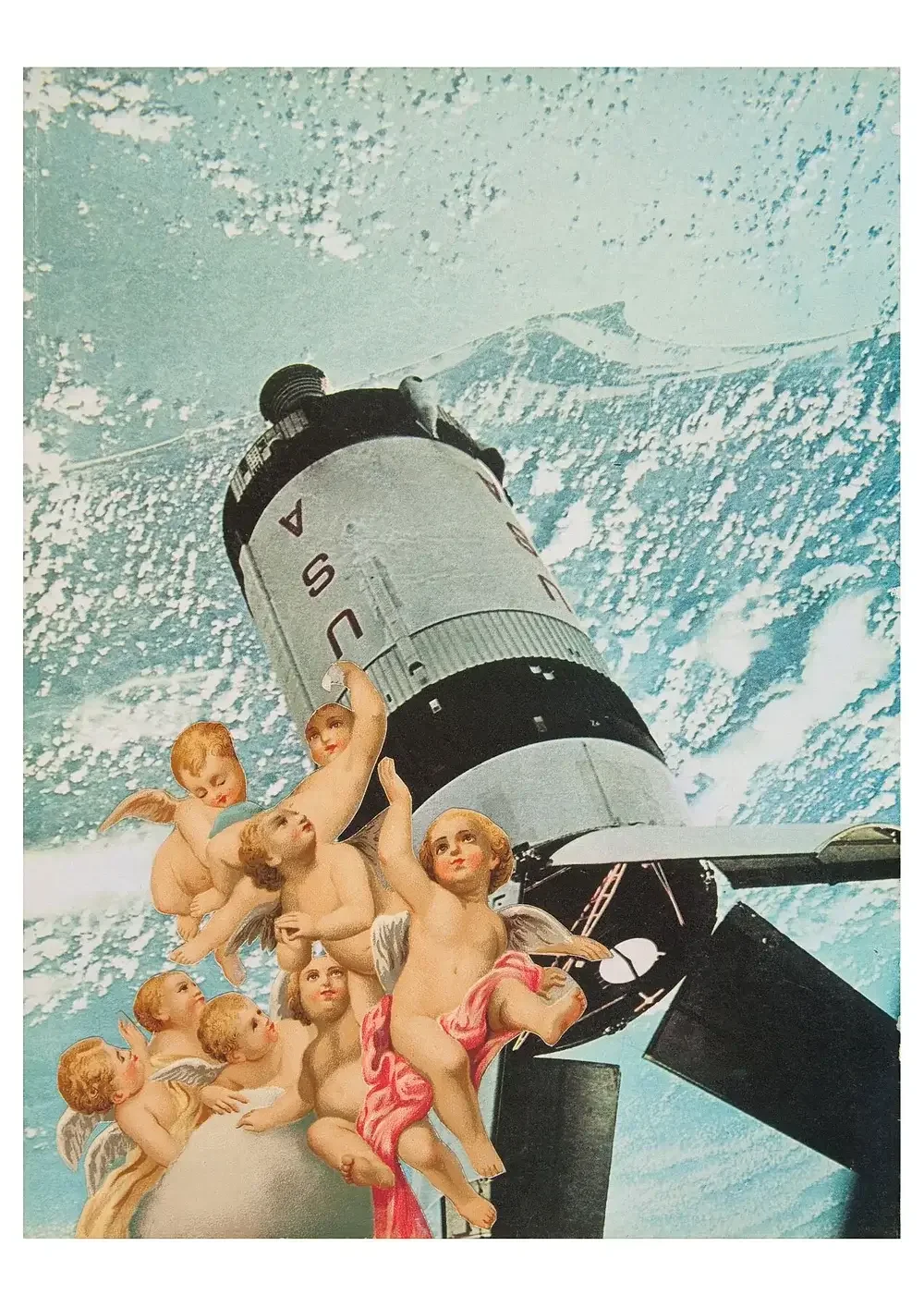
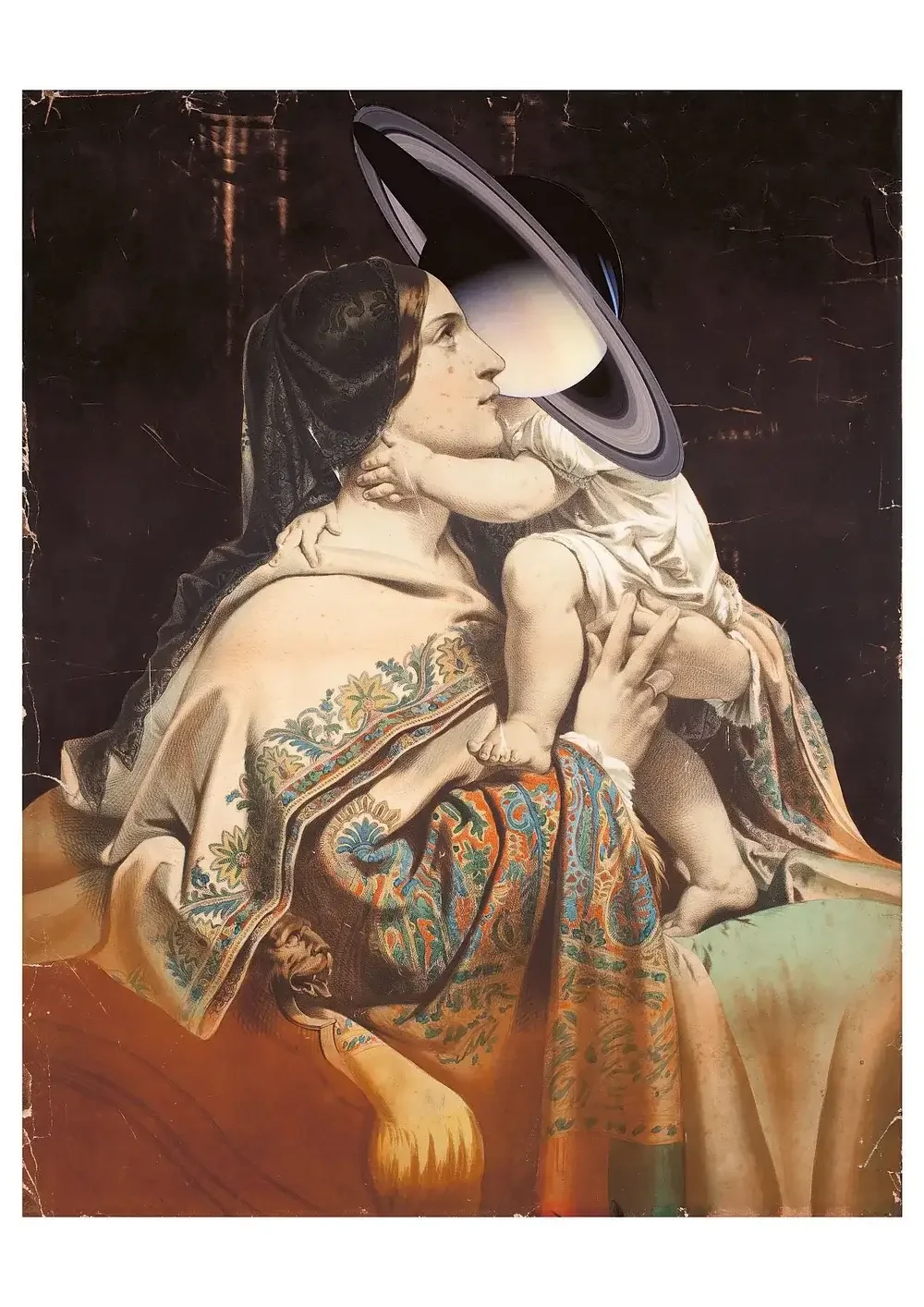
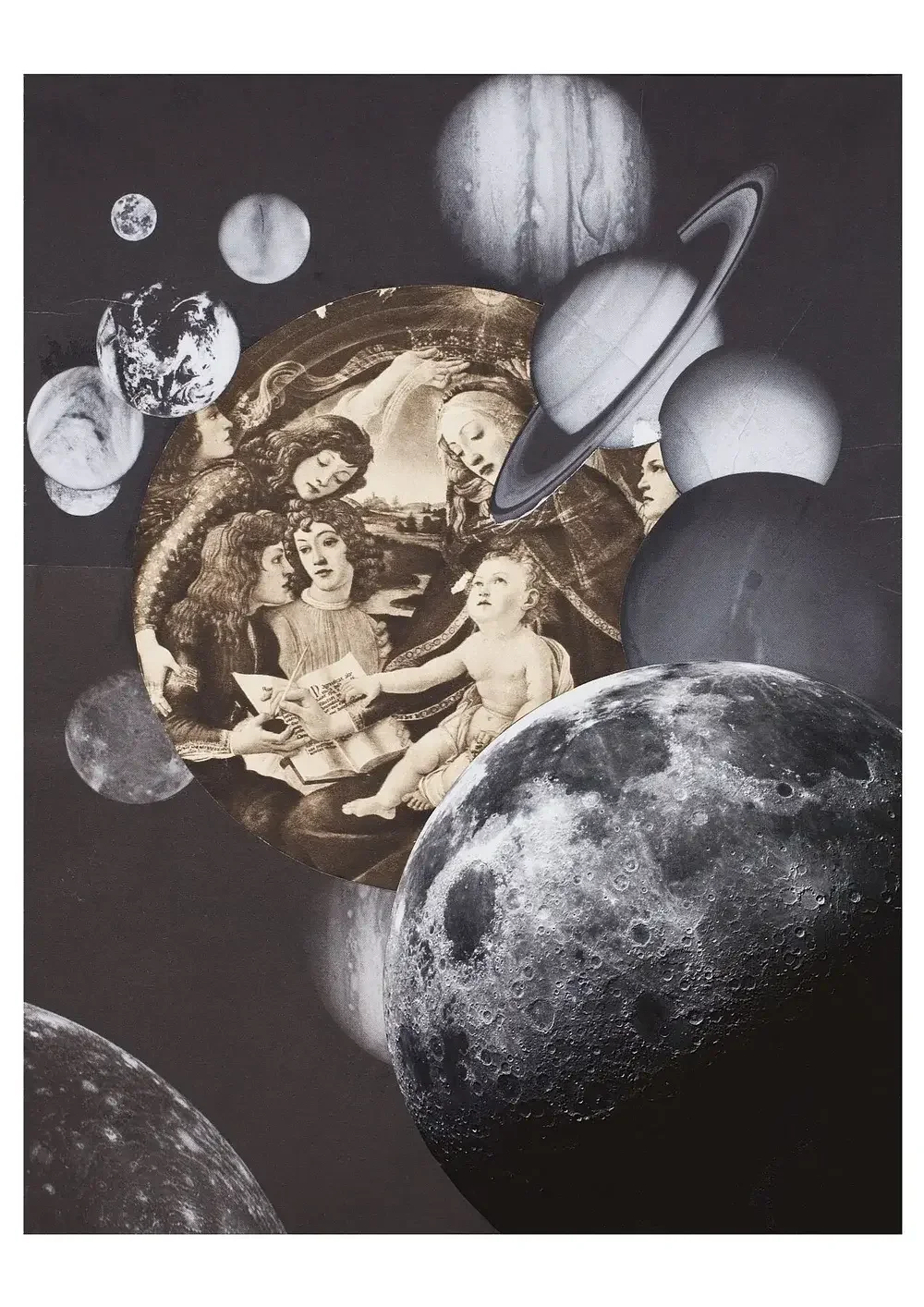
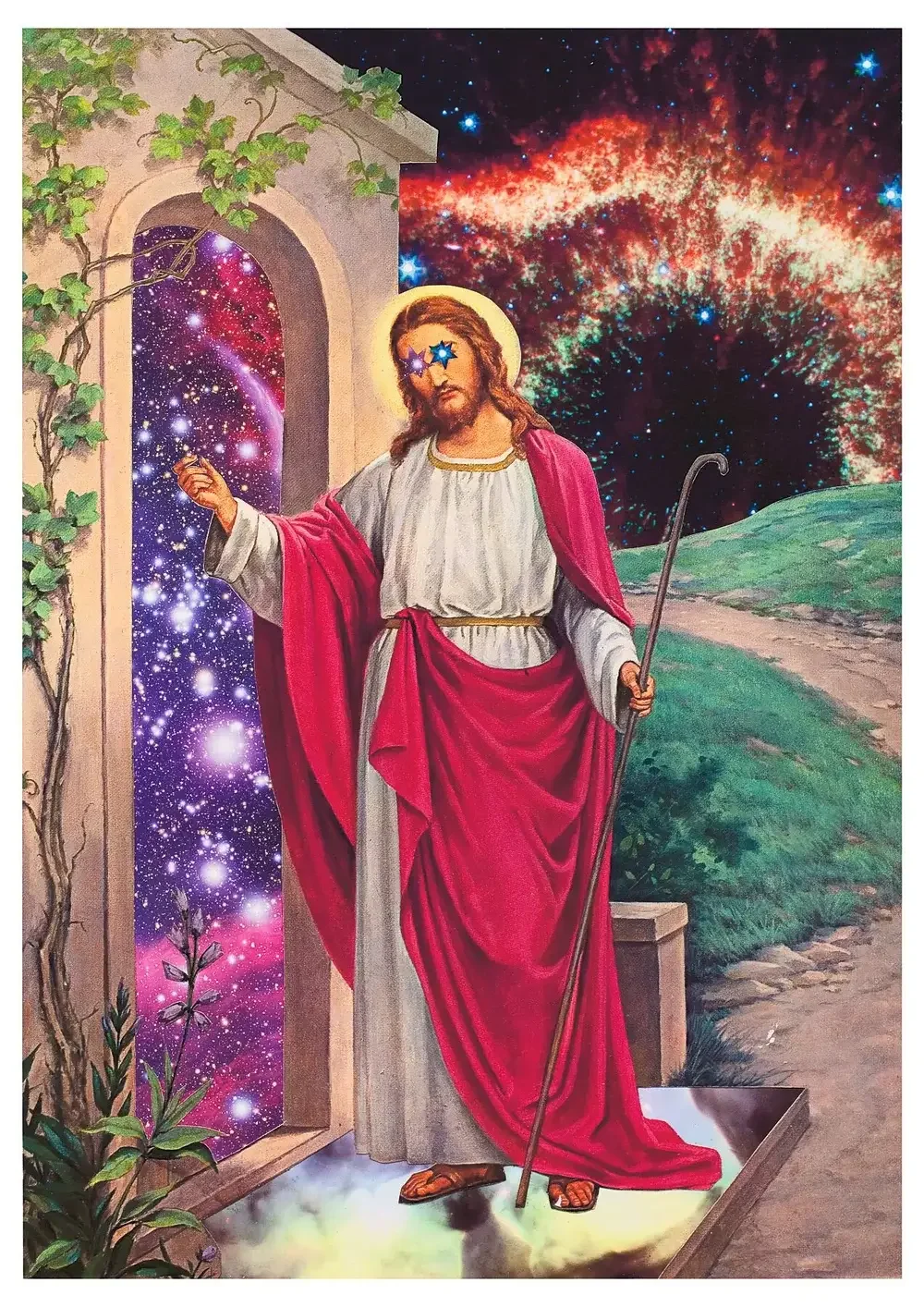
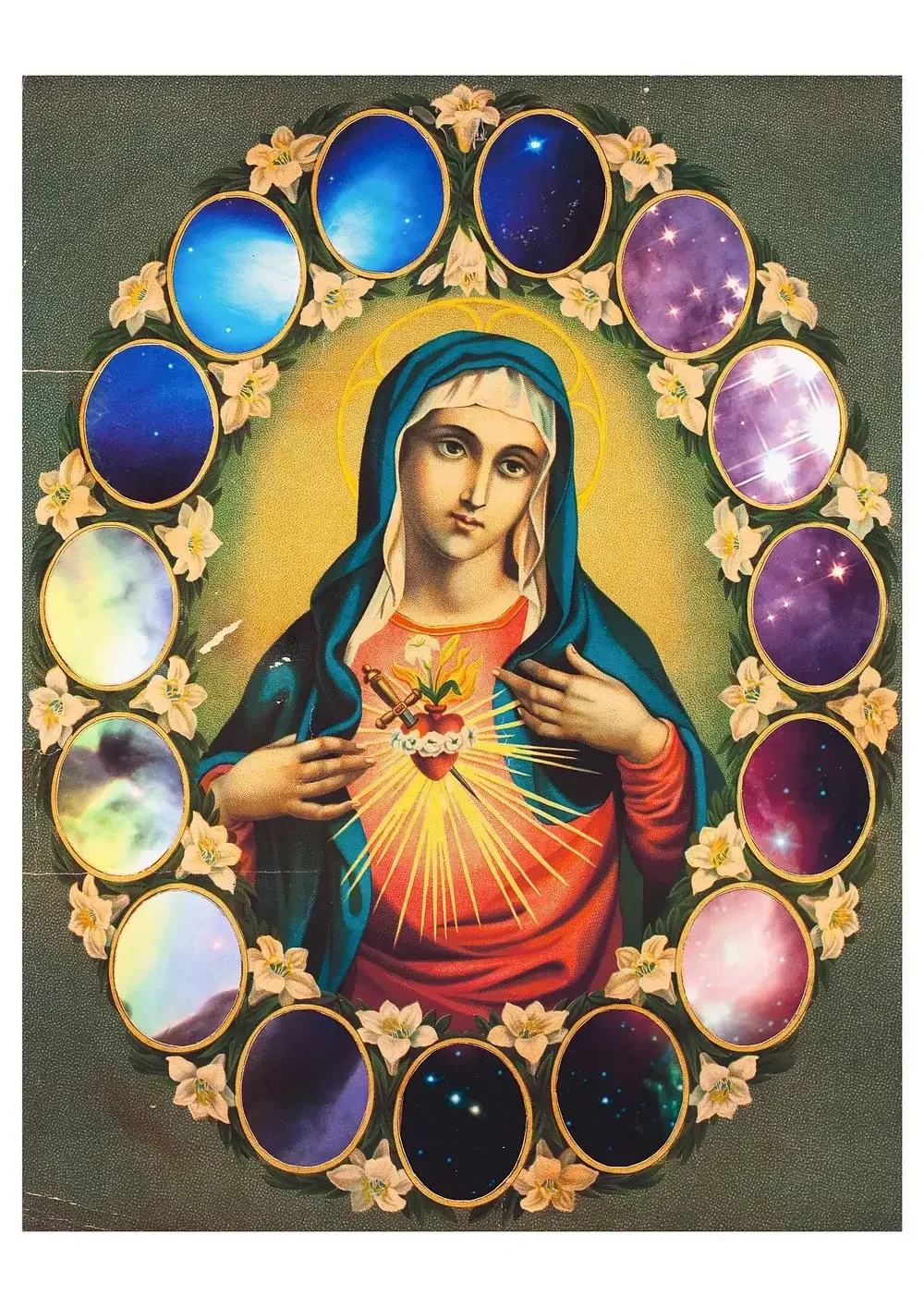
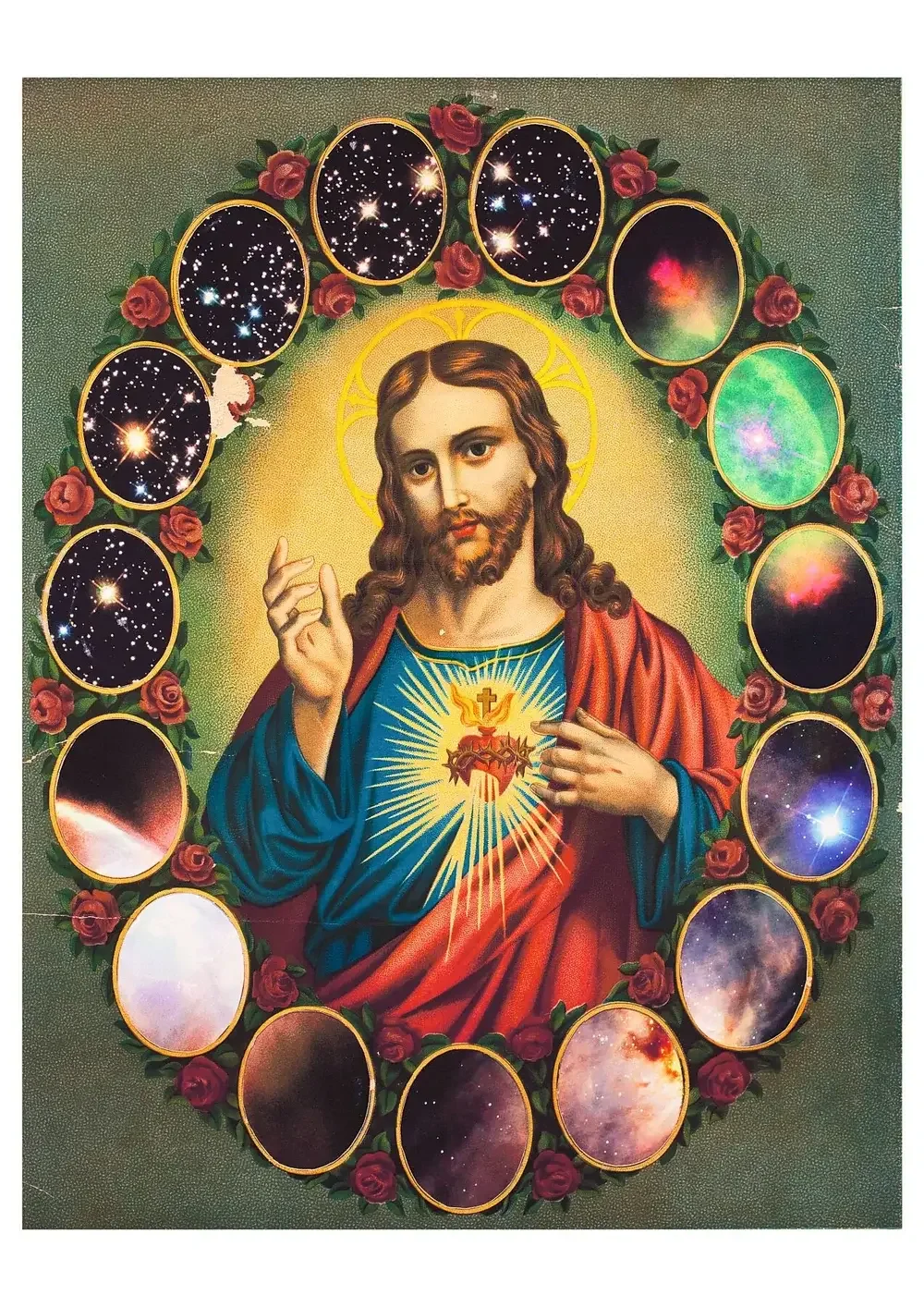
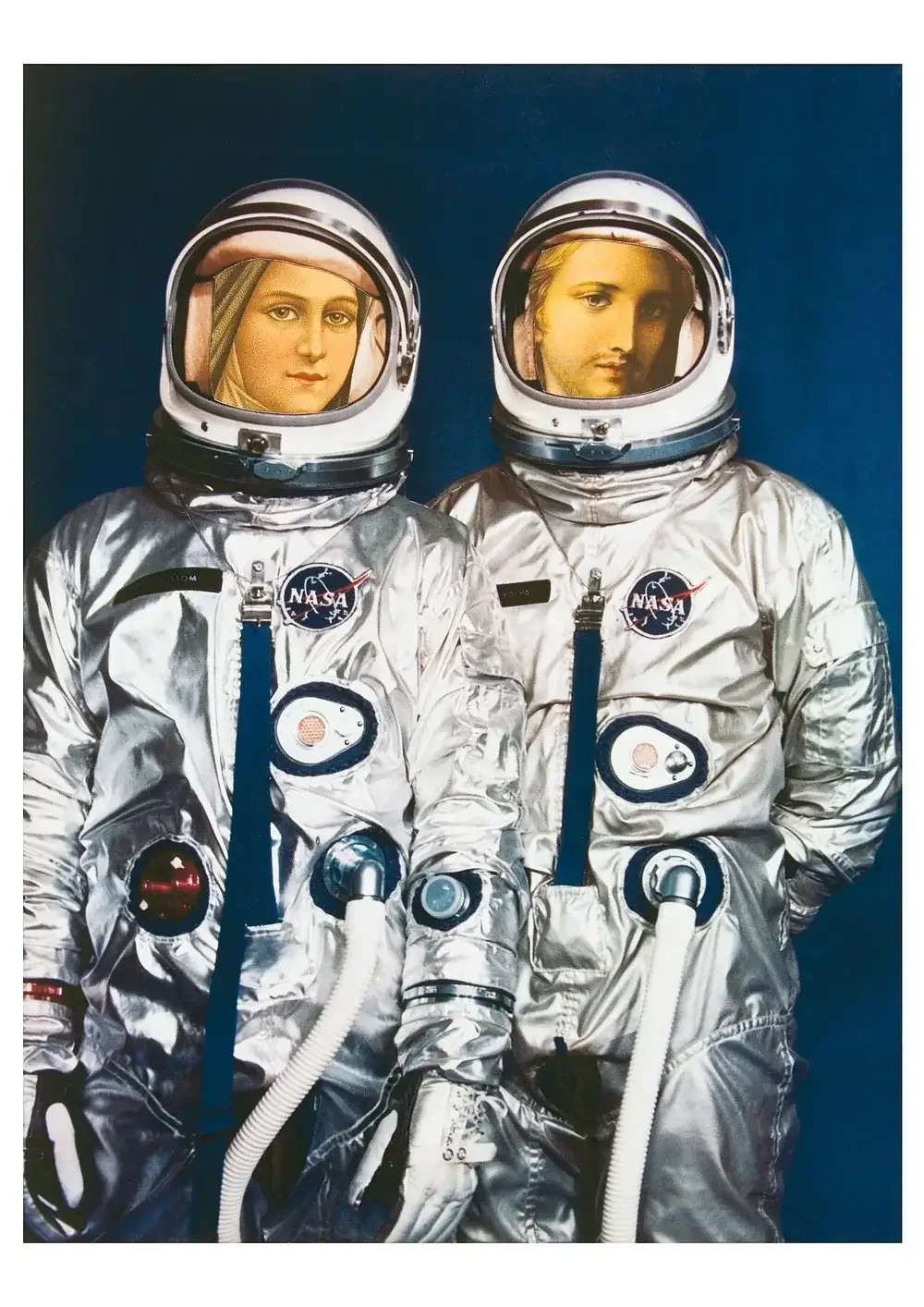
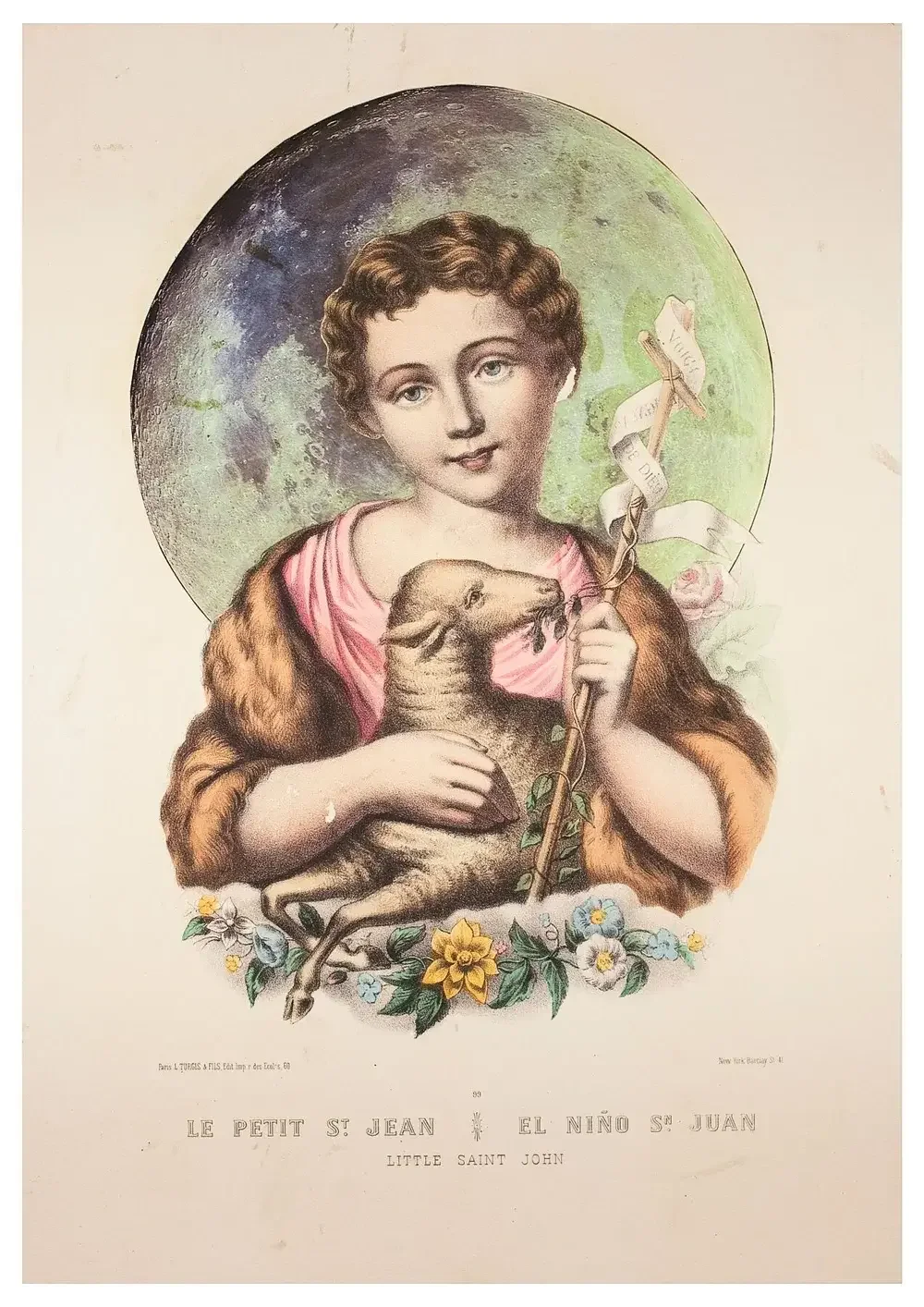
Giclée pigment ink on Hahnemühle German Etching paper achieves a superior quality print with exceptional detail, vibrant color accuracy, and long-term durability. The fresh print reproduces an aged authentic patina and the imprint of the artist’s hand-crafted marks.
· Archival Museum Quality ·
· Limited Edition. 100 ·
· Certificate of Authenticity ·
· Hand & Human-Made without AI ·
· 100% Carbon Neutral ·
· Free Worldwide Shipping ·